


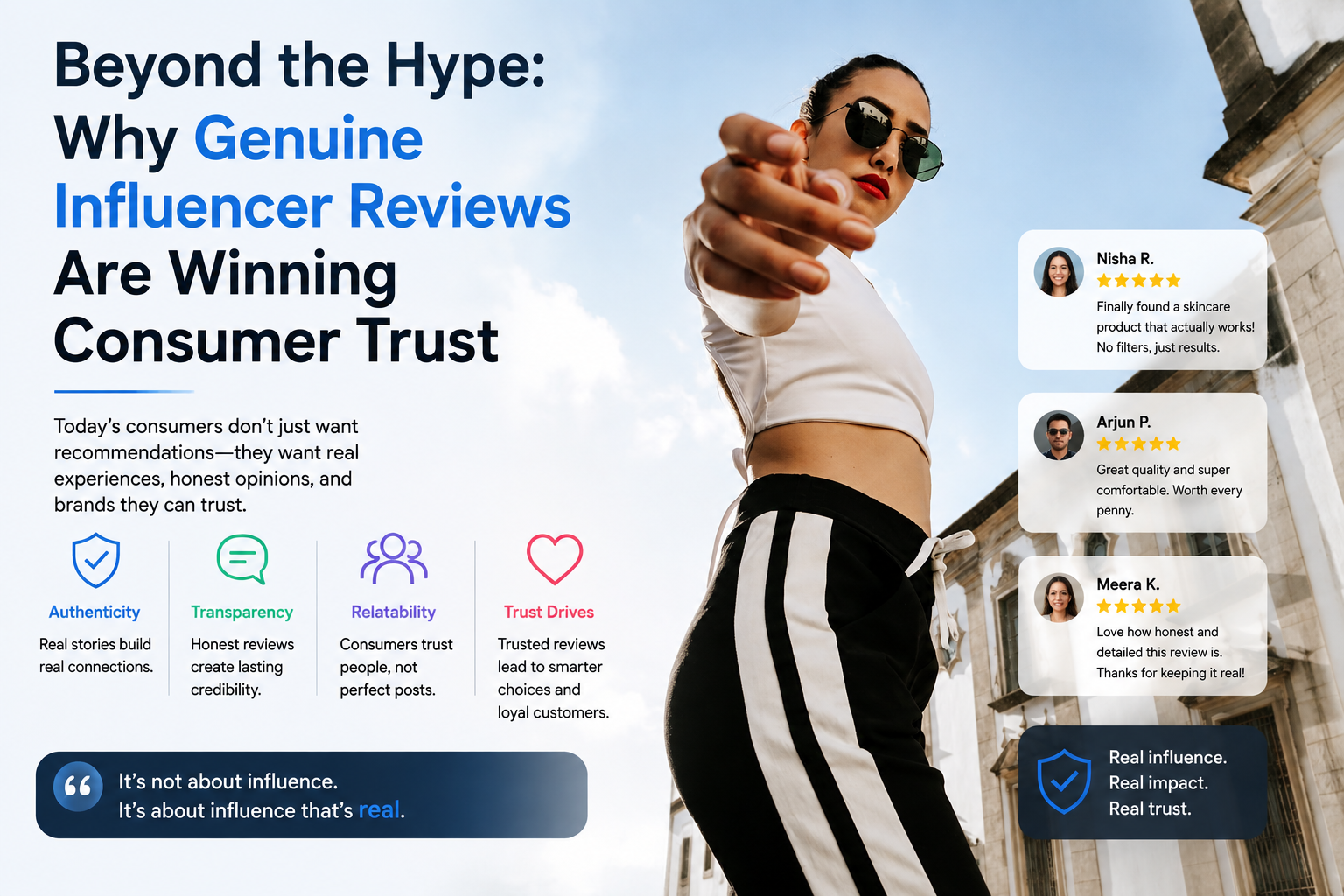
Aug 25: Social media has changed the way people discover and evaluate products. A single influencer video can introduce thousands of consumers to a skincare product, smartphone, restaurant or fashion brand within hours. But as influencer marketing becomes increasingly commercial, audiences are also becoming more careful about what they choose to believe.
This is where the genuine review is becoming increasingly important.
Instead of simply telling followers that a product is worth buying, credible influencers are expected to explain how it performs, what they like about it, what could be improved and who should actually consider purchasing it. The result is a gradual shift from influence through hype to influence through credibility.
Consumers Want More Than a Product Pitch
People may still discover products through influencers, but they increasingly want useful information behind the recommendation.
Sprout Social’s 2025 Influencer Marketing Report found that 64% of consumers considered genuine reviews the type of influencer content most likely to persuade them to make a purchase. The report also found that nearly 30% of consumers trusted influencers more than they had six months earlier.
The numbers point to an important trend. Consumers are not necessarily moving away from influencers. Instead, they are becoming more interested in which influencers they can trust.
Why Genuine Reviews Feel More Credible
Traditional advertising is designed to persuade consumers to buy. Influencer content can feel more personal because audiences often develop familiarity with the creator behind it.
Someone who regularly reviews smartphones, beauty products, cars or travel experiences can build credibility within a particular category. Followers become familiar with the creator’s preferences and opinions, making their recommendations easier to understand and evaluate.
That familiarity can make a genuine review feel more useful than a conventional advertisement.
A creator who says, “I liked this product, but there are two things you should know before buying it,” may actually be more convincing than someone who describes the product as perfect.
The reason is simple: consumers know that real products have weaknesses.
What Makes an Influencer Review Truly Credible?
Not every review labelled as “honest” is necessarily credible. Consumers can look for several signals when deciding whether an influencer’s opinion deserves attention.
Actual product experience: A creator who has genuinely used a product over a reasonable period can provide more useful insight than someone presenting it after a brief demonstration.
Balanced opinions: A credible review should discuss both advantages and limitations rather than presenting every feature as exceptional.
Transparency: Audiences should be able to understand when content is sponsored, gifted or linked to an affiliate commission.
Category expertise: Someone who consistently covers a particular subject is more likely to provide useful context and comparisons.
Consistency over time: If an influencer’s recommendations remain consistent with their usual opinions and content, audiences may find them more believable.
Comparisons and alternatives: Explaining whether a product is better than competing or cheaper options makes a review more useful to consumers.
Ultimately, credibility comes from information, experience and transparency—not simply the word “honest” in a video’s title.
Follower Count Is Not Everything
For a long time, influencer marketing was heavily focused on follower numbers.
But a large audience does not necessarily translate into credibility.
Sprout Social’s 2026 Influencer Marketing Report found that only 17% of consumers check a creator’s follower count before deciding whether to engage with their content. Content relevance and the creator’s style are increasingly important.
This could give smaller and niche creators a significant advantage.
A technology creator with a focused audience of smartphone enthusiasts may have more credibility when reviewing a new phone than a celebrity influencer with millions of followers but little experience with technology.
In other words, influence is increasingly becoming about relevance rather than reach alone.
The Difference Between Promotion and Recommendation
This distinction is becoming particularly important as brands invest more heavily in creator marketing.
A promotional post might highlight a product’s benefits, include a discount code and direct followers to a purchase link.
A genuine review is different. It provides context.
A creator might explain how long they used the product, what worked, what did not and whether they would purchase it again.
That type of information gives consumers something they cannot always get from a traditional advertisement: personal experience.
Influencers Are Becoming Product Filters
Consumers today are exposed to an enormous amount of product information.
They can read reviews, watch demonstrations, compare prices and browse thousands of comments. But this abundance of information can also make decision-making difficult.
This is where trusted influencers can act as filters.
Deloitte’s creator-economy research found that 77% of consumers surveyed follow creators because of shared interests or a desire to learn something new. Its research also found that three in five consumers were more likely to recommend, purchase from or explore a brand when a favoured creator endorsed it.
The influencer’s role, therefore, is evolving.
Instead of simply creating awareness, a creator can help an audience understand whether a product is worth considering.
Trust Can Disappear Quickly
The relationship between an influencer and their audience can be fragile.
If a creator promotes a different product every week or describes every item as “amazing” or “must-have,” followers may eventually become sceptical.
Constantly positive reviews can create the impression that the creator is more interested in selling than informing.
This is why negative or balanced feedback can sometimes strengthen credibility.
An influencer who is willing to say that a product is overpriced, unnecessary or unsuitable for certain consumers demonstrates that their recommendations are not automatically positive.
This connects closely with the wider deinfluencing movement, where creators encourage audiences to think twice before buying products simply because they are trending.
Paid Content Does Not Automatically Mean Inauthentic
There is an important distinction between sponsored content and dishonest content.
An influencer can receive payment from a brand and still provide an honest review.
The issue is whether the content provides genuine value to the audience.
A credible sponsored review can explain:
- What the influencer liked
- What they did not like
- Who the product is suitable for
- Who may want to avoid it
- How it compares with alternatives
- Whether they would buy it themselves
Transparency about the commercial relationship is also essential.
When audiences know that a post is sponsored but still receive balanced information, the content can retain credibility.
Brands Need to Give Creators Some Freedom
For brands, genuine influencer reviews require a different approach to campaign management.
If a company provides a rigid script and expects the creator to describe the product as perfect, the final content may feel like conventional advertising.
Giving relevant creators room to express their genuine experience can make the content more believable.
This does not mean brands should abandon campaign objectives. Instead, it means allowing the creator’s established voice and expertise to remain part of the content.
Sprout Social’s 2026 research also points toward a shift in influencer selection, with brands increasingly looking beyond follower counts and considering factors such as content relevance and creator fit.
The Rise of the Trusted Creator
The next phase of influencer marketing may therefore be defined by trusted creators rather than simply popular creators.
Three qualities are likely to matter:
Expertise: The creator understands the category they discuss.
Consistency: Their content has a clear and recognisable point of view.
Transparency: They are clear about sponsorships and distinguish personal experience from advertising claims.
These qualities can make a creator valuable even without millions of followers.
Genuine Reviews Could Shape Social Commerce
The consumer journey is becoming more complex.
A person may discover a product through an influencer, watch several reviews, search for criticism, compare alternatives and then decide whether to purchase.
The journey increasingly looks like:
Discover → Review → Compare → Question → Decide
The influencer’s role is no longer simply to generate excitement. It is to help consumers make sense of their options.
That could make credibility one of the most valuable assets in social commerce.
From Influence to Trust
Influencer marketing is not necessarily becoming less important as consumers become more sceptical. It may be becoming more demanding.
Audiences do not necessarily want fewer influencers. They want more credible ones.
A genuine review does not have to say that a product is perfect. It simply needs to explain what the creator actually experienced.
And that may be the future of influencer marketing: less hype, more honesty and a stronger relationship between creators and the people who trust them.
For brands, the lesson is equally clear. The most effective influencer campaign may not be the one that generates the loudest buzz. It could be the one that gives consumers enough honest information to make a confident decision.