


Aug 28: A consumer scrolling through social media may not be looking to buy anything. Then a creator demonstrates a skincare product, styles a new outfit or reviews a smartphone—and suddenly a casual scroll becomes a shopping decision.
That shift is changing the way brands think about digital commerce.
Creators are no longer simply promoting products to their followers. Through shoppable content, affiliate links, product recommendations, livestreams and their own brands, they are becoming an important part of the path between product discovery and purchase.
The scale of the opportunity is growing rapidly. The Interactive Advertising Bureau (IAB) estimated that creator advertising spending in the US would reach $37 billion in 2025, up 26% from the previous year. IAB also found that nearly half of creator-economy advertisers consider creators a “must buy” channel.
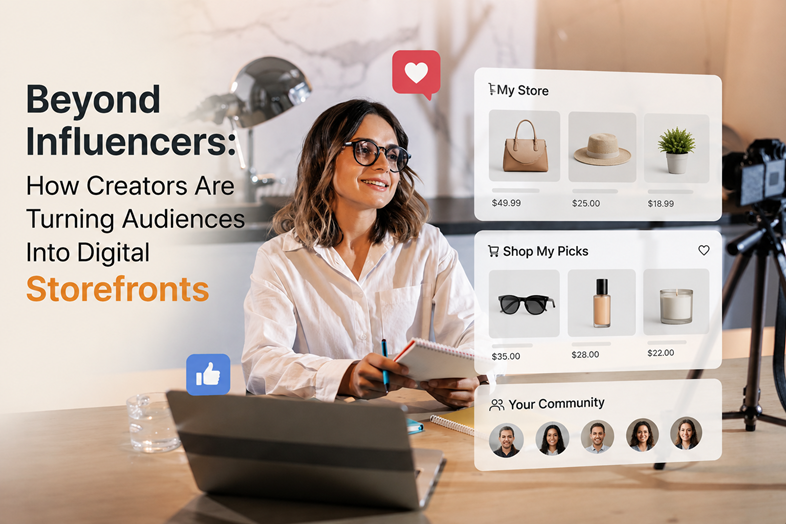
The numbers point to a larger transformation: the creator is increasingly becoming more than an influencer. In many cases, the creator is becoming the storefront.
From Product Search to Product Discovery
For years, e-commerce was built around intent.
Consumers searched for a product, compared prices and reviews, visited product pages and then decided whether to buy.
Creator-led commerce introduces a different starting point: discovery through content.
A consumer might watch a makeup tutorial and discover a new lipstick, see a travel creator using a particular suitcase or watch a technology review before considering a new laptop.
The product is no longer waiting at the end of a search. It appears naturally within the content consumers are already choosing to watch.
That makes the creator an important bridge between entertainment and commerce.
Why the Creator Matters
The real value of a creator is not necessarily the size of their following.
It is the relationship they have built with that audience.
People often follow creators for their expertise, personality, experiences or perspective. When a product fits naturally into that content, the recommendation can feel more relevant than a conventional advertisement.
A fashion creator can show how a garment looks in real life. A fitness creator can demonstrate equipment during a workout. A technology creator can explain the strengths and weaknesses of a new device.
Instead of simply telling consumers that a product exists, creators can show why it might matter to them.
That context can make product discovery more meaningful.
Influencer Marketing Is Becoming Commerce
Traditional influencer marketing was largely focused on awareness and engagement.
Creator-led commerce pushes the model closer to measurable business outcomes.
Affiliate links, creator-specific discount codes, shoppable posts and integrated product pages allow brands to connect content more directly with sales.
IAB’s 2025 creator-economy research found that 32% of advertisers identified online sales or conversions as a goal for their creator campaigns.
That signals an important change in expectations. Brands are increasingly looking beyond likes, comments and views and asking whether creator partnerships can contribute to the bottom line.
The creator is consequently moving from being simply a media channel to becoming a potential sales channel.
Creators Are Becoming Digital Product Curators
The internet has given consumers access to an enormous number of products. But more choice does not always make shopping easier.
Creators can help solve that problem by acting as curators.
They test products, compare alternatives, explain features and share personal experiences. Their content can help audiences narrow down choices in categories where consumers often need additional information before buying.
This is particularly visible in beauty, fashion, consumer technology, food, fitness, travel and home products.
In these categories, the creator can function almost like a specialised digital retailer—one who already understands the interests of the community they serve.
The Next Step: Creators Building Their Own Brands
Creator commerce does not stop at recommending somebody else’s products.
Increasingly, creators are becoming entrepreneurs themselves.
Once a creator understands an audience’s preferences and pain points, launching a product can become a natural next step.
A beauty creator might develop cosmetics. A fitness creator might launch activewear or training products. A food creator might build a packaged-food brand.
The creator already has something that many new businesses spend heavily to acquire: direct access to an audience.
Goldman Sachs Research estimated that the broader creator economy could reach approximately $480 billion by 2027. While the figure covers the creator economy as a whole rather than commerce alone, it highlights the growing commercial significance of creators.
The evolution is therefore moving from influencer promoting brand → creator partnering with brand → creator becoming the brand.
Why Smaller Creators Should Not Be Ignored
The creator-commerce opportunity is not restricted to celebrities.
Smaller creators can have highly specialised audiences, and that relevance can be valuable to brands.
A creator with 50,000 followers interested specifically in affordable skincare, sustainable fashion or running may offer a more targeted community than a celebrity with millions of followers across a broad range of interests.
This is encouraging brands to think beyond follower counts.
The important question is increasingly not “How many people follow this creator?” but “Are these the people who are likely to care about this product?”
AI Could Make Creator Storefronts Smarter
Artificial intelligence could further accelerate creator-led commerce.
Brands can use AI to identify suitable creators, analyse audiences and measure campaign performance. Creators can use AI tools to understand trends, generate content ideas and identify products that may be relevant to their audiences.
IAB reported in 2025 that three out of four brands were using or planning to use AI for creator-marketing activities.
The next evolution could be more personalised creator storefronts, where recommendations are tailored to individual consumers rather than presented identically to everyone.
But technology alone will not determine success.
The human connection that made the creator valuable in the first place still matters.
Trust Is the Real Storefront
The biggest asset a creator has may not be their followers. It may be trust.
That is also the biggest thing they can lose.
If audiences begin to see every recommendation as a paid promotion, the creator’s influence can weaken. Poorly matched partnerships can make content feel forced and reduce credibility.
For creators, transparency around sponsorships and affiliate relationships is essential.
For brands, authenticity should be part of creator selection. A product should make sense for the creator’s content and audience rather than simply being placed in front of a large number of followers.
The best creator-commerce partnerships do not feel like advertisements disguised as content. They feel like useful recommendations from a familiar source.
What This Means for Brands
Brands that want to benefit from creator-led commerce will need to move beyond one-off influencer campaigns.
The stronger opportunity lies in building longer-term relationships with creators and their communities.
Brands can:
- Select creators based on audience relevance rather than follower count alone
- Give creators room to tell stories in their own voice
- Introduce affiliate and performance-based models
- Develop creator-exclusive products or collaborations
- Track sales and conversions alongside engagement
- Use creator feedback to understand consumer preferences
- Build long-term creator partnerships instead of relying only on individual campaigns
This approach turns creators from temporary promotional partners into strategic commerce partners.
The Storefront Is No Longer Just a Website
The traditional storefront has a physical location. The digital storefront has a website or marketplace.
Creator-led commerce adds another possibility: the storefront can be a person.
The creator introduces the product, demonstrates it, explains it, recommends it and, increasingly, provides a direct route to purchase.
That convergence of content, community and commerce could fundamentally reshape digital retail.
For consumers, shopping becomes less about searching for products and more about discovering them through people they already follow. For brands, creators offer a way to reach audiences through relevance rather than interruption.
The future of commerce may therefore not be defined only by smarter marketplaces or faster checkout experiences. It may also be shaped by creators who have built something increasingly valuable in the digital economy: an audience willing to listen, engage and act on a recommendation.