


A Holiday Can Disappear. A Recipe Can Stay.
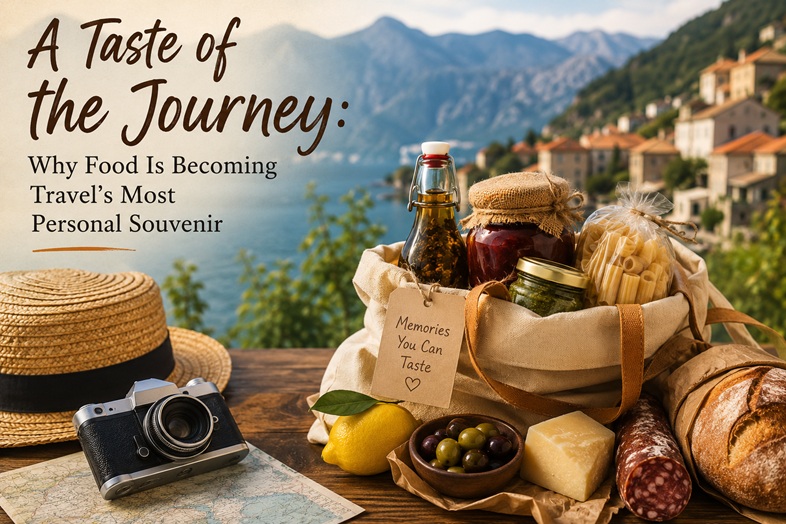
A photograph captures a place. A recipe can take you back to it.
Years after a holiday is over, a familiar aroma can suddenly bring back an entire journey — a spice market in Jaipur, a homestyle meal in Kerala, a plate of momos in the hills or a sweet discovered in an old neighbourhood.
That is what makes food different from most souvenirs.
It does not simply sit on a shelf. It can be cooked, tasted, shared and passed on. A dish can bring back the atmosphere of a place in a way even the best photograph sometimes cannot.
And there is a bigger travel story behind this shift. India’s tourism market is enormous: the Ministry of Tourism’s official data portal records 4.29 billion domestic tourist visits in 2025, an increase of 45.6% over 2024. With so many journeys taking place within the country, the opportunity to discover India’s regional food cultures is equally vast.
As travel moves away from checklist sightseeing towards more personal experiences, food is becoming an important part of the journey. Travellers are not only asking where they should go. They are increasingly interested in what they can taste, who prepares it and what the food reveals about a place.
The new souvenir may not be a miniature monument or a fridge magnet.
It may be a recipe written in a notebook.
The Journey Is Moving From Sightseeing to Tasting
For years, travel was often measured through places visited. A famous monument, a scenic viewpoint and a popular market could become the highlights of a trip.
But memories do not always work that way.
A cooking lesson with a local family can become more memorable than another guided tour. A conversation over a regional meal can stay with a traveller long after the photographs have been forgotten.
This is where food tourism connects with the larger movement towards experiential travel.
Food gives travellers a reason to slow down. It creates opportunities to meet people, understand traditions and experience a destination through everyday life rather than simply observing it.
India’s Culinary Map Is Bigger Than Its Tourist Map
India does not have one food culture. It has countless regional traditions shaped by geography, history, communities, agriculture and local customs.
Think of a Kerala sadya served on a banana leaf, a Rajasthani kitchen built around ingredients suited to an arid climate, a Bengali sweets trail, a Kashmiri wazwan or a millet-based meal rooted in indigenous food traditions.
Each tells a different story.
The Ministry of Tourism’s 2025-26 Annual Report highlights the government’s efforts to promote India’s culinary heritage, including the World Food India – Reviving the Culinary Treasures of India initiative. The programme focused on forgotten food traditions, traditional cooking techniques, GI-tagged ingredients, heirloom grains and indigenous food practices.
That matters because culinary tourism is not simply about getting more people to eat regional dishes. It can also create interest in the ingredients, skills and communities behind them.
The Best Food Experiences Often Happen Away From the Menu
Some of the most memorable travel meals are not found in the most famous restaurants.
They happen in homes, village kitchens, small cafés, local markets and roadside stalls.
A traveller may learn how a particular spice is roasted, watch a family prepare a festive dish or discover an ingredient they have never seen before.
Imagine learning to prepare a traditional Kerala dish in a family kitchen, walking through a Rajasthan market with someone who knows the local ingredients, or sitting down for a regional meal where every dish comes with its own story.
These experiences make food personal.
Instead of remembering only that something tasted good, travellers remember who prepared it, where they ate it and what they learned.
That is what turns a meal into a travel memory.
The Recipe Becomes the Souvenir
A recipe is surprisingly portable.
It can travel home in a notebook, a phone, a voice recording or simply in someone’s memory.
Months later, the traveller can buy the ingredients, recreate the dish and suddenly find themselves back in that kitchen or market.
The recipe becomes a small piece of the destination.
It may not reproduce the experience perfectly. The ingredients may be different, the kitchen quieter and the setting completely removed from the original place.
But the flavour can reopen the memory.
That is something a conventional souvenir rarely manages to do.
Cooking Classes Turn Travellers Into Participants
Cooking experiences have become one of the easiest ways to move from being a tourist to becoming a participant.
Instead of simply eating a regional dish, travellers learn how it is made.
The experience might involve visiting a local market, selecting ingredients, learning traditional techniques and sitting down to eat what they have prepared.
The attraction is not necessarily becoming a better cook.
It is understanding the food.
Once a traveller knows why a particular ingredient matters or why a dish is prepared in a particular way, the meal becomes part of the destination’s story.
Markets Are Part of the Food Story
Before a dish reaches the plate, its story often begins in a market.
Spices arranged in colourful piles, unfamiliar vegetables, local grains, fresh produce and regional ingredients can tell travellers a great deal about a destination.
Markets also reveal what people actually eat every day — something a carefully designed tourist menu may not always show.
For food-focused travellers, these places can become destinations in themselves.
The experience is as much about watching, asking and discovering as it is about buying.
Food Can Keep Forgotten Traditions Alive
Food traditions are not always written down.
They are often passed from one generation to another through observation and repetition. A grandmother teaches a recipe to a daughter. A village cook learns a technique from an older relative. A seasonal ingredient appears on the table because that is simply how it has always been done.
When these traditions disappear, more than a dish is lost.
Techniques, ingredients, stories and cultural knowledge can disappear with them.
This is one reason the focus on culinary heritage matters. The Ministry of Tourism’s World Food India initiative specifically highlighted ancient techniques such as slow cooking, fermentation and sun-drying, along with forgotten ingredients including millets and tribal grains.
Tourism, when handled responsibly, can give these traditions another audience without separating them from the communities that created them.
The Food Trail Is Becoming a Travel Route
Food is also changing how people think about destinations.
Instead of travelling simply from one landmark to another, a journey can be built around a cuisine, ingredient or food tradition.
A traveller might follow a trail of regional sweets, explore traditional breakfasts, seek out local seafood or travel specifically to understand a particular cooking style.
This creates possibilities for smaller destinations that may not have the visibility of India’s biggest tourist cities.
A home cook, farmer, food producer, market vendor, guide or small restaurant can become part of the tourism ecosystem.
That makes culinary tourism more than a hospitality trend. It can become an additional source of income for local businesses and communities.
Social Media Has Turned Food Into a Travel Invitation
There is another reason food has become so powerful in travel: it is incredibly visual.
A sizzling street-food stall, an elaborate thali, a colourful market or an unfamiliar regional dish can become a travel invitation within seconds.
Social media can introduce travellers to foods and destinations they might never have considered.
But there is a more meaningful opportunity here too.
A small regional food business can tell its story online. A home chef can introduce an old family recipe to a new audience. A lesser-known dish can attract curious travellers who want to taste it where it originated.
The challenge is making sure the story does not become more important than the culture behind it.
The Recipe Changes When It Comes Home
Interestingly, a recipe does not always remain exactly the same after a journey.
A traveller may not find the original ingredients. They may adjust the spice level, replace something unavailable or change the cooking method.
And that is part of the story.
The dish becomes a meeting point between the destination and the traveller’s own home.
A Kerala recipe might become a weekend favourite in Delhi. A Rajasthani dish might appear on a Bengaluru dining table. A family could recreate something learned during a holiday and gradually make it their own.
The souvenir has evolved.
It is no longer simply something brought back from a place.
It becomes something that continues to live after the trip.
Food Makes Travel More Personal
There is a reason people often ask, “What did you eat?” when someone returns from a trip.
Food gives travel a personal dimension.
People may forget the exact name of a street or the order in which they visited attractions. They are less likely to forget the meal that surprised them, the tea shared during a conversation or the dish they tried for the first time.
Taste is closely connected to memory.
That makes food one of the most powerful ways of keeping a journey alive.
A Recipe Can Connect Generations
Perhaps the most meaningful thing about a recipe is that it can outlive the traveller.
A person can return home, recreate a dish and introduce it to family members who were never on the trip.
Children can learn about a place through food. Parents can recreate something they discovered while travelling. Friends can turn a holiday recipe into a regular weekend meal.
The journey continues in an unexpected way.
A destination that existed for only a few days in someone’s calendar can become part of a family’s kitchen for years.
The Business of Keeping Food Local
There is also an economic story underneath this emotional one.
When travellers seek authentic local food, spending can move beyond large hotels and established tourism operators. Local restaurants, home cooks, farmers, food producers, guides, artisans and small businesses can all become part of the experience.
That creates a wider tourism ecosystem around food.
For destinations, this can be particularly valuable because culinary experiences can encourage travellers to stay longer, explore neighbourhoods and visit places beyond the standard tourist circuit.
For local communities, the opportunity is to turn culinary knowledge into income without losing ownership of the traditions themselves.
The Future of Food Tourism Is More Local
As travellers look for experiences that feel personal and less predictable, local food is likely to become an even stronger part of tourism.
India is particularly well placed for this shift.
Its culinary diversity can connect tourism with farmers, artisans, home cooks, small restaurants, food producers and local communities. It can also encourage travellers to explore places that might otherwise remain outside conventional tourist routes.
The opportunity is already being recognised at a national level. The Ministry’s 2025-26 Annual Report describes World Food India’s focus on culinary heritage, indigenous ingredients, sustainable food practices and regional traditions. The event also brought together chefs, food historians, culinary experts and industry stakeholders around the idea of preserving and promoting India’s food heritage.
But there is a balance to maintain.
Food traditions should not be stripped of their meaning simply to make them easier to sell. Local communities need to remain part of the story, and traditional knowledge deserves respect and recognition.
The strongest culinary experiences will be those that allow travellers to discover a culture without turning it into a performance.
The Best Souvenir May Be Something You Can Cook
Travel is often described through photographs, souvenirs and stories.
But sometimes, the most powerful memory is much simpler.
It is the smell of something cooking.
It is the sound of spices hitting a hot pan.
It is the recipe someone patiently explained before you left.
It is the first attempt to recreate that dish at home months later.
A recipe does more than preserve a flavour. It keeps a place alive long after the traveller has left.
And perhaps that is what makes food such a remarkable souvenir.
You don’t just bring it home.
You bring the journey home with you.