


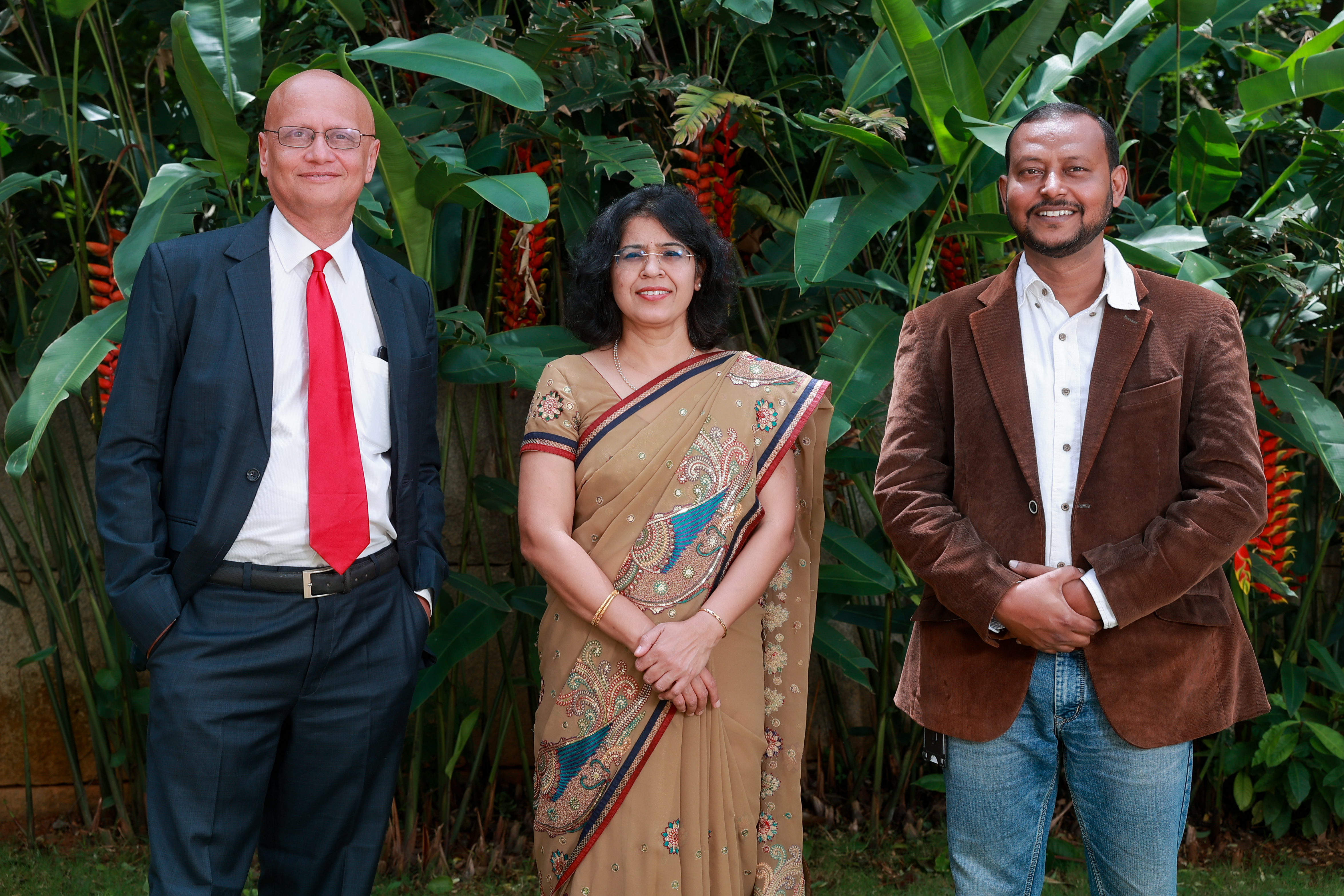
05th, October 2026: Eyestem Research Private Limited, a pioneering biotechnology company developing advanced scalable cell therapy solutions for blindness caused by dry age-related macular degeneration, announced promising clinical findings from its randomized Phase 2 clinical trial of Eyecyte–RPE™ for Geographic Atrophy (GA) secondary to dry age-related macular degeneration (AMD). The interim results were presented by Dr. Ritesh Narula, Co-Principal Investigator of the trial, at EURetina 2026 in Vienna, Austria. With the Phase 2 trial progressing, Eyestem is ready to file for its US Investigational New Drug (IND) application in early 2027 for treating Geographic Atrophy and related vision loss.
The randomized controlled Phase 2 trial has recruited 24 subjects, with 15 in the treatment arm and 9 in the natural history control arm.
Eyecyte–RPE™ has shown an excellent overall safety profile in the Phase 2 study consistent with the safety profile in the preceding Phase 1 clinical trial. Seven different surgeons have performed these surgeries using Eyestem’s patent-pending surgical technique.
The visual acuity gains observed in Phase 1 have continued with longer follow-up. Seven subjects have shown an improvement of 13 letters at 12 months follow-up vs. baseline, while four subjects who completed 18 months have maintained an improvement of 15.3 letters.
The visual acuity gains observed in Phase 2 are consistent with those seen in Phase 1, with three subjects who completed six months of follow-up demonstrating a 16-letter gain vs. baseline. 12 subjects completed 6 months across both phases with an average improvement of 13.8 letters.
Commenting on the clinical progress, Dr. Jogin Desai, Founder and CEO, Eyestem, said, “Early results from the Phase 2 clinical study build on the highly promising Phase 1 results, achieving an important milestone for Eyestem’s geographic atrophy program. We are encouraged to see the gains sustained over longer follow-up periods coupled with a good safety profile. Together, these findings give us greater confidence in the potential of Eyecyte–RPE™ to meaningfully change the treatment landscape for patients with geographic atrophy across the world.”