


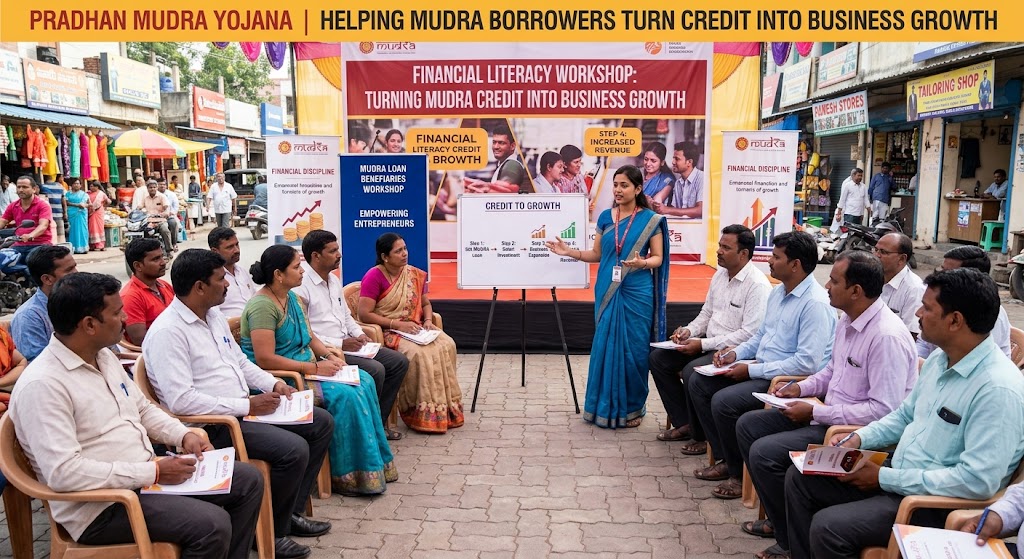
New Delhi: Access to a business loan can provide a much-needed boost to a small entrepreneur, but knowing how to use and manage that money can be just as important. With this in mind, Finance Minister Nirmala Sitharaman has asked banks to step up financial literacy efforts for beneficiaries of the Pradhan Mantri MUDRA Yojana.
The focus is on helping small borrowers understand formal banking, manage their loans responsibly and make informed financial decisions as their businesses grow. The Finance Minister has called for financial literacy programmes to be taken to every state so that entrepreneurs can better understand the opportunities and responsibilities that come with institutional credit.
For many micro and small business owners, a MUDRA loan may be their first meaningful connection with the formal financial system. The money can help a shop owner purchase equipment, a manufacturer increase production, a service provider expand operations or an entrepreneur invest in a new business activity. However, without adequate financial awareness, borrowers may find it difficult to plan repayments, manage cash flows or make the best use of available banking facilities.
The proposed financial literacy push aims to bridge this gap. Better awareness can help entrepreneurs understand interest rates, repayment schedules, credit records, digital banking and other financial services. It can also encourage borrowers to maintain regular repayments and develop a stronger relationship with formal lenders.
Timely repayment is particularly important for entrepreneurs who want to expand in the future. A good repayment record can help establish creditworthiness and make it easier to seek larger loans when a business reaches the next stage of growth.
The objective is therefore not simply to increase awareness about MUDRA loans. It is to help beneficiaries use credit as a tool for building sustainable businesses. When borrowers understand how to plan their finances and use loans productively, the benefits can extend beyond the immediate funding received.
The Pradhan Mantri MUDRA Yojana, launched in 2015, was designed to provide institutional credit to micro enterprises without the need for traditional collateral. The scheme supports businesses across manufacturing, trading and services, as well as activities allied to agriculture.
Over the years, MUDRA has become an important source of formal finance for small entrepreneurs. According to government data, more than 59 crore MUDRA loans amounting to over Rs 41 lakh crore had been sanctioned by June 2026.
The growing scale of lending also increases the importance of financial education. As more entrepreneurs enter the formal credit system, they need the knowledge to understand their borrowing, repayment obligations and wider financial options.
The initiative could have a particularly important impact at the local level. Small businesses often operate within communities, serving local customers and creating employment. When such enterprises receive appropriate finance and are able to manage it effectively, additional investment can translate into higher production, better services and more livelihood opportunities.
Financial literacy can also help reduce dependence on informal borrowing. Entrepreneurs who understand formal banking products and maintain a healthy credit history may have greater opportunities to access institutional finance instead of relying on potentially expensive informal sources.
For banks, stronger engagement with MUDRA borrowers can also create a more informed customer base. Financially aware customers are better positioned to use digital payments, savings products, insurance and other formal financial services as their businesses develop.
The larger objective is to make financial inclusion more meaningful. Providing credit is an important first step, but ensuring that entrepreneurs understand how to use that credit responsibly can determine whether it becomes temporary financial support or a foundation for long-term business growth.
By strengthening financial literacy alongside access to MUDRA credit, the government and banks are looking to give small entrepreneurs not only access to finance, but also greater confidence to manage it, expand their businesses and contribute to the wider economy.