


New Delhi, Sep 03: India Health 2026, organised by Informa Markets in India, concluded at Bharat Mandapam, New Delhi. The third edition brought together over 300 domestic and international brands and more than 8,000 healthcare professionals, creating a comprehensive platform for healthcare providers, manufacturers, clinicians, procurement leaders, policymakers, distributors, innovators and international stakeholders to engage across the healthcare value chain. The event witnessed a 38% increase in unique visitors compared with the previous edition.
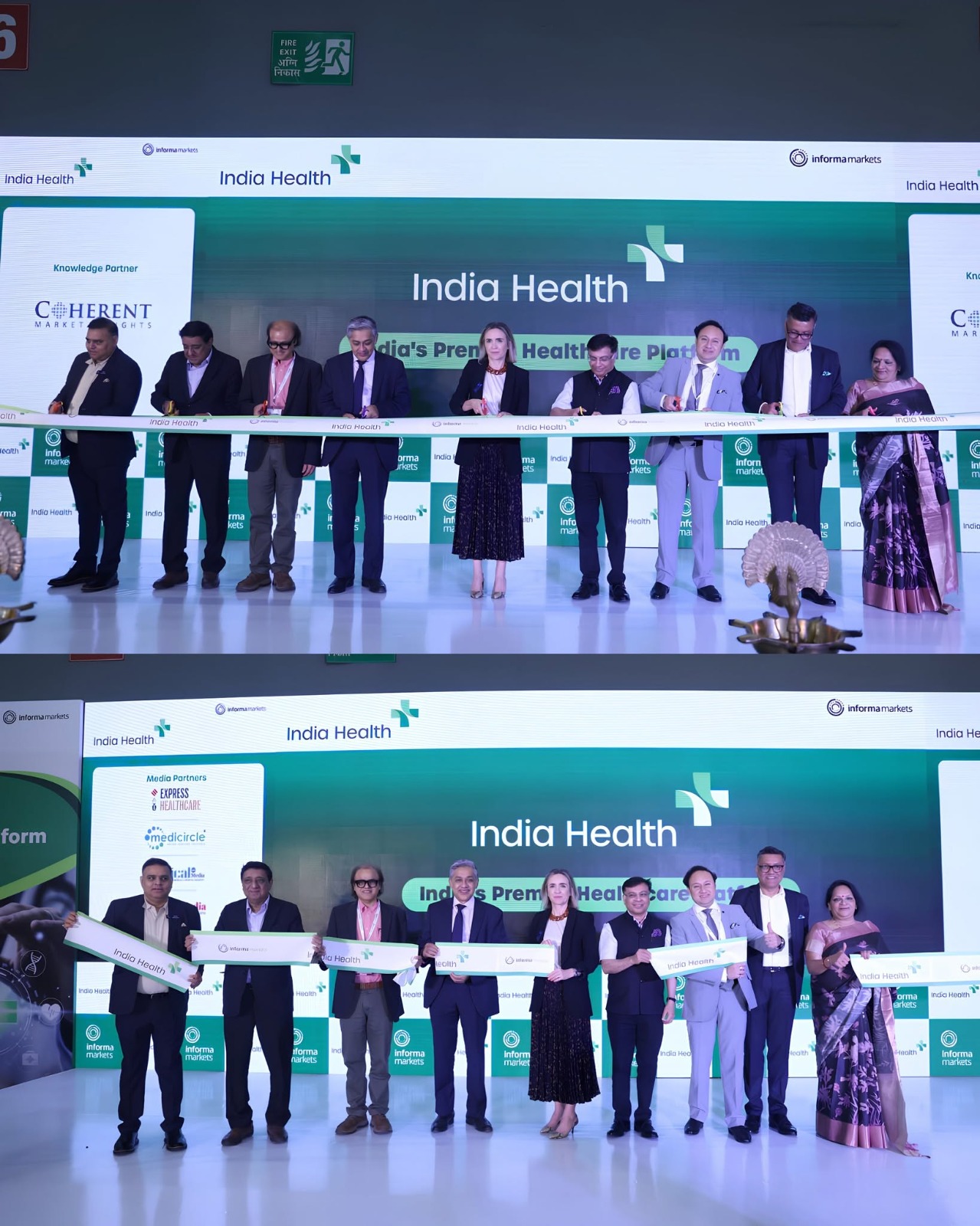
The inaugural session saw the presence of Dr. Jitendra Sharma, MD, Founder and CEO, AMTZ; Dr. Sunil K. Khetarpal, Deputy Director General, AHPI; Mr. Nital Patel, Secretary, ADMI; Dr. Rajiv Chhibber, Vice President, Sahajanand Medical Technologies; Mr. Rajiv Nath, Managing Director, Hindustan Syringes & Medical Device Ltd & Forum Coordinator AIMED; Prof. Dr. Rajendra Pratap Gupta, Founder and Chairman, Health Parliament and Academy of Digital Health Sciences; Dr. Annie Kumar, National President, TNAI; Mr. Yogesh Mudras, Managing Director, Informa Markets in India, Ms. Solenne Singer, Senior VP, inD Group and Mr. Rahul Deshpande, Senior Group Director, Informa Markets in India.
India Health 2026 showcased the breadth of the healthcare sector, including medical-device manufacturing, diagnostics, medical imaging, surgical technologies, digital health, artificial intelligence, hospital infrastructure, and wellness. The exhibition connected technology providers with healthcare institutions and decision-makers, while providing opportunities to discover new solutions, explore sourcing requirements and build commercial and strategic relationships.
A defining moment of the edition was Time Medical’s unveiling of its first-ever Made-in-India CT scanner, highlighting the growing emphasis on domestic medical-device manufacturing and the development of capabilities across the value chain. The focus was further reinforced through the Medical Manufacturing Pavilion, where companies showcased their manufacturing capabilities and innovations. With India’s medical-devices market projected to reach approximately USD 30 billion by 2030, the growing attention to local production and technology development comes at a significant point in the evolution of the sector.
Commenting on the conclusion of India Health 2026, Mr. Yogesh Mudras, Managing Director, Informa Markets in India, said,
“India Health 2026 has demonstrated the strength, diversity and growing ambition of India’s healthcare and MedTech sector. The increased engagement from across the industry, alongside the participation of manufacturers, healthcare providers, innovators, policymakers and international stakeholders, reflects the importance of platforms that bring technology and healthcare needs together.
“What stood out at this edition was the breadth of the opportunity from domestic medical-device manufacturing and advanced diagnostics to AI, digital healthcare and new models of clinical care. The conversations also made clear that technology alone will not define the next phase of healthcare growth. Manufacturing capabilities, skilled professionals, resilient supply chains, sustainable business models and collaboration across the ecosystem will be equally important. As we look ahead, our focus will remain on creating platforms that enable meaningful business connections, accelerate technology adoption, strengthen manufacturing capabilities and facilitate global collaboration. India Health will continue to support the partnerships and conversations that can contribute to the next phase of India’s healthcare and MedTech journey,” he added.
The exhibition also showcased the convergence of healthcare and emerging technology. Exhibitors including DKS Ortho, DRGEM Healthcare, FaceEcho.AI and Hamdard presented solutions across orthopaedics, medical imaging, AI-enabled healthcare and wellness. Advanced surgical technology was also represented through the Euler Advanced Bipolar and Ultrasonic Energy Generator, listed on the Government e-Marketplace.
International engagement formed another important dimension of the exhibition. The participation of the Dubai Health Authority strengthened dialogue around healthcare collaboration between India, the UAE and the wider international community. The combination of domestic manufacturing and international participation indicated the growing interaction between local capabilities and global healthcare markets.
Business engagement remained central to the event with buyers, procurement leaders, distributors and healthcare decision-makers connecting with manufacturers and technology providers around sourcing, technology adoption and potential partnerships.
While the exhibition demonstrated what is changing in healthcare today, the conference programme examined what comes next. Themed ‘Driving Innovation to Shape the Future of Clinical Care’, the conference brought together healthcare leaders, clinicians, technology experts and industry stakeholders for discussions on how innovation can translate into better clinical outcomes, more efficient delivery and wider access to care.
Artificial intelligence and digital transformation emerged as key drivers of this change. Discussions examined AI-enabled clinical decision support, predictive analytics, digital diagnostics and medical imaging, alongside electronic medical records, interoperability, smart hospitals, robotics and tele-ICU models. Importantly, the conversations also addressed the infrastructure required to support digital adoption, including cybersecurity, data governance and secure healthcare systems.
The discussion then moved from technology to how healthcare is delivered and scaled. Sessions examined precision diagnostics, genomics, personalised medicine and minimally invasive and robotic-assisted procedures, alongside developments in cardiovascular care, orthopaedics, critical care, oncology, diabetes, fertility, women’s health and neurosciences. Discussions on Tier 2 and Tier 3 markets considered expansion, pricing, payer mix, workforce availability and technology-enabled care, highlighting the challenge of extending quality healthcare while maintaining sustainable operating models.
The wider systems supporting that expansion also came under discussion. Supply-chain resilience, localisation versus global sourcing, supplier diversification, digital visibility and risk mitigation highlighted the importance of reliable healthcare infrastructure, while conversations around medical education and workforce development explored AI-enabled learning, simulation, immersive technologies and the evolving skills required in a digitally enabled healthcare environment.
India Health 2026 concluded with a view of a healthcare sector moving towards greater integration between manufacturing, technology, clinical care and access. By bringing together those developing healthcare solutions, those adopting them and those shaping the systems around them, the exhibition reinforced the importance of collaboration in turning innovation into scalable and sustainable healthcare outcomes.