


International partnership set to simplify access to microgravity environment for in-demand commercial research and manufacturing, as part of an in-orbit services market projected to be worth US$4.6 billion as soon as 2030.
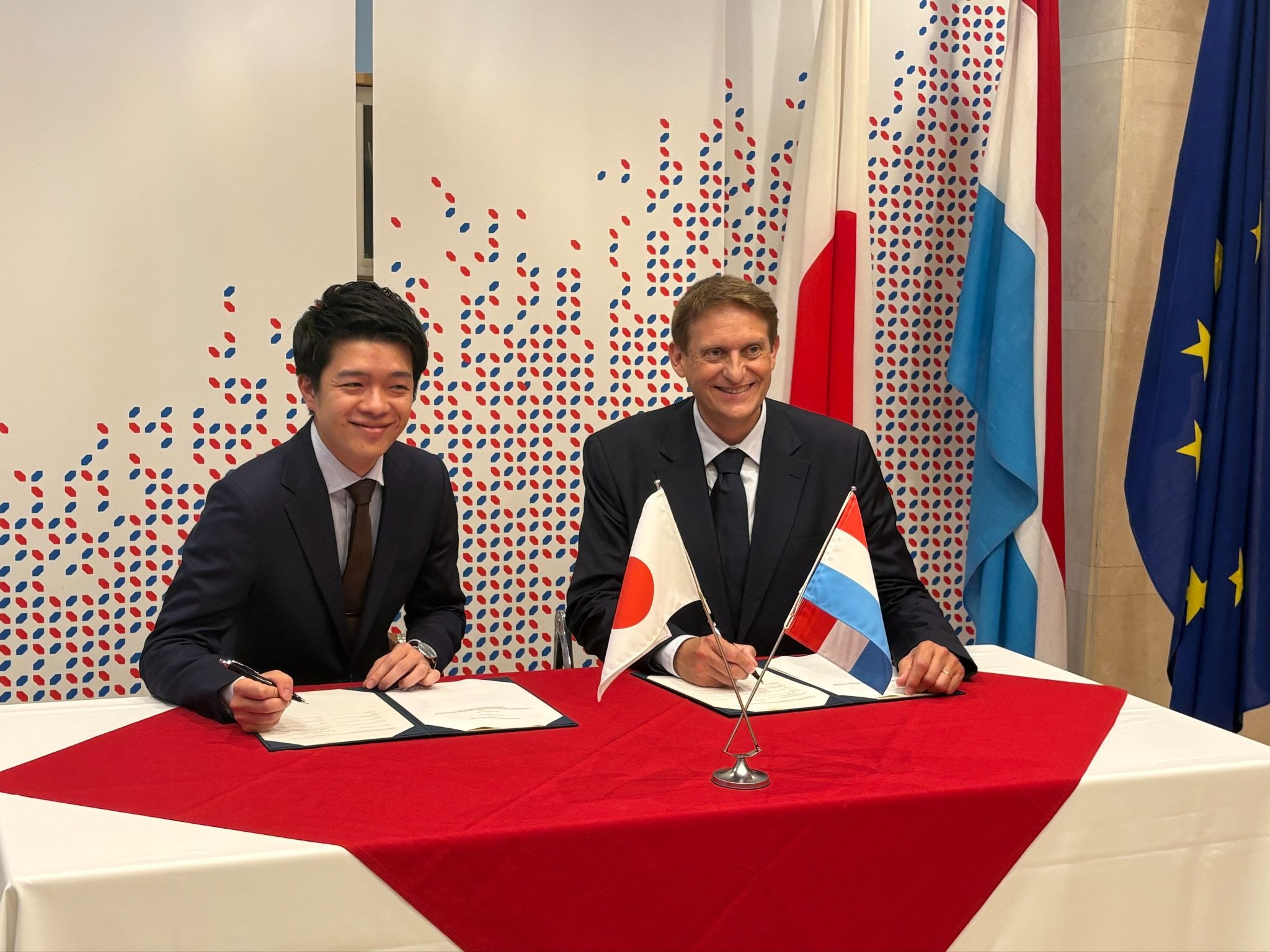
LUXEMBOURG, 9th July 2026 – A Japanese firm pioneering the development of atmospheric technologies for returning items from space, ElevationSpace, has today announced a partnership agreement with Luxembourg-based Space Cargo Unlimited, a European leader in commercial microgravity research and in-space manufacturing.
The Memorandum of Understanding (MoU) will enable jointly defined customer requirements for future services and see ElevationSpace explore the integration of Space Cargo Unlimited’s autonomous payload platform, known as BentoBox, into the company’s planned spacecraft. In parallel, Space Cargo Unlimited will study the development of a BentoBox configuration optimised for ElevationSpace’s vehicle. This shared vision seeks to capitalise on the growing demand for commercial activity in low Earth orbit, lowering the technical and operational barriers that have traditionally limited market access
ElevationSpace Inc. is Japan’s first private company developing atmospheric re-entry and recovery technologies for returning materials and products manufactured or tested in space.
The company’s CEO, Ryohei Kobayashi stated, “We are honored to announce this collaboration with Space Cargo Unlimited, a company that has established a leading position in Europe’s in-orbit demonstration and experimentation market. By combining our precise lift-guided re-entry and return capabilities with the BentoBox platform, we believe we can significantly lower the barriers to utilising space.
Achieving our mission of ‘Create a world where everyone can live in space’ requires an infrastructure that enables every industry on Earth to benefit from the space environment. Together, we look forward to leading the development of that infrastructure.”
According to various industry forecasts, the global in-space manufacturing market could reach US$4.6 billion by 2030 and expand to more than US$60 billion by 2040, reflecting the industry’s transition from experimental missions to scalable commercial manufacturing. As the sector grows, routine and reliable return capabilities will become increasingly important for industries such as biotechnology, pharmaceuticals and advanced materials, where products manufactured or tested in microgravity must be recovered for analysis and commercial use.
Space Cargo Unlimited’’s BentoBox solution provides a standardised payload platform for in-space testing and manufacturing, allowing customers to send experimental samples to space without requiring extensive expertise in flight-qualified hardware development. The company has established a strong position within the European space ecosystem through pioneering commercial missions, including Mission WISE, which successfully sent grapevine canes to the International Space Station (ISS) for a 12-month study, building on its team’s decades of experience in microgravity developments.
Space Cargo Unlimited co-founder & CEO, Nicolas Gaume commented, “We are now entering the commercial microgravity era. As more industries recognise the value of in orbit services, the challenge is no longer proving what’s possible, but making access reliable, repeatable and commercially viable.
By combining Space Cargo Unlimited’s microgravity production platform with ElevationSpace’s innovative return capabilities, we ensure that highly sensitive payloads, such as pharmaceutical and biotechnology samples, can be returned safely to Earth, creating a stronger foundation for the next generation of commercial space services.”
Today’s announcement marks an important step towards a commercially sustainable microgravity economy. By designing ElevationSpace’s future free-flyer platform to accommodate BentoBox from the outset, the partnership adopts a customer-first approach that minimises payload redesigns and integration challenges. The result will be shorter lead times, lower costs and a more scalable commercial service, making it easier for organisations of all sizes to access the benefits of microgravity research and manufacturing.