


Mumbai, Apr 28: Homi Bhabha State University, in partnership with TeamLease EdTech, successfully hosted an AI Symposium and Business AI Hackathon for students enrolled in its BSc Business AI programme, marking an early push toward application-led learning in undergraduate education. A milestone experience in the academic journey of Business AI students, the initiative emphasised a “learning by doing” approach, enabling participants to move beyond classroom instruction to applied problem-solving.
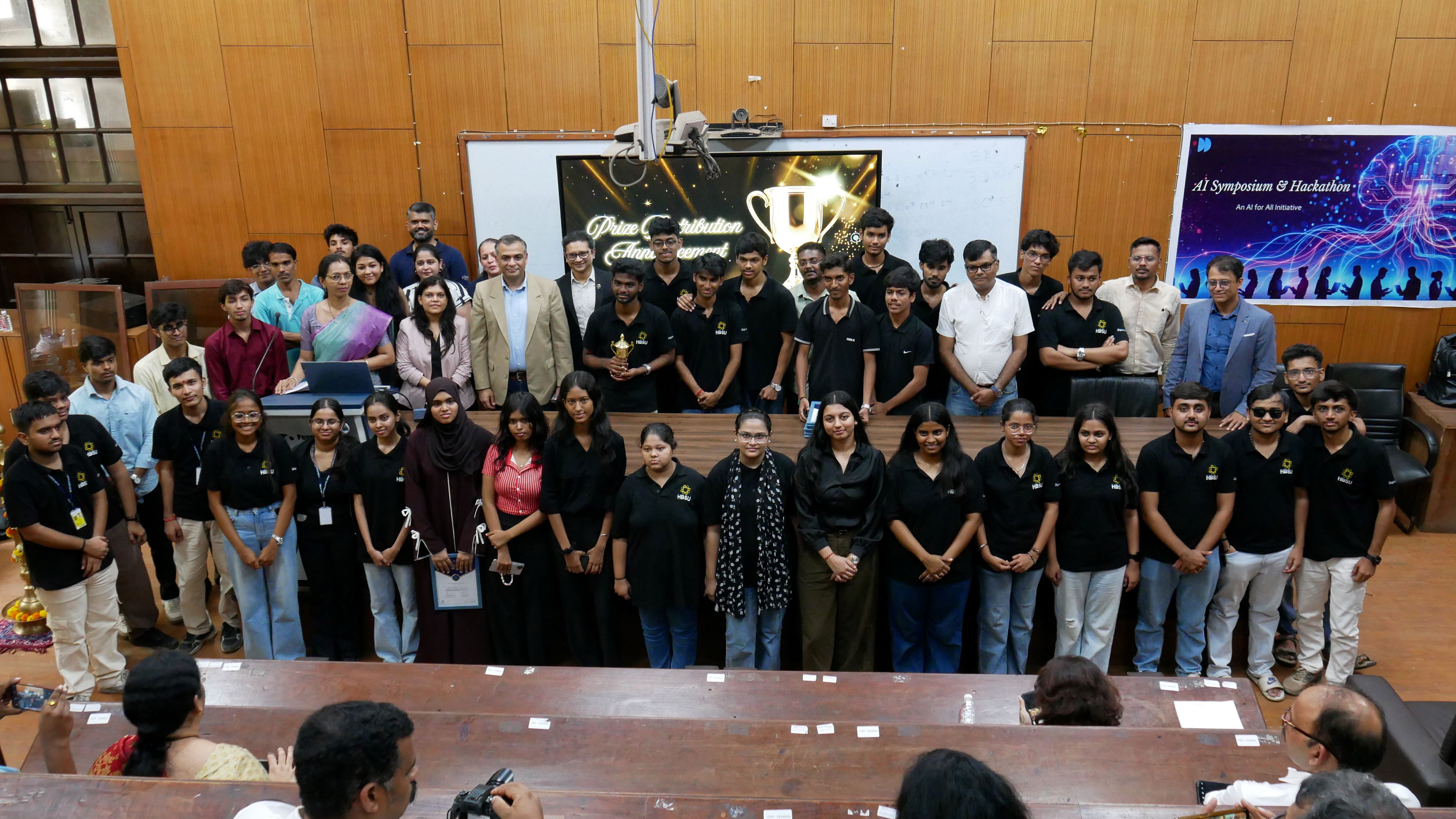
The event brought together students who developed AI-driven solutions addressing business and societal problem statements. As part of Maharashtra’s first undergraduate Business AI programme, the initiative combined technical AI learning with practical business applications, allowing students to convert foundational concepts into working solutions within a structured environment.
During the hackathon, students worked in teams across 10 thematic tracks, building solutions using tools and techniques covered as part of the program. The projects were evaluated by a jury comprising academic and industry experts, including Aditee Rele (Executive Leader in Technology, Microsoft) and Hrishi Gandhi (Chief Growth Officer, Leap India), with a focus on problem-solving approach, usability, and clarity of presentation.
Commenting on the initiative, Shantanu Rooj, Founder and CEO, TeamLease EdTech, said,
“We are seeing a clear shift in how employability is being built within higher education. Our research indicates that traditional academic metrics explain only about 6% of actual learning effort, while applied learning signals such as projects, engagement, and problem-solving account for nearly 36%. Early exposure to application-led environments allows students to develop demonstrable capabilities beyond theoretical understanding. Integrating such experiences within the first year can significantly improve role readiness and reduce the gap between education and employment.”
Prof. Rajnish Kamat, Vice Chancellor, Homi Bhabha State University, added,
“At Homi Bhabha State University, we are consciously embedding application-led learning early in the academic journey. This approach is aligned with the National Education Policy 2020, which emphasises experiential learning and industry integration as key to improving graduate outcomes. Our first-year students got the opportunity to engage with real-world problems, work collaboratively, and translate classroom learning into tangible outcomes. Such experiences are critical in shaping not just technical competence, but also problem-solving ability and confidence, which are essential for future-ready graduates.”
The hackathon moved beyond traditional assessment formats by focusing on hands-on learning experiences. Students were evaluated not just on conceptual understanding, but on their ability to apply AI in practical scenarios, structure problem-solving approaches, and build usable solutions.
Participants developed their first practical AI projects, gained exposure to live problem contexts, and received feedback from domain experts – key elements increasingly seen as critical for building portfolios and improving employability outcomes.
The initiative reflects a broader shift in higher education toward integrating industry-aligned, application-based learning frameworks. Institutions are progressively adopting experiential models such as hackathons, apprenticeships, and live projects to bridge the gap between academic learning and workforce readiness. As these approaches scale, early exposure to applied learning environments is expected to play a more central role in strengthening graduate readiness, particularly in technology-led domains where demonstrable skills and practical experience are increasingly influencing hiring outcomes.
