


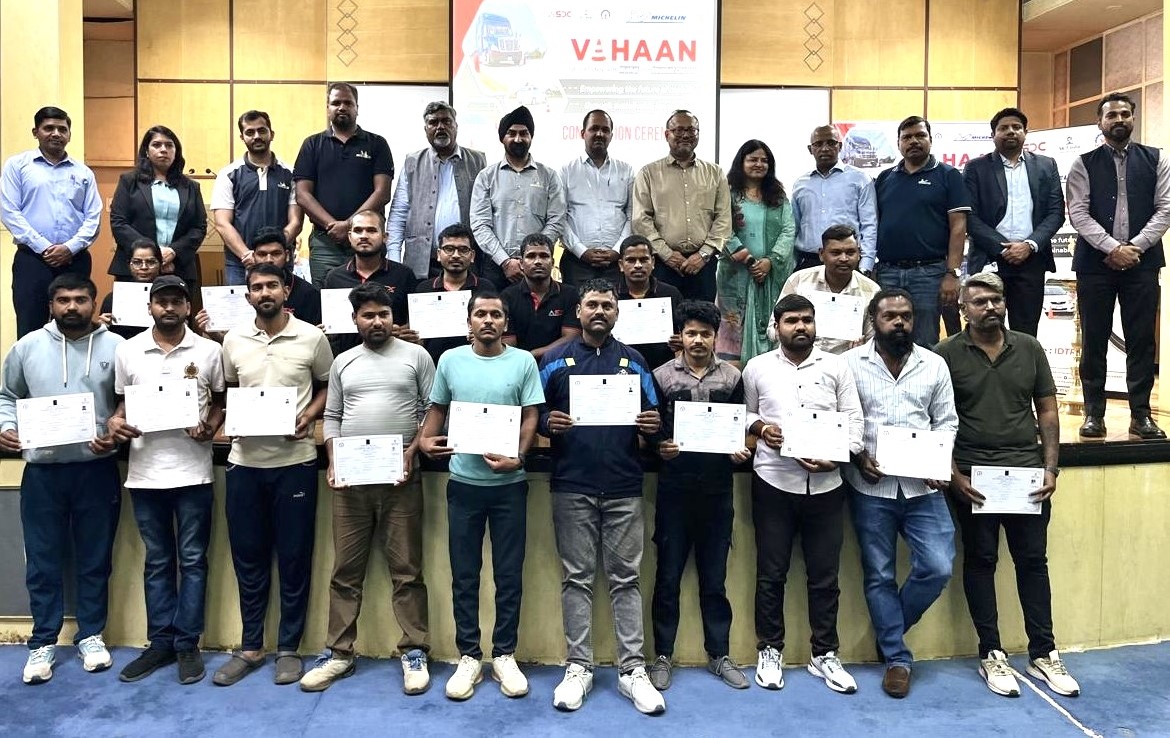
New Delhi, Mar 23: Automotive Skills Development Council (ASDC), in partnership with Michelin India, successfully concluded the convocation ceremonies for Project Vahaan and Project EV Shiksha in Pune, marking a significant milestone in industry-led skill development aligned with India’s rapidly transforming mobility and automotive ecosystem. The events highlighted the measurable impact of structured, industry-aligned training in enhancing employability, promoting road safety, and supporting sustainable and electric mobility. India’s mobility sector is witnessing growing demand for skilled drivers, safety-oriented road users, and electric vehicle ready technicians. However, limited access to formal training continues to constrain livelihood opportunities for youth from low-income families. Recognising this gap, Michelin India supported two targeted skilling initiatives in Pune with a strong focus on economically weaker sections, where employment plays a critical role in family stability.
Project Vahaan focused on building safe, responsible, and employable drivers through certification-aligned Level 4 training for Light Motor Vehicle and Heavy Motor Vehicle drivers. A total of 35 candidates were trained through a blend of classroom learning and hands-on practice covering traffic regulations, defensive driving techniques, road safety practices, and soft skills.
Project EV Shiksha was designed to build future-ready technical skills aligned with the growing electric vehicle ecosystem. Under the Electric Vehicle Service Technician Level 4 program, 30 candidates received theoretical and practical exposure to high-voltage safety protocols, fire safety, routine EV maintenance, minor repairs, basic diagnostics support, safe handling of EV components, and workplace readiness skills. The convocation ceremony for EV Shiksha was held at MIT Art, Design and Technology University, while the ceremony for Project Vahaan took place at MIDC, Kasarwadi, Chinchwad. The events brought together representatives from Automotive Skills Development Council (ASDC), Michelin India, training partners, and beneficiaries. The programmes featured formal inaugurations, addresses by industry and skilling ecosystem leaders, certificate distribution, and interactions with trained candidates—reinforcing the strong linkage between skill development initiatives and tangible employment outcomes. Shantanu Deshpande, Managing Director, Michelin India said, “At Michelin India, we believe the future of mobility will be shaped not only by technology but also by people equipped with the right skills. Through initiatives like Project Vahaan and EV Shiksha, in partnership with ASDC, we are committed to strengthening skill development for young talent and preparing them for the evolving mobility ecosystem. By enabling access to this structured training, we aim to strengthen road safety through better tyre care and maintenance, support the transition to electric mobility, and create meaningful livelihood opportunities.”
Addressing the occasion, Vinkesh Gulati, Chairperson, ASDC said, “These initiatives demonstrate how industry-aligned skilling can deliver outcomes beyond training numbers. By integrating safety, employability, and future mobility skills, we are preparing a skilled workforce capable of supporting the future of India’s automotive and mobility ecosystem. Through this approach, we are enabling youth to build dignified careers while also contributing to safer roads and a greener, more sustainable mobility landscape.”
Arindam Lahiri, CEO, ASDC added, “Through Project Vahaan and EV Shiksha, ASDC continues to focus on impact-driven skilling. The combination of certified training, industry relevance, and inclusion ensures long-term value for both learners and the mobility sector.”
Together, the two initiatives have enabled the training of 65 candidates, contributing to workforce readiness, road safety awareness, green mobility support, and meaningful social transformation at the family and community level.
