

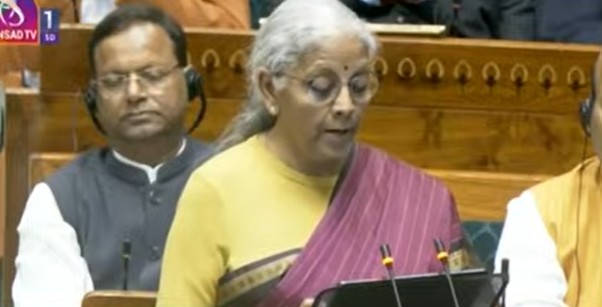
Feb 1: The Union Budget 2026–27 has placed the tourism sector firmly at the center of India’s economic growth strategy, recognizing its vast potential to generate employment, boost regional development, and enhance India’s global soft power. Building on previous fiscal commitments, the government has announced targeted investments in infrastructure development, digital transformation, skill enhancement, and niche tourism, signaling a long-term vision to position India as a premier global tourism destination.
With tourism already contributing significantly to GDP and job creation, the latest budget reinforces policy continuity while introducing new initiatives aimed at sustainability, inclusivity, and global competitiveness.
Tourism Budget 2026–27: Strategic Vision and Continuity
In Union Budget 2025–26, the tourism sector received an allocation of ₹2,541.06 crore, primarily focused on improving infrastructure, connectivity, and destination development. The 2026–27 budget builds on this momentum, deepening reforms and expanding initiatives through public-private partnerships (PPPs) and an innovative “challenge mode” approach to destination development.
This framework encourages competition, innovation, and accountability, ensuring that funds are deployed efficiently while leveraging private sector expertise.
Infrastructure & Destination Development: Building World-Class Tourist Assets
Development of 50 Top Tourist Destinations
One of the most significant announcements in the Union Budget 2026–27 is the development of 50 top tourist destinations across India. These destinations will be upgraded with world-class infrastructure, improved connectivity, last-mile access, and sustainable facilities to meet international standards.
Swadesh Darshan 2.0: Sustainable Tourism at the Core
The budget reinforces the Swadesh Darshan 2.0 scheme, with a strong emphasis on:
Sustainable tourism practices
Community participation
Eco-friendly infrastructure
Cultural preservation
This approach ensures tourism growth without compromising environmental and social integrity.
PRASHAD Scheme: Strengthening Pilgrimage Tourism
Under the PRASHAD (Pilgrimage Rejuvenation and Spiritual Augmentation Drive) scheme, the government continues to enhance infrastructure at major pilgrimage and spiritual destinations. Improved amenities, crowd management systems, and heritage conservation are expected to significantly boost religious tourism, one of India’s strongest travel segments.
Skill Development & Training: Investing in Human Capital
Training 10,000 Tourist Guides
To address skill gaps and improve visitor experience, the budget announces a pilot project to train 10,000 tourist guides. The program will focus on:
Multilingual capabilities
Digital tools and storytelling
Local history, culture, and sustainability
Global service standards
This initiative is expected to create direct employment while uplifting local communities.
National Institute of Hospitality
A major institutional reform is the establishment of a National Institute of Hospitality, aimed at:
Standardizing hospitality education
Enhancing service quality
Supporting innovation and research
Meeting global tourism workforce standards
This move positions India to compete with leading global hospitality hubs.
Regional & Niche Tourism: Diversifying India’s Tourism Portfolio
Medical Tourism: Five Regional Hubs
Recognizing India’s strength in affordable, high-quality healthcare, the budget proposes the development of five regional medical tourism hubs. These hubs will integrate:
Hospitals and wellness centers
Hospitality infrastructure
Digital health facilitation
International patient services
This initiative strengthens India’s position as a global medical tourism destination.
Blue-Green Integrated Tourism Circuits
The promotion of Blue-Green Integrated Tourism Circuits aims to combine:
Coastal (blue) tourism
Forest, river, and eco (green) tourism
This integrated approach enhances experiential travel while promoting conservation-led development.
Heritage & Cultural Tourism
The budget also emphasizes the restoration and enhancement of heritage sites, supporting India’s rich cultural legacy and encouraging longer tourist stays.
Focus on Emerging Regions: Northeast and Jammu & Kashmir
To ensure balanced regional growth, the government has increased marketing and infrastructure support for Northeast India and Jammu & Kashmir. Improved connectivity, destination branding, and safety infrastructure are expected to unlock tourism potential in these regions, driving local employment and entrepreneurship.
State-Level Spotlight: Kerala’s Tourism Push
At the state level, Kerala’s tourism budget allocation has increased to ₹413.52 crore for 2026–27, reflecting strong alignment with the national vision. Key focus areas include:
Aggressive domestic and international marketing
Expansion of responsible tourism initiatives
Community-based tourism models
Sustainability and experiential travel
Kerala’s approach serves as a blueprint for other states seeking inclusive and eco-conscious tourism growth.
Public-Private Partnerships and Challenge Mode Development
A defining feature of the 2026–27 tourism strategy is the use of public-private partnerships and challenge mode funding, where destinations compete based on:
Innovation
Sustainability
Employment impact
Community involvement
This model ensures transparency, scalability, and measurable outcomes.
Conclusion: Tourism as a Pillar of India’s Growth Story
The Union Budget 2026–27 firmly establishes tourism as a strategic economic pillar, not merely a service sector. By combining infrastructure investment, skill development, digital initiatives, and regional inclusion, the government aims to create a tourism ecosystem that is globally competitive, environmentally responsible, and employment-intensive.
With sustained policy focus and effective execution, tourism is set to play a transformative role in India’s journey toward inclusive growth, global visibility, and long-term economic resilience.