

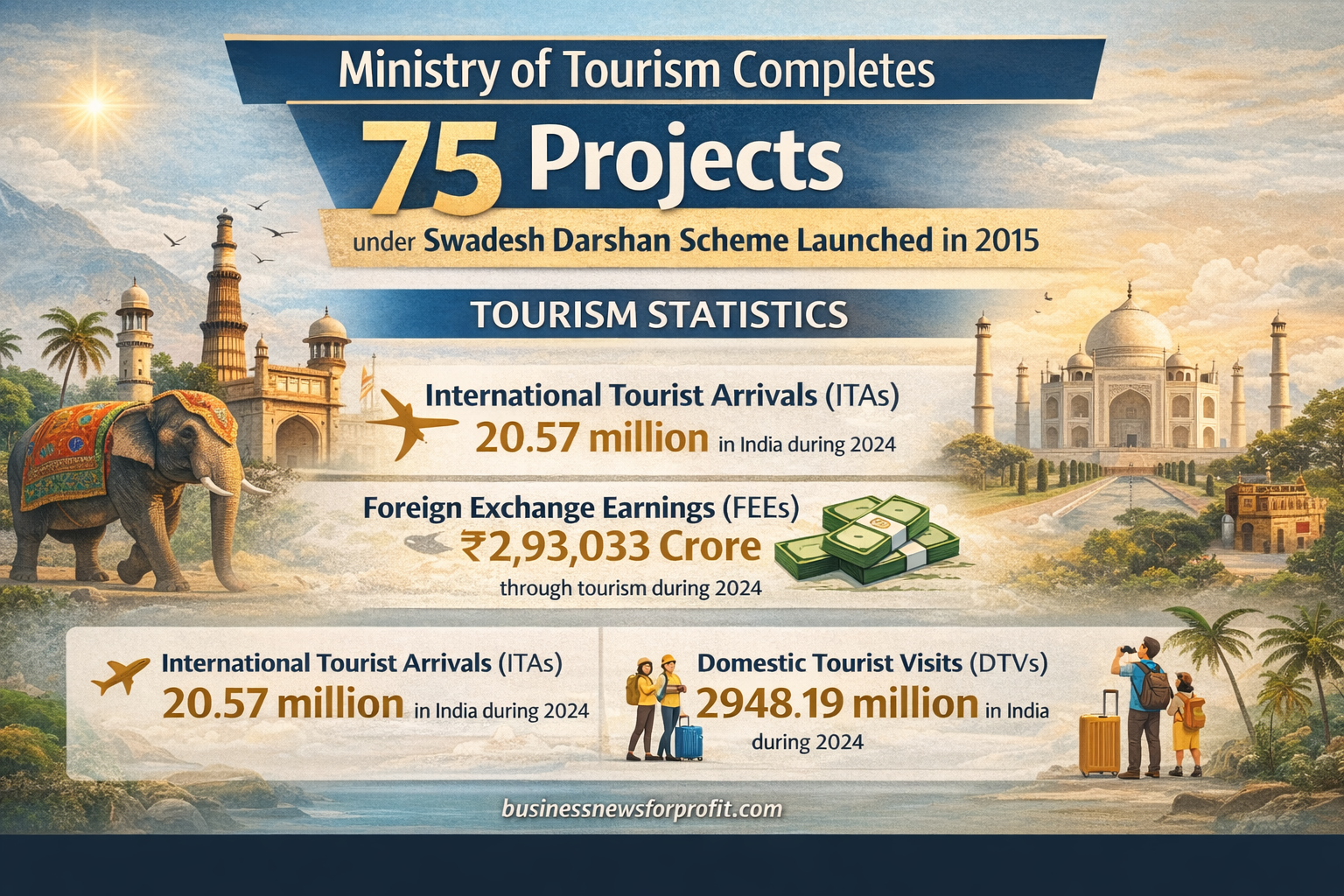
India’s tourism infrastructure drive is gathering momentum, with the Ministry of Tourism completing 75 projects under the Swadesh Darshan Scheme, a flagship programme launched in 2015 to develop theme-based tourist circuits across the country.
According to official data, 76 projects worth ₹5,290.33 crore were sanctioned under the original Swadesh Darshan framework, with all but one now physically completed. The scheme has since been revamped as Swadesh Darshan 2.0, reflecting a sharper focus on sustainable, destination-centric tourism. Under the new version, 53 projects amounting to ₹2,208.27 crore have been approved.
Focus on sustainable destinations and iconic centres
A key feature of Swadesh Darshan 2.0 is the Challenge Based Destination Development (CBDD) initiative, designed to improve tourist experience across the entire value chain. Under CBDD, 36 projects worth ₹648.11 crore have been sanctioned across four themes: spiritual tourism, culture and heritage, vibrant villages, and ecotourism including Amrit Dharohar sites.
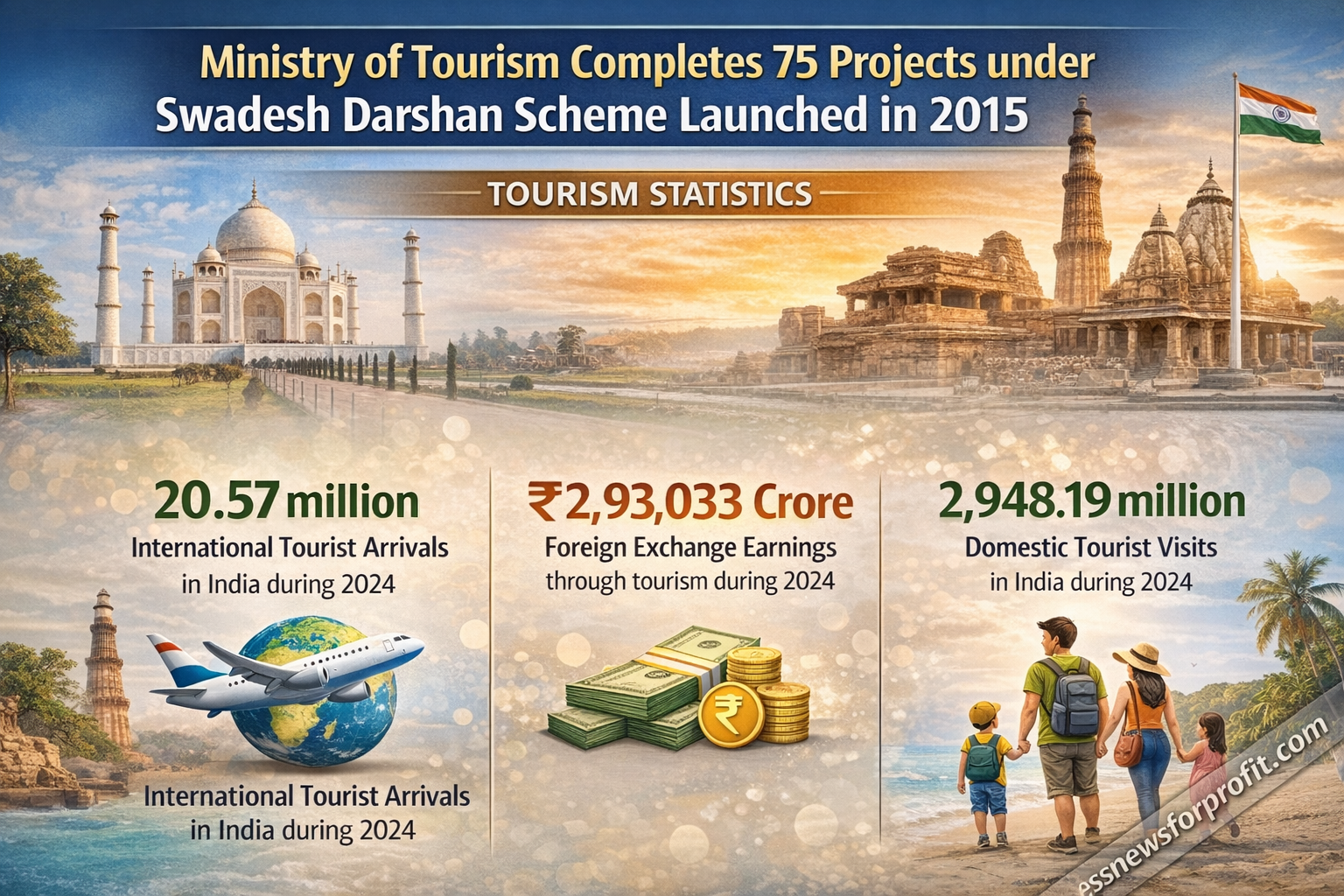
Tourism development has also received a boost through the Special Assistance to States for Capital Investment (SASCI) scheme. Following Budget 2024–25 announcements, 40 projects across 23 states have been sanctioned ₹3,295.76 crore as long-term, interest-free loans for up to 50 years. The objective is to comprehensively upgrade iconic tourist centres and position them at a global scale through branding and marketing.
In parallel, the Centre has approved the Pradhan Mantri Janjatiya Unnat Gram Abhiyan (PM-JUGA), under which the Ministry of Tourism will develop 1,000 tribal homestays. The initiative aims to improve livelihoods in tribal areas while expanding authentic tourism experiences. The programme is being implemented as a sub-scheme of Swadesh Darshan, with dedicated guidelines already issued.
Pilgrimage, infrastructure, and central agency support
Religious and spiritual tourism remains a major focus area. Under the PRASHAD scheme, 54 projects worth ₹1,726.74 crore have been sanctioned for integrated development of pilgrimage destinations, with 31 projects already completed.
Additionally, the Assistance to Central Agencies scheme has supported 66 projects worth ₹948.78 crore for tourism infrastructure developed by organisations such as the Archaeological Survey of India, Port Trusts, ITDC, and the Railways. Of these, 39 projects have been completed, while 10 have been foreclosed.
Marketing, events, and global outreach
On the promotion front, the Ministry organised Bharat Parv at Delhi’s Red Fort as part of Republic Day celebrations in January 2025, showcasing state tourism offerings under the theme “Dekho Apna Desh”. It also marked the 11th International Day of Yoga with events at 40 culturally and naturally significant tourist locations, aligning tourism with wellness and sustainability.
To tap overseas demand, the Chalo India Global Diaspora Campaign offered one lakh gratis e-tourist visas, encouraging members of the Indian diaspora to bring non-Indian friends to the country. The initiative was valid until March 31, 2025.
The Ministry has also stepped up efforts in the North-East through the International Tourism Mart. The 13th edition, held in Gangtok in November 2025, brought together domestic and international stakeholders to highlight the region’s tourism potential.
MICE and medical tourism gain ground
Positioning India as a global hub for meetings and exhibitions is another priority. The Ministry has launched the “Meet in India” sub-brand and developed a comprehensive digital MICE catalogue covering infrastructure across more than 60 cities, including G20 host cities. The Meet in India Conclave 2025, held in Jaipur, served as a key platform to advance this agenda.
Medical and wellness tourism is emerging as a strong growth segment. In 2024, India received 6,44,387 foreign tourists for medical purposes, a jump of about 252 percent compared to 2020. The government has introduced e-medical and e-Ayush visas for travellers from 171 countries, while integrating modern healthcare with traditional AYUSH systems.
Skilling and local participation
To support employment and improve visitor experience, the Ministry has rolled out the Paryatan Mitra and Paryatan Didi initiative. Around 4,382 tourism service providers have already been trained, with the programme expanded to 50 destinations nationwide. Additional skill-building programmes under the Capacity Building for Service Providers scheme and digital certification courses aim to create a professional tourism workforce, including in remote regions.
Taken together, these initiatives reflect a shift towards mission-mode tourism development, with a strong emphasis on infrastructure, sustainability, skilling, and global positioning. For the tourism industry and investors alike, the scale and breadth of the government’s push signal long-term opportunities across destinations, services, and allied sectors.