

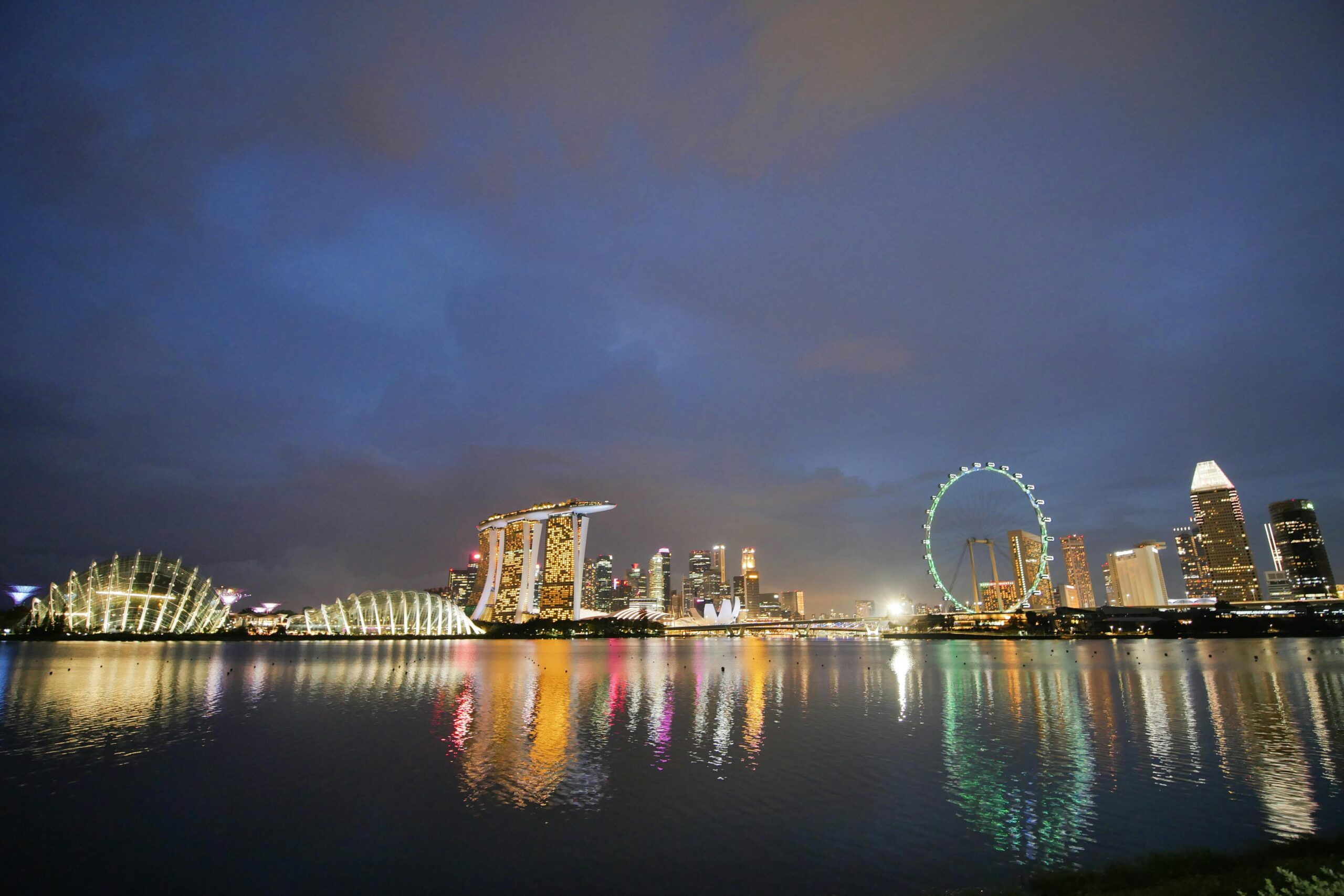
Feb 17: In an increasingly competitive global economy, cities are no longer just travel destinations—they are strategic business assets. In 2026, Singapore continues to stand out not merely as a tourism hotspot, but as Asia’s most efficient, stable, and high-performing business ecosystem.
For corporations, investors, startups, and high-net-worth individuals, Singapore represents something rare: a location where infrastructure, governance, capital markets, and lifestyle seamlessly converge to drive profitability.
For a business-focused audience, the question is no longer “Why visit Singapore?” but rather “Why aren’t we expanding there yet?”
The Strategic Advantage: Gateway to Southeast Asia’s Growth
Singapore’s geographic position places it at the heart of Southeast Asia—one of the world’s fastest-growing economic regions. With seamless connectivity to Indonesia, Malaysia, Thailand, Vietnam, and beyond, the city-state functions as a launchpad into a consumer market of more than 650 million people.
Unlike many emerging markets, Singapore offers:
Political stability
Transparent regulatory systems
World-class banking infrastructure
Strong intellectual property protections
Pro-business tax frameworks
For multinational corporations, this translates into lower operational risk and higher predictability—two critical factors when deploying capital internationally.
Marina Bay: Where Capital Meets Skyline
The transformation of Marina Bay has redefined what a modern financial district looks like. Home to global banks, sovereign wealth funds, fintech innovators, and multinational headquarters, Marina Bay symbolizes Singapore’s evolution into Asia’s premier financial nerve center.
Landmarks like Marina Bay Sands are not just architectural icons—they anchor conventions, global summits, and high-level corporate gatherings. The area also houses the Singapore Exchange, reinforcing the city’s role as a capital markets powerhouse.
Commercial real estate demand in prime districts remains resilient due to:
Regional headquarters consolidation
Fintech and AI sector expansion
Wealth management growth
Family office registrations
For property investors and REIT stakeholders, Singapore continues to demonstrate consistent rental yields and long-term value stability.
A Financial System Built for Global Confidence
Under the supervision of the Monetary Authority of Singapore, Singapore maintains one of the most robust financial regulatory systems globally. The MAS has positioned the city as a leader in:
Digital banking
Green finance
Blockchain innovation
Sustainable investment frameworks
Fintech adoption has accelerated, with digital payment platforms, wealth-tech startups, and cross-border settlement technologies scaling rapidly. As Asia’s wealth grows, Singapore has become the preferred base for private banking and asset management firms serving regional elites.
The result? A high concentration of capital, talent, and innovation within a compact, well-regulated environment.
MICE Tourism: The Billion-Dollar Business Travel Engine
Business travel in Singapore is not an auxiliary industry—it is a core economic driver. Through strategic planning by the Singapore Tourism Board, the city has positioned itself as Asia’s premier MICE (Meetings, Incentives, Conferences, Exhibitions) destination.
Global forums, fintech summits, energy conferences, and startup expos consistently choose Singapore for its:
State-of-the-art convention centers
Efficient visa policies
Premium hospitality infrastructure
Seamless public transport
Business travelers typically spend significantly more than leisure tourists, contributing to higher revenue across hospitality, aviation, retail, and fine dining sectors. Corporate travel growth directly feeds into GDP expansion and job creation, reinforcing Singapore’s status as a business-first destination.
Infrastructure That Reduces Friction
Efficiency is one of Singapore’s most valuable economic assets.
From award-winning Changi Airport to a digitally integrated transport network, the city minimizes friction for executives and investors.
Key infrastructure advantages include:
Fast airport-to-district connectivity
Smart city digital governance
High-speed internet reliability
Advanced port logistics systems
For supply chain operators and regional distributors, Singapore’s port remains one of the busiest and most technologically advanced in the world. This strengthens its appeal as a headquarters and distribution hub.
Tax Efficiency and Corporate Incentives
Singapore’s competitive corporate tax rate and clear incentive programs continue to attract multinational companies. Government-backed grants and innovation incentives encourage:
Research and development
Advanced manufacturing
Clean energy investments
Technology startups
The city’s double taxation agreements with numerous countries further enhance its appeal as a base for global operations.
For businesses comparing expansion options across Asia, Singapore often emerges as the most risk-adjusted attractive choice.
The Fintech and Startup Ecosystem
Singapore has evolved into Southeast Asia’s fintech capital. Venture capital funding remains strong, supported by:
Government co-investment schemes
Regulatory sandboxes
International accelerator programs
Startup founders benefit from proximity to investors, banks, and legal expertise within a compact urban ecosystem. The collaborative environment allows rapid scaling while maintaining regulatory compliance.
As digital banking adoption grows across Southeast Asia, Singapore-based firms are uniquely positioned to capture regional market share.
Lifestyle as a Business Asset
Corporate relocation decisions increasingly factor in quality of life—and Singapore excels here as well.
Executive families benefit from:
International schools
Advanced healthcare systems
Safety and political neutrality
Multicultural social integration
Premium districts such as Orchard Road offer world-class retail, while Sentosa provides leisure escapes minutes from the financial core.
For high-net-worth individuals and global executives, this balance between professional opportunity and lifestyle security enhances Singapore’s attractiveness as a long-term base.
Sustainability and Future-Ready Policy
Singapore is actively investing in green finance, carbon trading markets, and sustainable urban design. As ESG considerations become central to institutional investment strategies, the city’s proactive environmental policies add another layer of appeal.
Corporate sustainability mandates increasingly align with Singapore’s long-term development blueprint, making it easier for companies to meet global compliance standards.
Why Singapore Delivers Strong ROI in 2026
For business leaders evaluating expansion, Singapore offers:
Stable governance
Capital access
Strategic regional connectivity
Advanced infrastructure
High-spending business tourism
Regulatory clarity
Lifestyle appeal
Few global cities combine all these elements within such a compact and efficient framework.
Singapore is not simply a destination—it is an economic multiplier. Companies that establish operations here often find themselves better positioned to penetrate Southeast Asia’s fast-growing markets while minimizing operational risk.
Final Word: A City Built for Profit and Progress
As global capital seeks stability amid economic volatility, Singapore continues to project reliability, innovation, and long-term strategic vision.
In 2026, the city-state stands as Asia’s most balanced business ecosystem—where corporate expansion, fintech innovation, wealth management, and premium living intersect.
For investors, entrepreneurs, and multinational executives, Singapore is not just a stopover—it is a strategic decision.