

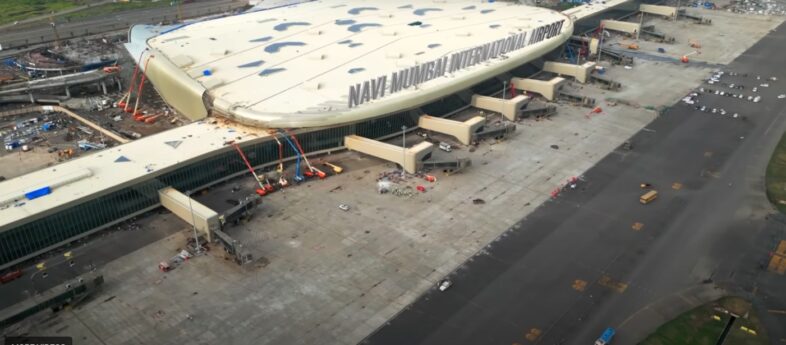
Festive Inauguration Marks the Start of Operations at NMIA with First Commercial Flight
The launch of Navi Mumbai International Airport (NMIA) marks a historic milestone in India’s aviation journey, ushering in a new era of connectivity, infrastructure development, and economic growth. Strategically located in southern Navi Mumbai, the airport has been developed to ease congestion at Chhatrapati Shivaji Maharaj International Airport (CSMIA), which has been operating beyond capacity for years.
After years of meticulous planning and execution, NMIA officially commenced commercial operations on Christmas Day, transforming long-standing vision into reality and positioning itself as a future-ready global aviation hub.
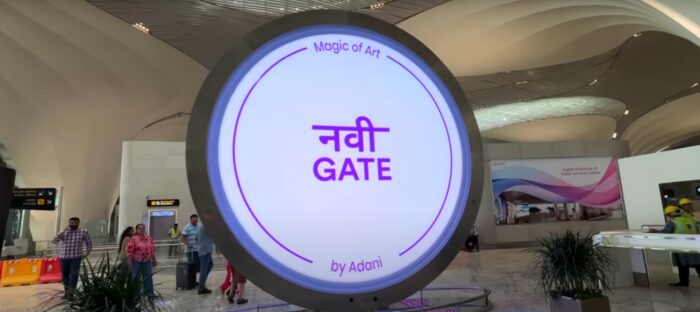
Christmas Day Launch: NMIA Welcomes Its First Commercial Flight
It was a moment of celebration and national significance as Navi Mumbai International Airport began operations in a festive atmosphere, coinciding with Christmas. The airport welcomed its first commercial arrival—IndiGo flight 6E460 from Bengaluru—at 8:00 am, marking the formal start of passenger services.
The aircraft was greeted with a traditional water cannon salute, a ceremonial aviation honour reserved for landmark occasions. Fire tenders sprayed arcs of water over the aircraft as it taxied, creating a symbolic and visually striking welcome for NMIA’s first passengers.
Ahead of the historic landing, IndiGo staff were seen cutting a cake and breaking coconuts, an auspicious tradition symbolising prosperity and new beginnings. Shortly after the arrival, NMIA recorded its first departure, with IndiGo flight 6E882 to Hyderabad taking off at 8:40 am, confirming the airport’s operational readiness for two-way commercial traffic.
Sharing real-time updates on social media, the Adani Group, which is developing the airport, stated:
“A new era for Indian aviation takes shape. After years of planning and execution, Navi Mumbai International Airport stands ready to welcome its first flight. Built to serve 90 million passengers annually by the final phase, NMIA is set to unlock new possibilities not just for Mumbai, but for the entire nation.”
Key Features and Specifications of Navi Mumbai International Airport
Designed as one of India’s most advanced airports, NMIA combines scale, technology, and sustainability.
Total Area: Approximately 1,160 hectares
Passenger Capacity: Up to 60 million passengers annually in initial phases, scalable to 90 million passengers in the final phase
Runways: Two parallel runways, each around 3,700 metres, enabling simultaneous take-offs and landings
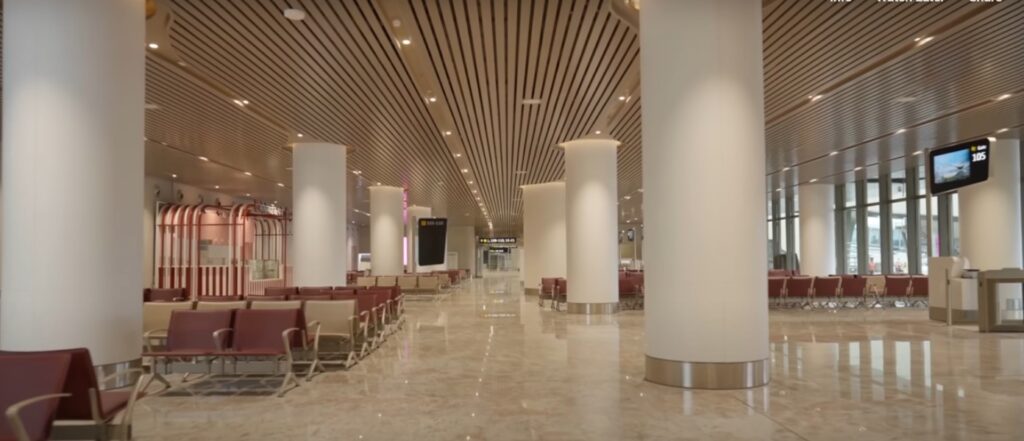
Terminal Infrastructure: Modern, spacious terminals with advanced check-in, security, and passenger processing systems
The airport integrates automated baggage handling, advanced navigation systems, and smart security infrastructure, aligning with global aviation standards while prioritising passenger comfort and efficiency.
Economic Impact on Navi Mumbai and Surrounding Regions
The operationalisation of Navi Mumbai International Airport is expected to be a major economic catalyst for Maharashtra and western India.
Job Creation and Regional Growth
The airport will generate thousands of direct and indirect jobs across aviation, logistics, hospitality, retail, transportation, and support services. Additional employment will arise in cargo handling, warehousing, and allied industries.
Investment and Business Expansion
Improved connectivity is set to attract significant domestic and foreign investments, encouraging businesses to establish operations in Navi Mumbai. This will accelerate economic diversification and position the region as a key commercial hub.
Tourism and Trade Boost
Enhanced air access will drive tourism growth, benefiting hotels, transport providers, restaurants, and local attractions while strengthening trade and commerce.
Infrastructure Development and Enhanced Connectivity
The launch of NMIA is closely linked to extensive infrastructure upgrades aimed at seamless access:
Road Connectivity: New expressways, widened arterial roads, and dedicated airport corridors
Metro Connectivity: Planned metro lines connecting key nodes of Navi Mumbai directly to the airport
Multimodal Transport: Integration with buses, ridesharing services, and last-mile connectivity solutions
These developments strengthen Navi Mumbai’s position as a well-connected urban and business destination.
Sustainability and Environmental Initiatives
Sustainability is central to NMIA’s development philosophy. The airport incorporates:
Solar energy and renewable power solutions
Rainwater harvesting and advanced water management systems
Energy-efficient terminal buildings
Robust waste management and recycling frameworks
Biodiversity protection and wildlife management plans
These initiatives position NMIA as a model for green and sustainable airport development in India.
Challenges Overcome During Development
The airport’s journey was not without obstacles. Challenges included land acquisition complexities, regulatory and environmental clearances, logistical coordination, and monsoon-related constraints. These were addressed through government intervention, stakeholder engagement, compensation frameworks, and advanced project management systems, ensuring timely execution.
Government Support and Policy Framework
Strong backing from central and state governments played a crucial role in NMIA’s development. Supportive policies such as the National Civil Aviation Policy (NCAP) and the Public-Private Partnership (PPP) model enabled funding, regulatory clarity, and political consensus, accelerating project delivery.
Future Prospects of Navi Mumbai International Airport
As passenger demand rises, NMIA is expected to evolve into a major international aviation hub, featuring:
Capacity expansion to 90 million passengers annually
New domestic and international routes
Partnerships with global and low-cost airlines
Deployment of AI, biometrics, and data analytics for smarter operations
Leadership in sustainable aviation practices
Conclusion
The launch of Navi Mumbai International Airport is a landmark achievement that reshapes India’s aviation landscape. Beginning operations on Christmas Day with its first commercial flight, NMIA symbolizes not only infrastructural excellence but also India’s ambition to build future-ready, sustainable transport hubs.
By easing congestion, enhancing connectivity, creating jobs, and unlocking economic potential, NMIA stands poised to transform air travel for Mumbai, Maharashtra, and the nation at large—truly ushering in a new era in Indian aviation.