

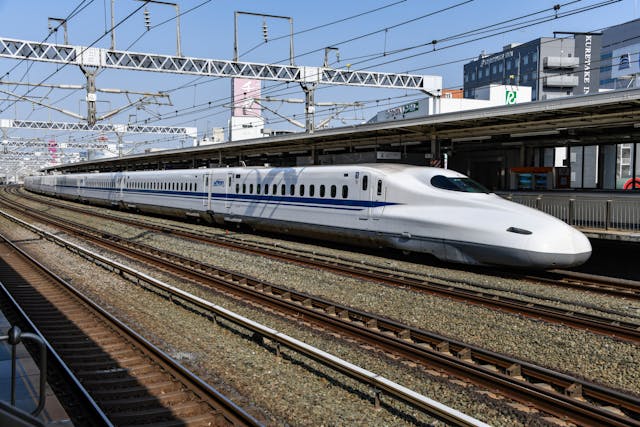
As India closes the chapter on 2025, few public institutions reflect the country’s scale of ambition quite like Indian Railways. The year marked a turning point in how rail travel is imagined, built and experienced—bringing together speed, safety, comfort and connectivity on an unprecedented scale. From high-speed trains and redeveloped stations to record-breaking bridges and advanced safety systems, the national transporter undertook a sweeping transformation aimed at reshaping both passenger and freight movement.
According to the Ministry of Railways’ year-end review, 42 major railway projects worth over ₹25,000 crore were commissioned during the year. These projects spanned innovation, indigenisation, track renewal, electrification and station redevelopment—collectively setting the stage for a new era of rail travel in India.
A New Standard of Passenger Experience
One of the most visible changes in 2025 was the continued expansion of modern train services. Indian Railways introduced 15 new Vande Bharat Express trains during the year, taking the total number of operational services to 164 across the national network. Designed for speed, efficiency and comfort, these trains have emerged as a symbol of India’s rail modernisation drive.
Looking ahead, the upcoming Vande Bharat Sleeper is expected to transform overnight travel by combining high speed with long-distance comfort—offering a modern alternative to traditional sleeper trains.
Complementing this premium segment, 13 new Amrit Bharat Express trains—fully non-AC services—were also rolled out in 2025. With a total of 30 Amrit Bharat services now operational, these trains aim to deliver quality travel experiences to the common passenger, balancing affordability with improved amenities.
Meanwhile, Namo Bharat Rapid Rail Services strengthened short- and medium-distance regional connectivity, particularly in high-demand corridors, addressing the growing need for high-frequency commuter travel.
Stations Reimagined, Connectivity Expanded
Railway stations themselves underwent a visible transformation in 2025. Several redeveloped stations began offering airport-like facilities, branded food and beverage options, and improved passenger amenities—reshaping stations from transit points into modern public spaces.
On the connectivity front, the year saw the completion of landmark infrastructure projects. The opening of India’s first vertical-lift railway bridge at Pamban restored and strengthened connectivity to Rameswaram. In the north, all-weather rail access to Kashmir advanced with the commissioning of critical links, including the iconic Chenab Bridge, now the world’s highest railway bridge.
Rail access also expanded deeper into the Northeast with the completion of the Bairabi–Sairang line, marking a significant step toward integrating remote regions with the national network.
Tracks, Speed and Electrification: Building the Backbone
Between April and November 2025 alone, Indian Railways commissioned over 900 km of new railway lines. Beyond expansion, the focus remained firmly on renewal and safety. During the year, track renewal works covered 6,880 km, while complete track renewal was carried out across 7,051 km, ensuring smoother and safer journeys.
Over the longer term, the scale of expansion is even more striking. Between 2014 and 2025, Indian Railways laid 34,428 km of new track, averaging 8.57 km per day—more than double the pace achieved in the previous decade.
Speed upgrades also gathered momentum. Sectional speeds were raised to 130 kmph over nearly 600 km of track on key routes, including parts of the Golden Quadrilateral and Golden Diagonal. Additionally, speeds of 110 kmph were achieved across more than 4,000 km, combining infrastructure upgrades with advanced track technology.
Electrification remained a cornerstone of modernisation. By the end of 2025, 99.2 per cent of the Broad Gauge network had been electrified, placing India well ahead of several major rail networks globally. Fourteen railway zones and 25 states and Union Territories have now achieved complete electrification, significantly reducing dependence on fossil fuels.
Safer Coaches, Smarter Systems
Coach manufacturing also reached new highs. In FY 2025–26 (up to November), more than 4,200 LHB coaches were produced—an increase of 18 per cent over the previous year. Over the last 11 years, Indian Railways has manufactured over 42,600 LHB coaches, known for superior safety, smoother rides and lower maintenance requirements.
Safety outcomes reflected these investments. Consequential train accidents fell sharply—from an annual average of 171 in the decade ending 2014 to 31 in 2024–25, and further down to 11 in FY 2025–26 (up to November). The safety budget nearly tripled over the past decade, while fog safety devices expanded from just 90 units in 2014 to nearly 26,000 in 2025.
A major technological milestone was the rollout of Kavach Version 4.0, India’s indigenously developed Automatic Train Protection system. Commissioned across 738 route kilometres, Kavach assists loco pilots by automatically enforcing speed limits and applying brakes when necessary—enhancing safety even under adverse weather conditions.
High-Speed Rail: Progress on a New Frontier
India’s high-speed rail ambitions also moved forward in 2025. The 508-km Mumbai–Ahmedabad High Speed Rail corridor achieved over 55 per cent physical progress by November, while financial progress crossed 69 per cent, with expenditure exceeding ₹85,000 crore. The project represents a significant leap toward next-generation rail mobility.
On Track for the Future
As 2025 comes to a close, Indian Railways stands transformed—not just in scale, but in vision. The year marked a shift from incremental improvement to systemic modernisation, driven by technology, safety and passenger-centric design.
While challenges remain, the progress achieved in 2025 has laid a strong foundation for faster, safer and more inclusive rail travel. In many ways, the journey of Indian Railways this year mirrors the journey of the nation itself—ambitious, complex and firmly on track toward the future.