

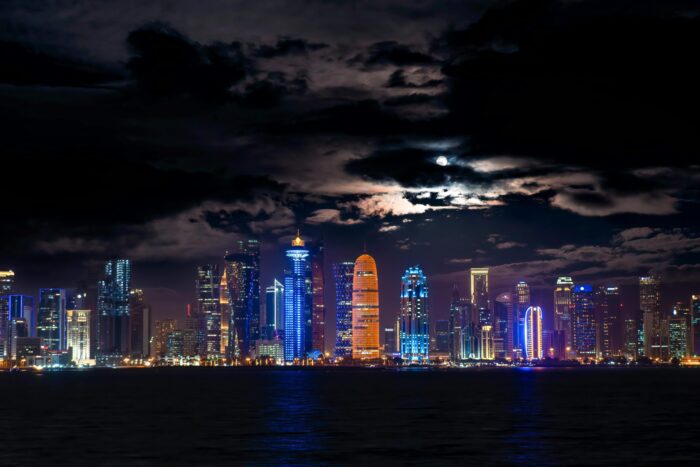
Feb 23: As Gulf economies accelerate diversification strategies, global investors are turning their attention to a rising corporate powerhouse — Doha. Long known for its energy wealth, Qatar’s capital is rapidly redefining itself as a financial, commercial, and business travel hub.
In 2026, Doha is no longer viewed solely through the lens of hydrocarbons. Instead, it stands at the intersection of infrastructure modernization, sovereign-backed investment, and global connectivity. For businesses seeking stability, regional access, and high-growth potential, Doha presents a compelling strategic opportunity.
Post-World Cup Infrastructure: A Lasting Economic Catalyst
The 2022 FIFA World Cup served as a transformational milestone for Qatar. However, the real impact is being felt years later. Infrastructure built for the global event is now powering corporate growth and urban efficiency.
Developments such as:
- Lusail City
- Msheireb Downtown Doha
have reshaped Doha’s commercial landscape.
Lusail City is emerging as a smart, mixed-use urban district featuring commercial towers, residential zones, and modern office spaces. Meanwhile, Msheireb Downtown Doha represents one of the world’s most sustainable city regeneration projects, blending heritage architecture with cutting-edge business infrastructure.
The Doha Metro, expanded road networks, and Hamad International Airport’s upgrades ensure seamless connectivity for business travelers and multinational corporations.
Financial Strength Backed by Sovereign Power
Qatar’s economic resilience is significantly supported by the Qatar Investment Authority, one of the world’s largest sovereign wealth funds. This institutional strength enhances investor confidence and signals long-term fiscal stability.
Additionally, the Qatar Financial Centre has positioned Doha as a competitive financial hub. The QFC offers:
100% foreign ownership
Competitive tax regimes
Repatriation of profits
Streamlined regulatory frameworks
These advantages make Doha increasingly attractive to global banks, fintech companies, and multinational corporations seeking a Middle East base.
A Growing MICE and Corporate Travel Hub
Business tourism is playing a critical role in Doha’s economic diversification. The city is emerging as a leading destination for MICE (Meetings, Incentives, Conferences, Exhibitions) events.
Doha regularly hosts:
Energy summits
Financial forums
Technology conferences
Diplomatic gatherings
Premium hospitality brands supporting corporate travel include:
Mandarin Oriental, Doha
The St. Regis Doha
These hotels offer state-of-the-art conference facilities, executive meeting rooms, and luxury accommodations tailored to global business leaders.
Compared to some neighboring markets, Doha provides high-end infrastructure with a more focused and less saturated corporate environment.
Strategic Location: A Gateway Between Continents
Doha’s geographic positioning offers direct access to:
Europe
Asia
Africa
Hamad International Airport serves as a major aviation hub, connecting multinational executives to key global cities within hours. This strategic accessibility strengthens Doha’s appeal as a regional headquarters location.
For companies operating across the Gulf Cooperation Council (GCC), Africa, and South Asia, Doha provides logistical convenience combined with political stability.
Sectoral Growth Opportunities in 2026
While energy remains foundational, Qatar is actively investing in diversified industries.
Energy Transition & Sustainability
Qatar is focusing on cleaner energy technologies and sustainable infrastructure investments.
Financial Services & Fintech
Digital banking, blockchain integration, and Islamic finance innovations are expanding rapidly.
Technology & Smart Cities
Lusail and Msheireb developments emphasize smart infrastructure and tech-enabled governance.
Logistics & Trade
Qatar’s port expansions and trade agreements enhance its role as a regional logistics hub.
Lifestyle & Bleisure Advantage
Modern corporate travelers increasingly seek destinations offering both productivity and lifestyle experiences. Doha provides:
Waterfront business lounges
Cultural landmarks such as the Museum of Islamic Art
Luxury retail districts
Desert and coastal leisure activities
This “bleisure” combination strengthens Doha’s appeal for executive retreats and corporate incentive programs.
Regulatory Stability and Business Confidence
Qatar’s governance model emphasizes economic stability and investor protection. Reforms in foreign ownership laws, dispute resolution mechanisms, and business licensing procedures have simplified market entry.
In an era of geopolitical uncertainty, stability remains a powerful differentiator — and Doha offers precisely that.
Challenges to Monitor
Despite strong fundamentals, investors should assess:
Market competition within the Gulf
Global energy price fluctuations
Regional geopolitical dynamics
However, Qatar’s long-term diversification strategy mitigates many sector-specific risks.
Doha 2026: A Strategic Bet on the Future
As businesses reevaluate expansion strategies across the Middle East, Doha emerges as a high-potential destination backed by sovereign strength, modern infrastructure, and regulatory reforms.
It may not seek to replace established hubs overnight. Instead, Doha is building a focused, resilient, and forward-looking ecosystem that prioritizes profitability, stability, and long-term growth.
For investors, entrepreneurs, and corporate leaders, Doha represents more than a travel destination — it is a strategic gateway to emerging global opportunity.