

By Gourab Patra
Nestled in the lush Eastern Ghats of Odisha, Koraput is renowned for its rich tribal culture, age-old traditions, and deep connection with nature. Among its many indigenous celebrations, Charchara—also known as Chher-Chher, or Chherta—stands out as a unique and deeply symbolic tribal harvest festival. Celebrated across Koraput, parts of Western Odisha, and widely in Chhattisgarh, the festival reflects the spiritual beliefs, agrarian roots, and collective spirit of rural and tribal communities.
Timing and Meaning
Charchara is celebrated on the full moon night of the Hindu month of Paush (Paush Purnima), usually falling in December or January. The festival marks the end of the crop cultivation season and the beginning of the harvest, especially of paddy, which forms the backbone of rural life and food culture in these regions.
The name “Chher Chhera” literally means “give grains” or “take grains”, symbolizing generosity, sharing of wealth, and social equality. Giving charity is regarded as a sign of generosity, while accepting it is seen as humility—values deeply embedded in tribal and agrarian societies.
An Expression of Gratitude to Nature
At its core, Charchara is a thanksgiving festival. Communities express gratitude to Mother Earth, forest spirits, village deities, and ancestors for a successful harvest. It is also a prayerful moment to seek blessings for prosperity, health, and protection in the coming agricultural year. The festival beautifully reflects the harmonious relationship between humans and nature, a cornerstone of tribal life.
According to mythological belief, this day commemorates the instance when Lord Shiva (Shankar) begged for alms from Goddess Annapurna, symbolizing humility, sustenance, and the sacredness of food.
Rituals Rooted in Tradition
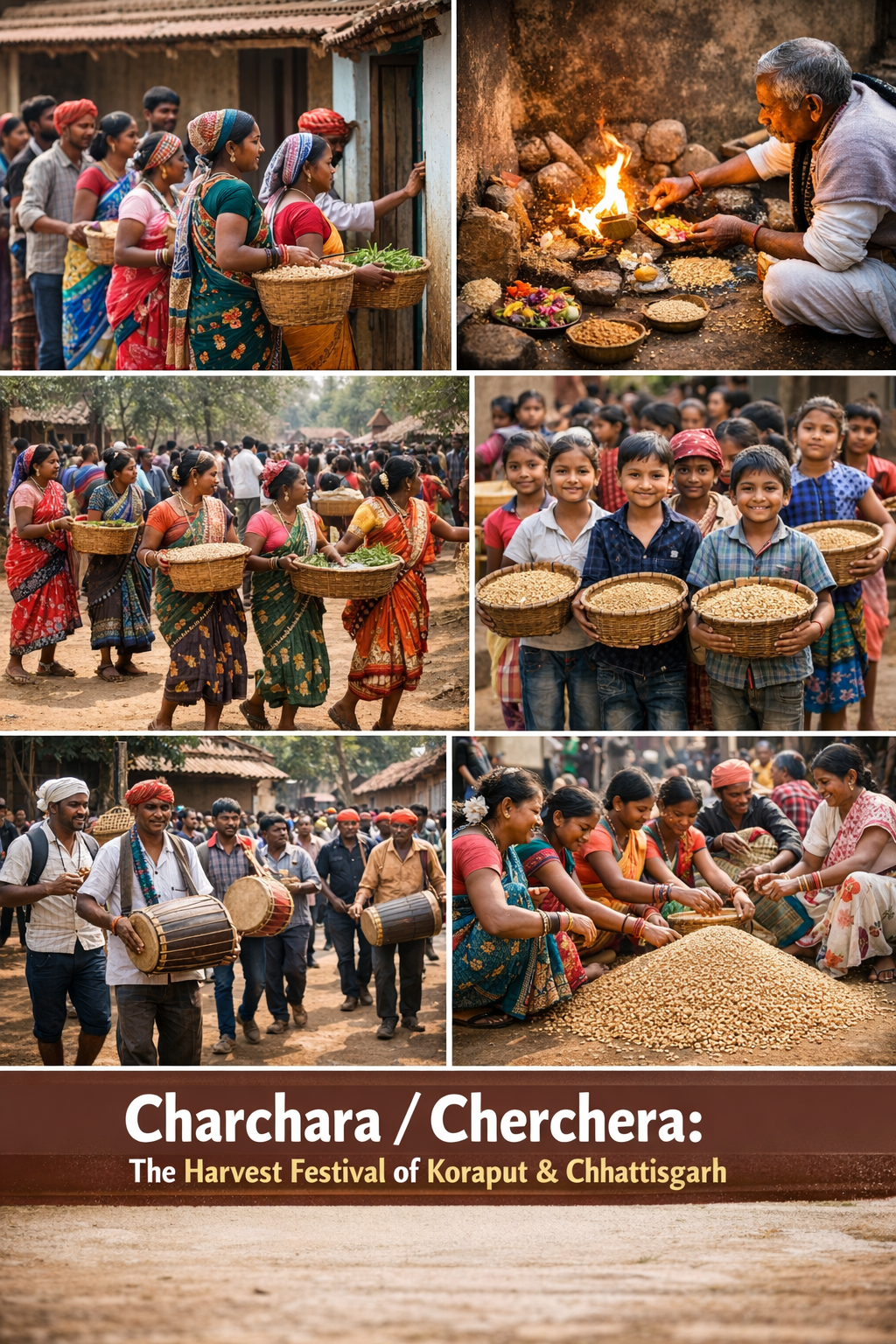
The celebrations begin with rituals led by village elders or traditional priests. Newly harvested grains, green vegetables, seasonal produce, flowers, and forest offerings are presented to ancestral spirits and local deities. These rituals are conducted at sacred village spaces—under ancient trees, near stone shrines, or in courtyards highlighting the deep spiritual connection between the people and their environment.
A distinctive aspect of Charchara is the ritual use of fire and symbolic markings, believed to cleanse the surroundings and ward off negative energies. Homes are cleaned, courtyards decorated, and villages take on a renewed, festive appearance, symbolizing purification and new beginnings.
Door-to-Door Celebrations and Offering of Grains
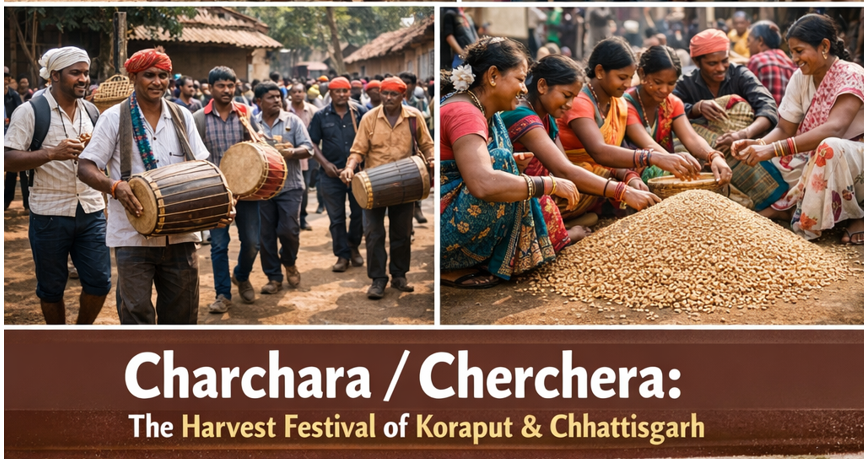
One of the most vibrant features of Charchara is the door-to-door celebration. Groups of children, youth, women, and elders move from house to house singing traditional folk songs, dancing, and asking for offerings of freshly harvested paddy and green vegetables.
Families prepare in advance by storing a portion of their harvest specifically for this day. The offerings collected represent not charity alone, but shared happiness and collective prosperity. In many villages, the collected grains are later sold, and the money is distributed equally among participants or used for community welfare, reinforcing fairness and mutual support.
Music, Dance, and Community Bonding
Charchara is incomplete without music and dance. Men and women, adorned in traditional attire, tribal jewelry, and natural ornaments, perform folk dances accompanied by drums and indigenous instruments. These performances are not merely celebratory; they act as living expressions of folklore, oral history, and cultural identity passed down through generations.
Community feasting follows, with traditional dishes prepared from local ingredients. Families and neighbors come together, strengthening bonds and celebrating unity, joy, and shared success.
Cultural and Social Importance
Beyond its rituals and festivities, Charchara represents the core values of tribal life—community living, respect for nature, ancestral reverence, and sustainable practices. It highlights indigenous knowledge systems and reinforces cultural identity in an era of rapid modernization.
In Chhattisgarh, the importance of Cherchera is reflected in its official recognition, with the state government declaring holidays for major festivals and celebrating them symbolically at the Chief Minister’s residence.
Regional Connections
While known as Charchara in Koraput, the festival is called Chherta in parts of Sarguja and Cheri Chera or Chher-Chhera in Raipur and Bilaspur regions of Chhattisgarh. Despite regional variations in name and expression, the essence remains the same—celebrating agricultural prosperity, communal harmony, and the joy of giving.
Preserving a Living Heritage
Despite changing lifestyles and modern influences, Charchara continues to be celebrated with pride and devotion. Efforts by local communities, cultural organizations, and government initiatives to document and promote such festivals are helping preserve this living heritage for future generations.
Conclusion
Charchara (Cherchera) truly embodies the soul of Koraput and central India—simple yet profound, spiritual yet celebratory. Through its rituals, songs, dances, and collective sharing, the festival offers a powerful glimpse into timeless agrarian traditions and tribal wisdom. Celebrating Charchara is not merely about marking a harvest; it is about honoring a way of life that values nature, gratitude, community, and cultural continuity.