

Why This Debate Is Everywhere
Feb 23: From LinkedIn threads to global business conferences, one question continues to dominate conversations in 2026: Will AI replace human jobs — or redefine them?
Artificial intelligence has rapidly moved from experimental technology to everyday business infrastructure. Tools developed by companies like OpenAI, Google, and Microsoft are now integrated into search engines, writing platforms, design tools, HR systems, and financial software.
The speed of this transformation has sparked curiosity, optimism, and anxiety — making AI and employment one of the most searched and discussed topics online.
The Rise of AI in the Modern Workplace
Artificial intelligence is no longer limited to tech companies. It is embedded in almost every industry:
- Banking & Finance: Fraud detection, risk analysis, automated reporting
- Healthcare: Diagnostic assistance, predictive analytics
- Marketing: Content creation, audience targeting, performance analysis
- Retail: Inventory forecasting, chatbot support
- Manufacturing: Robotics and smart automation
Businesses are embracing AI because it improves efficiency, reduces operational costs, and processes massive amounts of data in seconds.
But with this efficiency comes a critical question — what happens to manpower?
Why People Fear AI Replacing Jobs
The fear surrounding AI replacing human jobs is understandable. Automation historically disrupts labor markets. During previous technological revolutions, machines replaced repetitive manual tasks, forcing workers to reskill.
In 2026, AI performs:
- Data entry and administrative tasks
- Basic content writing
- Customer service queries
- Scheduling and workflow management
- Initial recruitment screening
For employees in these roles, AI feels like direct competition.
When companies announce layoffs tied to automation strategies, social media amplifies concerns, making the AI vs human jobs debate trend across platforms.
The Argument for Job Redefinition
However, many economists and global institutions suggest a more nuanced perspective.
The World Economic Forum has frequently emphasized that while AI may displace certain tasks, it will also create new job categories. Historically, innovation doesn’t eliminate work — it changes the nature of work.
Instead of asking, “Will AI take jobs?” experts now ask, “Which tasks will AI automate, and which will humans elevate?”
For example:
- AI can analyze thousands of legal documents in minutes — but lawyers interpret strategy.
- AI can generate draft marketing copy — but humans shape brand voice.
- AI can process financial trends — but executives make strategic decisions.
This shift suggests that AI is less about replacement and more about redistribution of responsibilities.
Emerging Careers in the AI Era
As automation increases, entirely new job roles are emerging:
- AI Prompt Engineers
- Machine Learning Specialists
- AI Ethics Consultants
- Automation Strategists
- Data Governance Experts
- AI Trainers and Supervisors
Technology not only changes industries — it creates new ones.
Companies investing in AI also require skilled manpower to manage, supervise, and improve these systems. This creates a hybrid workforce where humans and machines collaborate.
Skills That Will Define the Future of Work
In an AI-driven economy, technical skills are important — but human skills are irreplaceable.
The most valuable capabilities in 2026 include:
1. Critical Thinking
AI provides information. Humans analyze implications.
2. Emotional Intelligence
Leadership, negotiation, and empathy remain uniquely human strengths.
3. Creativity
Original storytelling, innovation, and artistic expression still require human imagination.
4. Adaptability
The workforce must continuously learn and evolve alongside technology.
Employees who upskill and integrate AI tools into their workflow are not being replaced — they are becoming more productive and competitive.
AI and Productivity: A Double-Edged Sword
Businesses love AI because it increases output while lowering costs. Automated workflows reduce errors and improve turnaround time.
However, productivity gains can create workforce restructuring. Organizations must balance automation with social responsibility.
Companies that invest in employee retraining programs are more likely to sustain long-term growth. Responsible AI adoption includes:
- Transparent communication
- Workforce upskilling initiatives
- Ethical automation policies
- Fair transition planning
The debate isn’t only technological — it’s ethical.
The Psychological Impact of the AI Debate
Beyond economics, the AI and manpower conversation affects identity.
Work is more than income — it provides purpose and stability. When automation enters the equation, uncertainty follows.
The reason this debate trends online is simple: it touches everyone — students planning careers, professionals considering career shifts, entrepreneurs evaluating automation, and governments shaping labor policies.
AI represents both opportunity and disruption, making it one of the most emotionally charged business topics today.
Collaboration Over Competition
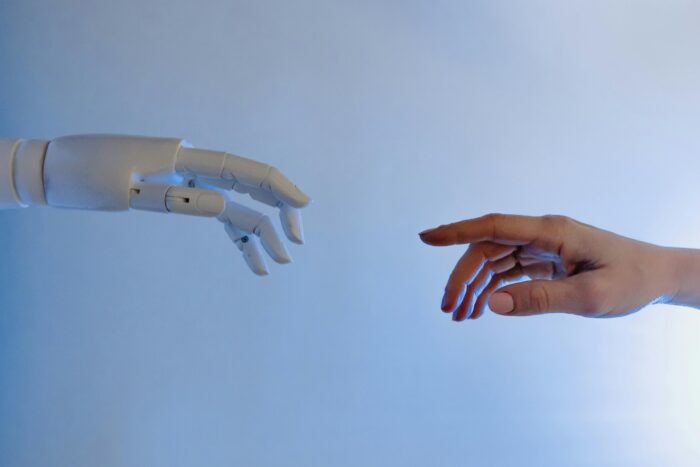
The most realistic outlook for 2026 and beyond is not AI versus humans — but AI with humans.
Hybrid models are proving most effective:
- AI handles repetitive tasks.
- Humans focus on strategy and creativity.
- AI provides insights.
- Humans make judgment calls.
Companies that treat AI as an assistant rather than a replacement tool are achieving stronger innovation outcomes.
The Global Economic Perspective
Governments worldwide are analyzing AI’s long-term labor impact. Investment in digital education and workforce training programs is increasing.
Countries that prioritize AI literacy and technical education will likely see stronger economic resilience.
The future of work will favor nations and businesses that adapt quickly — without neglecting human development.
Conclusion: Redefinition Is More Likely Than Replacement
So, will AI replace human jobs?
In some areas, yes — routine and repetitive roles may shrink. But history suggests that technology reshapes employment more than it erases it.
AI is transforming how we work, what skills we value, and how businesses operate. The professionals who learn to collaborate with artificial intelligence will find themselves at the forefront of the next economic era.
The real debate isn’t whether AI will replace humans.
It’s whether humans will adapt fast enough to thrive alongside it.