

TANAKA Precious Metal Technologies Co., Ltd. Develops World’s First Palladium Hydrogen Membrane for Low-Temperature Purification
Tokyo, Mar 10: TANAKA Precious Metal Technologies Co., Ltd. announced the successful development of HPM-L111, the world’s first metal palladium (Pd) hydrogen permeable membrane capable of delivering high hydrogen permeation performance at low temperatures around 100°C. The innovation enables high-purity and fast hydrogen purification at significantly lower temperatures than previously possible, helping reduce energy consumption and supporting the development of next-generation hydrogen technologies worldwide.
Sample shipments of HPM-L111 are scheduled to begin on or after March 5, 2026, with an initial production capacity of approximately 100 samples per month.
An academic presentation on the new product will be delivered during the 2026 Spring Meeting of The Japan Institute of Metals and Materials, scheduled to take place from March 11–13, 2026 at the Chiba Institute of Technology. The product will also be showcased alongside a panel display at the H2 & FC EXPO – International Hydrogen & Fuel Cell Expo, being held from March 17–19, 2026 at Tokyo Big Sight.
Breakthrough in Palladium Hydrogen Membrane Technology
Palladium hydrogen permeable membranes are thin membranes made from palladium alloys that possess unique hydrogen absorption and permeation properties. These membranes are widely used for separating and purifying high-purity hydrogen in industrial processes.
Traditionally, metal membranes require high operating temperatures—typically 300°C or higher—to achieve effective hydrogen permeation. Through the application of advanced surface treatment technology, TANAKA has developed a membrane capable of delivering strong hydrogen permeation performance even at temperatures around 100°C.
Addressing Long-Standing Challenges
Among palladium-copper alloy membranes, the widely used PdCu40 alloy (containing 60% palladium and 40% copper) provides strong hydrogen permeation performance but requires operation at approximately 400°C to achieve optimal results. This requirement increases costs due to additional heating systems and energy consumption.
At lower temperatures, especially below 200°C, hydrogen penetration speed typically declines significantly, limiting the practical performance of conventional metal membranes.
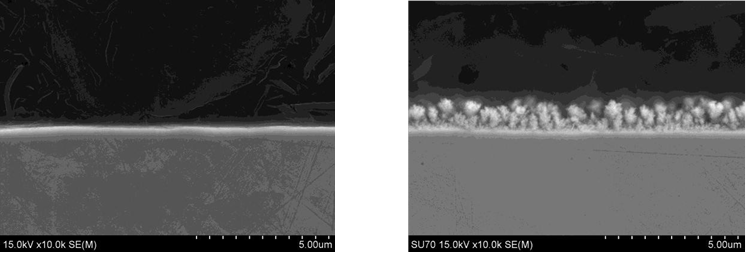
To overcome these limitations, HPM-L111 incorporates TANAKA’s proprietary surface treatment technology developed through decades of precious metal research. The membrane surface is engineered with microscopic jagged structures that increase the specific surface area, improving hydrogen penetration speed and significantly enhancing permeation performance at low temperatures.
Key Features of HPM-L111
-
High hydrogen permeation performance at low temperatures around 100°C
-
The world’s first metal membrane enabling high-purity hydrogen purification at this temperature range
-
Potential to improve the accuracy of hydrogen sensors
-
Supports high-speed removal of hydrogen generated within devices
Potential Applications
High-purity hydrogen permeation at temperatures around 100°C or lower opens new possibilities for multiple hydrogen technologies, including:
-
Hydrogen sensors, where the membrane can improve detection accuracy by isolating interfering gases
-
Fuel cells, enabling efficient hydrogen management
-
Vacuum equipment, allowing hydrogen removal while maintaining low operating temperatures
-
Hydrogen purification systems
By eliminating the need for heating processes previously required to reach 300°C or higher, the technology also helps reduce energy consumption and contributes to carbon neutrality goals.
Through innovations such as HPM-L111, TANAKA aims to support the advancement of a clean and efficient hydrogen ecosystem and contribute to the development of sustainable energy solutions worldwide.
