

Mar 06: India’s clean energy push was once framed primarily as a response to global climate responsibilities. Today, that narrative is rapidly evolving. The country’s energy transition is emerging as a powerful strategic tool—one that strengthens economic resilience, industrial competitiveness, and long-term energy security.
In an increasingly fragmented global order where fossil fuel markets are volatile and supply chains are frequently disrupted, reducing dependence on imported energy has become a matter of economic sovereignty. India’s rapid expansion in renewable energy, domestic solar manufacturing, and green hydrogen development reflects a broader national strategy aimed at building long-term energy independence.
Renewable Energy Expansion: Scale as Strategic Leverage
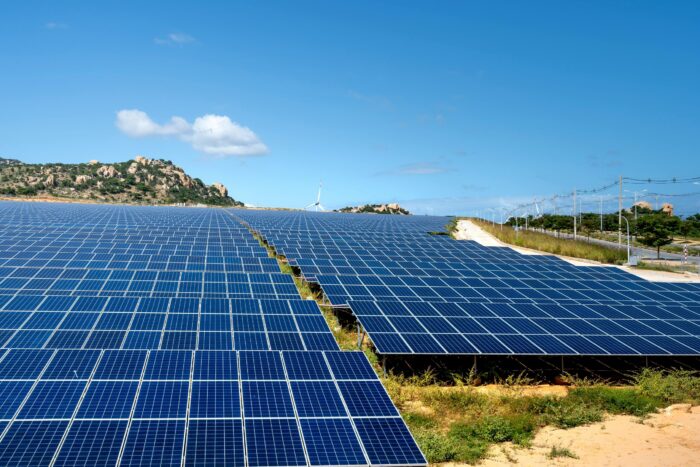
India has become one of the world’s fastest-growing renewable energy markets. The country’s renewable capacity—including solar, wind, hydro, and bioenergy—has already crossed 180 GW, with an ambitious target of reaching 500 GW of non-fossil fuel capacity by 2030.
Solar power has been the most transformative segment. Over the past decade, competitive bidding, improved technology, and economies of scale have driven solar tariffs to historic lows.
This expansion provides more than environmental benefits—it offers strategic advantages.
India still imports a large portion of its crude oil and natural gas. By increasing renewable energy production, the country can reduce its exposure to external shocks such as:
- Global oil price fluctuations
- Geopolitical tensions affecting energy supply
- Currency volatility impacting import costs
For industries such as steel, textiles, cement, and IT infrastructure, integrating renewable energy into operations helps stabilize electricity costs and improve long-term profitability.
A manufacturing hub that integrates on-site solar generation and renewable energy contracts, for example, can significantly reduce its vulnerability to energy price volatility. Over time, predictable energy costs improve export competitiveness and strengthen business margins.
When such shifts occur across multiple sectors, the macroeconomic impact becomes substantial.
Solar Manufacturing: From Import Dependency to Domestic Capability
In its early renewable expansion phase, India relied heavily on imported solar modules. While this enabled rapid capacity growth, it also created a new strategic dependency.
To address this challenge, the government has introduced a range of initiatives designed to boost domestic solar manufacturing. These include:
- Production-Linked Incentive (PLI) schemes
- Customs duties on imported solar equipment
- Capital subsidies for manufacturing ecosystems
The goal is clear: energy independence must also include supply chain independence.
As domestic manufacturing expands, renewable developers can reduce procurement delays, minimize currency risks, and accelerate project execution. At the same time, a local solar manufacturing ecosystem creates employment opportunities and strengthens India’s industrial base.
In this context, solar manufacturing is not merely an environmental initiative—it is also an industrial policy strategy.
Green Hydrogen: The Next Strategic Energy Frontier
India’s National Green Hydrogen Mission represents a long-term investment in the future of global energy systems.
Green hydrogen—produced using renewable electricity—offers a pathway to decarbonize sectors that are otherwise difficult to transition, including:
- Steel production
- Fertilizer manufacturing
- Oil refining
- Heavy transportation
Beyond domestic decarbonization, green hydrogen presents a major economic opportunity. As global demand for low-carbon fuels grows, derivatives such as green ammonia could become major internationally traded commodities.
Countries with abundant renewable energy resources and competitive production costs may eventually become global exporters of green fuels.
Consider a fertilizer plant that currently relies on imported natural gas. Transitioning to green hydrogen may initially involve higher costs, but it significantly reduces long-term exposure to global gas price volatility. As renewable energy prices fall and electrolyzer technologies improve, green hydrogen economics are expected to become increasingly competitive.
This positions India not just as a cleaner energy economy—but potentially as a future energy exporter.
Energy Security and Economic Sovereignty
Energy imports have long been a major contributor to India’s trade deficit. When global oil prices rise, the ripple effects are felt across the economy through inflationary pressures, fiscal stress, and currency instability.
Expanding renewable energy helps mitigate these risks by reducing dependence on imported fuels.
Greater energy independence can strengthen:
- Fiscal stability by reducing subsidy pressures during energy price spikes
- Foreign exchange reserves by lowering energy import bills
- Industrial competitiveness through predictable power costs
- Geopolitical flexibility by reducing reliance on specific energy-exporting regions
In an increasingly uncertain global environment, energy security is becoming a cornerstone of economic policy.
Decentralized Power and Local Economic Resilience
Another important dimension of India’s energy transition is decentralization.
Rooftop solar systems, rural microgrids, and distributed renewable solutions are helping expand energy access while strengthening local economies.
In regions where grid infrastructure is weak, decentralized renewable systems can significantly improve productivity. For example:
- Rural enterprise clusters can maintain consistent production
- Solar-powered cold storage reduces agricultural losses
- Small businesses gain reliable electricity access
Distributed renewable infrastructure therefore enhances both national energy security and grassroots economic resilience.
Storage, Smart Grids, and the Technology Advantage
Renewable energy growth must be supported by advancements in energy storage and grid modernization.
India is investing in multiple technologies to improve energy reliability, including:
- Battery storage systems
- Pumped hydro storage projects
- Smart grid technologies
As global storage costs continue to decline, countries that have already built large renewable ecosystems will gain a significant competitive advantage. Early infrastructure investments reduce transition costs and accelerate long-term economic benefits.
For businesses and policymakers alike, the strategic logic is simple: the earlier the transition begins, the greater the compounded advantage over time.
Beyond Climate Commitments
India’s clean energy transition is often discussed in the context of international climate commitments. While that perspective remains important, the broader reality is more pragmatic.
Energy independence reduces economic vulnerability. Domestic manufacturing strengthens industrial capacity. Green hydrogen opens new global trade opportunities. Renewable power stabilizes long-term economic fundamentals.
In a world where disruptions in energy supply can influence geopolitical dynamics, control over energy systems is becoming a strategic asset.
India’s clean energy transition, therefore, is not just about reducing carbon emissions. It is about building structural leverage in a century where energy security will shape economic and geopolitical power.
The country’s renewable expansion is ultimately transforming not only its energy landscape—but also the trajectory of its economic future.