

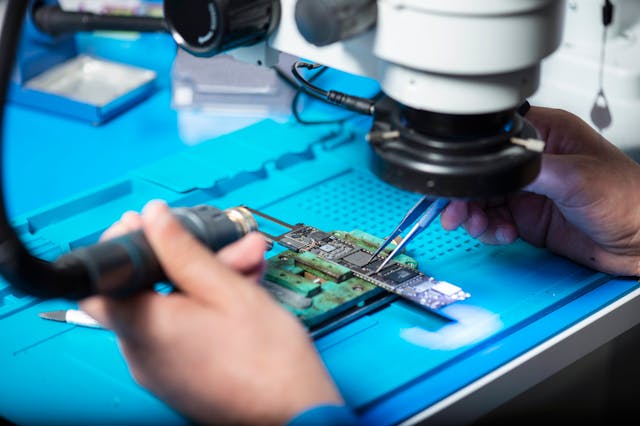
India is poised to redefine its role in the global electronics ecosystem. Over the past decade, the country’s electronics sector has evolved from being heavily import-dependent to emerging as a resilient, export-ready hub capable of contributing significantly to global supply chains. Analysts now describe this transformation as a movement toward “strategic indispensability,” reflecting India’s growing potential to become a critical player in global electronics manufacturing.
A Decade of Transformation
Historically, India relied extensively on imports for consumer electronics and smartphone components. Between 2013 and 2016, around 78% of electronics imports came from overseas, primarily China. During this period, India’s domestic manufacturing was nascent, with limited integration into global supply networks. The reliance on foreign suppliers exposed Indian businesses to vulnerabilities, including supply disruptions, price volatility, and dependency on foreign technology.
Recognising these challenges, India began emphasizing import substitution between 2017 and 2021, promoting domestic manufacturing and attracting private investment. Government initiatives such as the Production-Linked Incentive (PLI) scheme and the Electronics Manufacturing Incentive Programme (EMI) incentivized companies to invest in local production capacity, accelerate technology transfer, and create a more robust domestic ecosystem.
From 2022 to 2027, India is entering the era of export-led strategic resilience, scaling production, integrating with international markets, and preparing the groundwork for global competitiveness. Looking ahead to 2028 and beyond, India’s electronics sector is projected to become export and supply-chain-led, achieving a level of strategic indispensability that allows it to function as a reliable alternative to China in the global electronics value chain.
Lessons from China’s Electronics Dominance
China’s supply chain strength offers valuable lessons for India. Over four decades, China transformed from a manufacturing destination for foreign brands into a global export powerhouse. Key milestones in China’s growth included:
-
1980s: Manufacturing for global brands like Honda, Toyota, HP, and Dell.
-
1990s: Growth of domestic companies alongside foreign investments.
-
2000s onward: Emergence of global brands such as Xiaomi, Huawei, Vivo, Oppo, and BYD, which now dominate international markets.
China’s advantage stemmed from three major factors: plug-and-play infrastructure, access to low-cost capital, and government policies incentivising scale and exports. Together, these elements reduced operational risks, encouraged large-scale investment, and accelerated the growth of a competitive manufacturing ecosystem. Today, the world remains highly dependent on the Chinese supply chain for electronics and components.
India’s emerging electronics ecosystem aims to replicate this success while creating diversified, resilient, and globally integrated supply networks, reducing global reliance on a single manufacturing hub.
Objectives of India’s Electronics Strategy
India’s electronics sector is guided by clear objectives aimed at positioning the country as a global hub:
-
Strengthen Domestic Manufacturing: Expand local production capacity to reduce import dependency and build self-reliance.
-
Integrate with Global Supply Chains: Increase exports and ensure India becomes a dependable partner for international electronics supply.
-
Promote Technological Capability: Encourage innovation in semiconductors, consumer electronics, and components to compete with established global brands.
-
Enhance MSME Participation: Enable small and medium enterprises to participate in manufacturing and component supply chains.
-
Create Strategic Resilience: Develop capabilities to reduce global supply risks by diversifying sources and fostering local expertise.
-
Encourage Sustainability and Efficiency: Promote energy-efficient manufacturing, resource optimization, and responsible production practices.
Key Drivers of Growth
Several factors are fueling India’s rise in the electronics sector:
-
Policy Support: Incentive programs like PLI for electronics manufacturing encourage both domestic and foreign investments.
-
Infrastructure Development: Establishing plug-and-play industrial parks, logistics support, and integrated electronics clusters reduces setup time and operational risk.
-
Global Integration: Export-focused initiatives help Indian companies align with international standards, making them competitive in overseas markets.
-
Skilled Workforce: Training programs and technology-focused education are developing a talent pool capable of handling advanced manufacturing and R&D.
-
Innovation Ecosystem: Collaboration with global technology partners, startups, and universities fosters innovation in design, production, and smart manufacturing.
The Road Ahead: Strategic Indispensability
India’s electronics sector is on a trajectory to become “strategically indispensable” in the global supply chain. This means:
-
India will provide essential products and components that are critical to global production, reducing dependence on any single country.
-
Export resilience will increase, and Indian electronics products will be recognized globally for quality, reliability, and compliance.
-
Domestic MSMEs will have stronger participation in manufacturing and exports, driving economic growth and employment.
To achieve these goals, India must continue investing in infrastructure, policy clarity, regulatory support, and skill development, while fostering public-private partnerships that bridge technology gaps and reduce dependency on imports.
Conclusion
The global electronics landscape is at a crossroads. While China remains a dominant player, India is strategically positioning itself as a viable and reliable alternative, capable of powering the next generation of electronics manufacturing. By focusing on resilience, exports, technological capability, and integration into global supply chains, India’s electronics sector is not just preparing for growth—it is gearing up to become indispensable on the global stage.
With the right mix of policy support, infrastructure investment, and private-sector innovation, India can transform its electronics industry from an import-reliant market to a strategic hub that the world can depend on, redefining its role in the global supply chain for decades to come.