

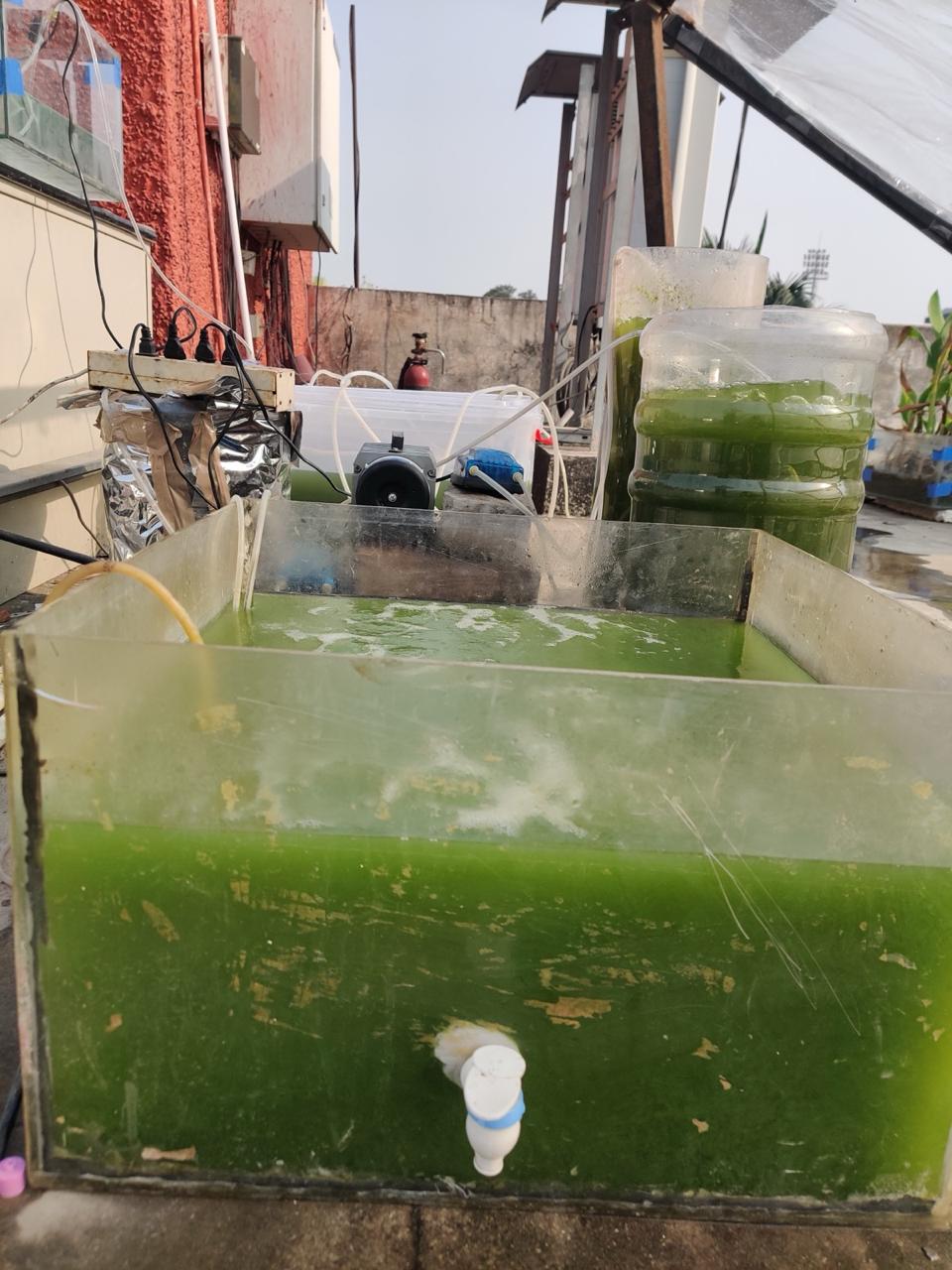
Uttarakhand, Feb 13: Recent research emerging from the Indian Institute of Technology Roorkee (IIT Roorkee) highlights the growing role of academic institutions in addressing complex challenges related to water security, climate resilience, and sustainable resource management. The work on microalgal photogranules for water treatment and resource recovery reflects a broader shift towards energy-efficient, nature-based, and circular approaches to environmental management, with relevance for both India and the global community. Conceptually, this study represents a major milestone in environmental engineering and biotechnology. By coupling wastewater treatment with algal biorefinery principles, the study presents an integrated solution that aligns with India’s pressing needs for energy-efficient wastewater treatment, nutrient pollution control, and water reuse.
The research was led by Prof. Sanjeev Kumar Prajapati, Principal Investigator, from the Environment and Biofuel Research Laboratory (EBRL), Department of Hydro and Renewable Energy, IIT Roorkee, with active contributions from the research team, including Mr. Harshit Tiwari. The work reflects collaborative academic efforts focused on advancing sustainable water treatment technologies through interdisciplinary research and innovation.
The research aligns with key Government of India initiatives including the National Water Mission, Jal Jeevan Mission, Jal Shakti Abhiyan, Swachh Bharat Mission, and the vision of Atmanirbhar Bharat, which emphasise technology-led solutions for sustainable infrastructure and self-reliance. At a time when water stress, nutrient pollution, and climate variability are intensifying, such academic contributions are increasingly seen as critical inputs to evidence-based policy and practice.
Experts note that the work demonstrates how advanced scientific methods can be translated into scalable solutions for wastewater treatment, water reuse, and environmental protection, particularly in agriculture-linked and urban contexts. By integrating innovation with real-world applicability, the research contributes to strengthening India’s preparedness for future water and environmental challenges.
Commenting on the broader significance, Prof. K. K. Pant, Director, IIT Roorkee, observed that
“Research institutions have a vital role to play in developing solutions that respond to societal needs while remaining scientifically rigorous and globally relevant. Advancements in sustainable water technologies are essential for long-term environmental and economic resilience.”
Prof. Sanjeev Kumar Prajapati, Principal Investigator, from the Environment and Biofuel Research Laboratory (EBRL), Department of Hydro and Renewable Energy, IIT Roorkee, said Linking research outcomes to national development goals and global sustainability frameworks ensures that innovation moves beyond laboratories and contributes meaningfully to resilient, low-carbon infrastructure for India’s future.
The findings resonate with several United Nations Sustainable Development Goals (SDGs), particularly SDG 6 (Clean Water and Sanitation), SDG 9 (Industry, Innovation and Infrastructure), SDG 12 (Responsible Consumption and Production), and SDG 13 (Climate Action). By supporting efficient water use, pollution reduction, and circular resource recovery, the research adds to global efforts aimed at building climate-resilient and sustainable systems.
As governments and industries worldwide seek credible, science-backed pathways to sustainability, research from institutions such as IIT Roorkee continues to inform innovation, policy, and practice at both national and international levels.