

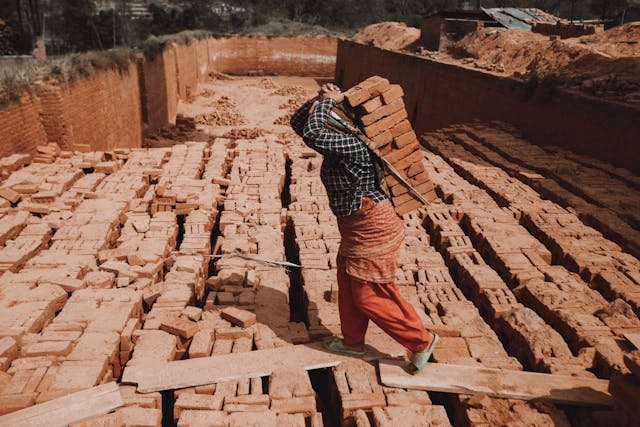
In a major policy shift, the Viksit Bharat–Guarantee for Rozgar and Ajeevika Mission (Gramin) – VB–G RAM G Bill, 2025 was introduced in the Lok Sabha on December 16, 2025. The Bill proposes to replace the Mahatma Gandhi National Rural Employment Guarantee Act, 2005 (MGNREGA), aiming to modernize rural employment schemes while aligning them with India’s vision of a Viksit Bharat by 2047.
Understanding MGNREGA: The Foundation of Rural Employment
MGNREGA has been a cornerstone of India’s rural development policy, guaranteeing at least 100 days of wage employment per year to rural households willing to undertake unskilled manual work. Beyond income security, it addresses rural poverty, curbs distress migration, and creates durable assets such as water conservation structures, rural roads, and climate-resilient infrastructure. The scheme emphasizes demand-driven work, decentralized planning via Panchayati Raj institutions, social audits, and inclusion of women and marginalized communities.
However, despite its promise, MGNREGA has faced challenges including limited days of employment delivered (historically around 45–55 days per household), fund mismanagement, and low-quality asset creation.
Key Changes Introduced by VB–G RAM G
The VB–G RAM G Bill proposes several structural reforms to address MGNREGA’s limitations:
-
Increased Employment Guarantee:
The Bill raises guaranteed workdays from 100 to 125 days per household annually, representing a 25% increase in rural employment opportunities. Unlike MGNREGA, where additional days were limited to drought- or disaster-hit areas, 125 days will be a statutory entitlement under this Bill. -
Agricultural Pause:
To ensure agricultural labor availability during critical periods, the Bill introduces a 60-day pause during peak sowing and harvesting seasons. States may notify this period according to local cropping patterns, districts, or agro-climatic zones. While easing labor shortages for farmers, this may temporarily limit employment availability under the scheme. -
Revised Centre-State Funding:
The Bill restructures funding from a predominantly central-funded model to a cost-sharing framework:-
90:10 (Centre:State) for Northeastern, Himalayan States, and UTs with legislatures
-
60:40 for other states
-
100% Central funding for UTs without legislatures
This significantly increases fiscal responsibility for states, particularly economically weaker ones.
-
-
Normative Allocations Replace Labour Budget:
The VB–G RAM G Bill introduces state-wise normative allocations, replacing the open-ended, demand-driven Labour Budget system. States will receive fixed funding determined by the Centre, with any excess expenditure to be borne by the state. This aims to improve fiscal predictability but may constrain the rights-based, demand-driven nature of employment guarantees. -
Technology-Driven Governance:
The Bill mandates the creation of the Viksit Bharat National Rural Infrastructure Stack, integrating rural works with the PM Gati Shakti Master Plan. All works will be recorded under a unified digital framework, covering water security, core rural infrastructure, livelihood-related assets, and disaster mitigation works. Key digital measures include:-
Biometric attendance verification
-
AI-based fraud detection
-
GPS tracking of worksites
-
Weekly public disclosure of scheme data
-
Potential Benefits
For Rural Workers:
-
Guaranteed 125 days of employment
-
Timely digital wage payments and Aadhaar-based verification
-
Mandatory unemployment allowance for unprovided work
-
Opportunities to participate in asset creation like roads, irrigation, and community facilities
For Farmers:
-
Easier access to agricultural labor during peak seasons
-
Lower wage inflation
-
Improved water and irrigation infrastructure
-
Better rural connectivity and storage facilities
For the Rural Economy:
-
Focus on durable, climate-resilient assets
-
Integration with national infrastructure plans
-
Potential to reduce distress migration and enhance rural productivity
Challenges and Concerns
Despite its promise, the VB–G RAM G Bill also raises critical issues:
-
Fiscal Burden on States: Economically weaker states may struggle with the 60:40 funding responsibility.
-
Rights vs Budget Caps: Normative allocations may limit demand-driven employment, affecting the scheme’s legal entitlement framework.
-
Digital Barriers: Reliance on biometric and online systems may exclude workers in remote areas due to poor connectivity or technical failures.
-
Conditional Agricultural Pause: While helpful for farmers, landless laborers or marginal farmers may face reduced work opportunities during the 60-day pause.
Conclusion
The VB–G RAM G Bill, 2025 marks a transformative step in India’s approach to rural employment. By increasing employment guarantees, digitizing governance, and emphasizing durable, climate-resilient assets, the Bill aims to link wage employment with long-term rural development. While challenges remain, particularly in implementation and state-level fiscal pressures, this legislation represents a vision for modernized rural livelihoods in line with India’s Viksit Bharat 2047 goals.
For policymakers, students, and aspirants preparing for higher studies or competitive exams, understanding the VB–G RAM G Bill is essential as it signals the future trajectory of India’s rural employment and infrastructure strategy.