

Feb 23: Over the past few months, two animals—worlds apart in geography and circumstance—found themselves at the center of global conversation. One was a tiny, abandoned baby monkey named Punch, rescued and hand-raised in a zoo after being rejected by its mother. The other was a lone penguin, photographed standing apart from its colony in the icy vastness of Antarctica, later dubbed the “Nihilist Penguin” by the internet.
One story was about visible vulnerability.
The other was about silent solitude.
Yet both felt intensely human.
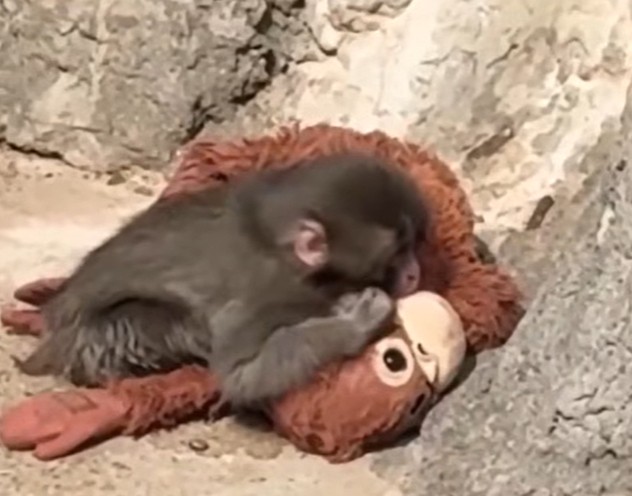
The Baby Who Was Left Behind
Punch’s story spread because it was almost unbearable to watch. A small primate, fragile and wide-eyed, clinging to warmth that wasn’t his mother’s. In zoos across the world, such interventions are not uncommon. When maternal rejection happens—due to stress, inexperience, or health complications—caretakers step in. Many institutions affiliated with the World Association of Zoos and Aquariums follow strict protocols to ensure such infants survive and eventually thrive.
But social media rarely begins with protocol.
It begins with feeling.
People didn’t see “zoo management.” They saw abandonment. They saw the universal fear of being left behind. And when caregivers wrapped Punch in warmth, fed him carefully, and monitored his fragile growth, viewers saw something else: the power of compassion.
Punch became more than a monkey.
He became a reminder that survival often depends on someone choosing not to look away.
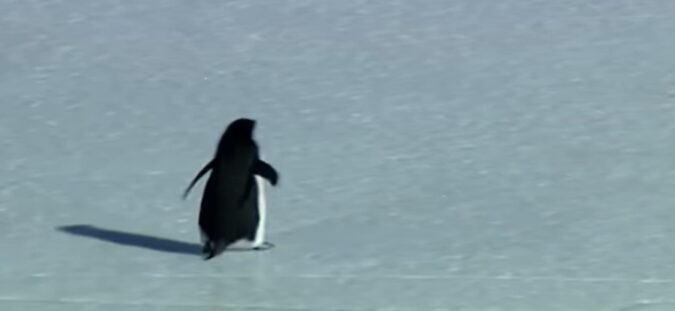
The Penguin Who Stood Alone
Then there was the penguin.
A single bird, positioned slightly away from its colony, framed against endless white. The photograph—reminiscent of wildlife features often published by National Geographic—was simple. No drama. No visible distress.
Yet the internet named it “Nihilist Penguin.”
It was an extraordinary projection. Penguins naturally space themselves apart for environmental and behavioral reasons. Standing alone does not mean despair. But viewers, scrolling late at night, saw something else in that solitary figure: loneliness. Existential fatigue. The quiet weight of being different.
The penguin was not necessarily alone in spirit.
But millions felt seen in its posture.
Why These Stories Stayed With Us
In an age of relentless headlines and digital noise, why did these two images linger?
Perhaps because they offered emotional clarity.
Punch represented the moment when life feels unfair, when we are too small for the world around us. But he also represented intervention—the quiet heroism of care. His story affirmed that abandonment does not have to be the end of the narrative.
The penguin, by contrast, represented stillness. There was no rescuer in frame. No dramatic arc. Just space. Silence. Endurance. And sometimes, that is equally powerful. In a culture that equates visibility with value, the lone figure suggested that standing apart does not mean being broken.
The Human Habit of Seeing Ourselves
There is a word for what happened with both animals: anthropomorphism. We assign human emotion to non-human subjects. We translate posture into psychology. We interpret stillness as sadness and distance as despair.
But this instinct is not naive—it is connective.
When people saw Punch, they remembered moments of rejection or fragility in their own lives. When they saw the penguin, they thought of evenings when they felt isolated in crowded rooms.
Animals become emotional mirrors because they do not argue back. They hold space for projection.
Care and Solitude: Two Sides of the Same Coin
Punch’s survival depended on others. The penguin’s image suggested self-containment. Together, they represent two truths of being human:
We need community.
We also need moments of solitude.
Too much isolation can wound.
Too little independence can suffocate.
The baby monkey teaches us about the importance of stepping in—for a colleague, a friend, a child, even ourselves. The penguin reminds us that solitude can be dignified, not tragic. There is strength in pausing, in observing, in standing quietly within vastness.
The Digital Echo
Social media amplified both stories because they required no translation. A baby reaching for warmth. A solitary figure against a blank horizon. These are visual languages understood everywhere.
But beyond virality, what endured was resonance.
In comment sections, people shared their own experiences of abandonment, resilience, burnout, recovery. Strangers comforted strangers. The very image of loneliness sparked unexpected community.
Ironically, the “lonely” penguin brought people together.
What We Carry Forward
Punch will grow. The penguin will continue its natural rhythms in one of the harshest climates on Earth. Their lives extend beyond our headlines.
But the feelings they stirred remain.
They remind us to notice vulnerability when we see it.
To intervene where we can.
To respect solitude without assuming despair.
To recognize that strength sometimes looks like survival—and sometimes looks like stillness.
In the end, perhaps these stories were never just about a monkey or a penguin. They were about us—about how deeply we long for care, how quietly we endure isolation, and how instinctively we search for meaning in even the simplest of images.
And maybe that is the most human story of all.