

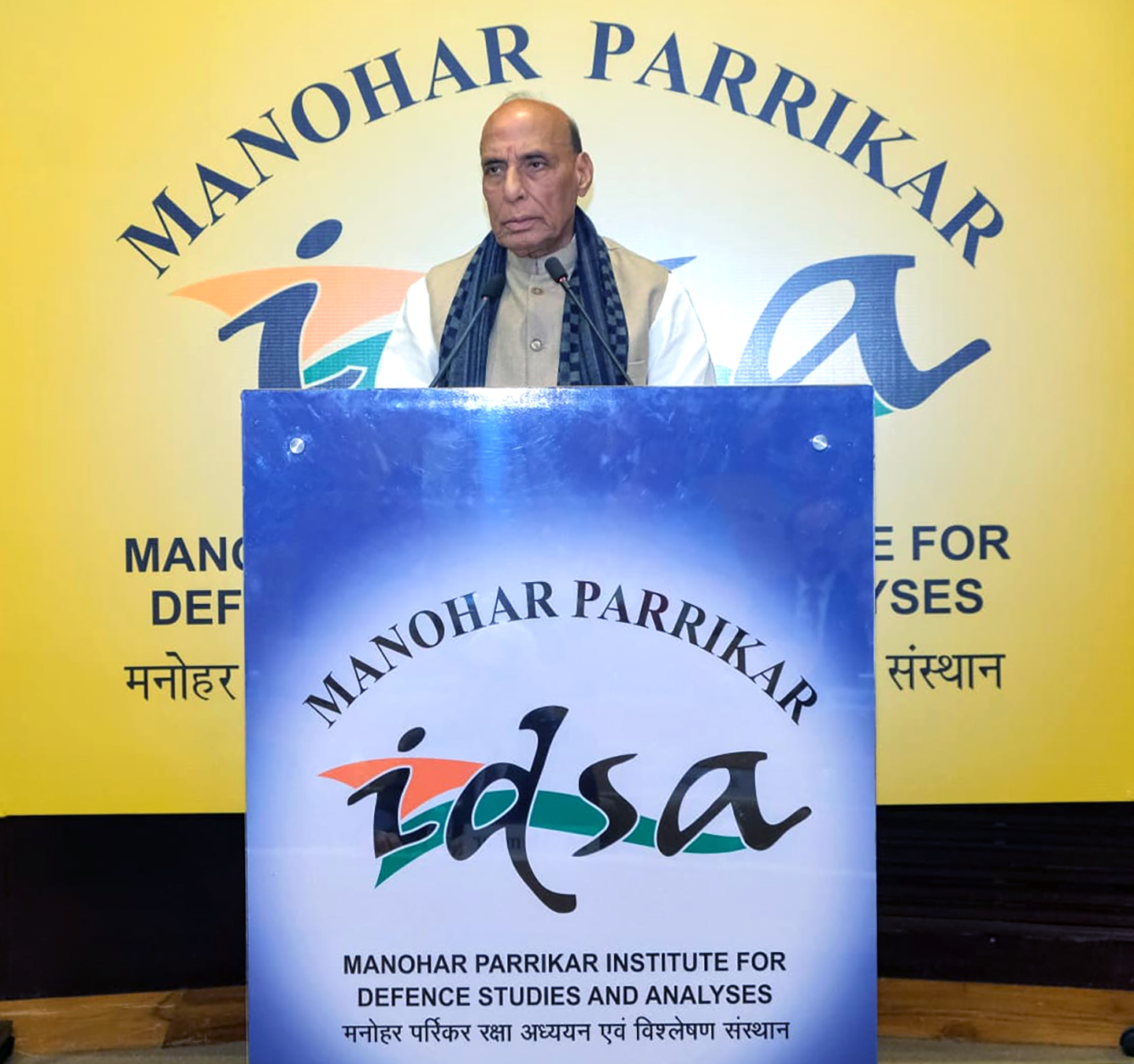
New Delhi, November 11, 2025: Raksha Mantri Shri Rajnath Singh has stressed the need for India to transition from being a consumer of technology to becoming a creator and global leader in defence innovation.
Delivering the inaugural address at the Delhi Defence Dialogue organised by the Manohar Parrikar Institute for Defence Studies and Analyses (MP-IDSA), he called for systems and ecosystems that make the creation and adoption of new technologies “natural, swift and self-sustaining.”
Speaking on the theme ‘Harnessing New Age Technology for Defence Capability Development’, the Raksha Mantri said India must create an environment where niche defence products can thrive—through strong institutional processes, agile organisations, and a collaborative spirit that unites soldiers, scientists, start-ups and strategists.
Shri Rajnath Singh emphasised that India must be prepared not only to absorb but also to shape disruptive technologies such as Artificial Intelligence, Machine Learning, Quantum Computing and Swarm Tech. “If our foundations are strong, our institutions agile, our minds open, and our collaboration seamless, then every new technological wave will propel us. We will not merely adapt to revolutions made elsewhere, but become the architects of revolutions born here,” he said.
He highlighted that the true impact of technology lies beyond devices and algorithms, extending to the way it reshapes processes, systems and decision-making across the national security framework. Harnessing new technologies, he noted, is about building defence institutions that are anticipatory, adaptive and capable of evolving continuously with the rapid pace of global innovation.
Underscoring the importance of internal readiness, the Raksha Mantri stated that high-tech systems—whether AI-driven algorithms, autonomous platforms or quantum computing—mean little without robust institutional capacity. Much of defence preparedness, he explained, depends on “invisible technologies” such as secure data architectures, encrypted networks, interoperable databases and automated maintenance systems.
Shri Rajnath Singh also highlighted the government’s efforts to strengthen India’s defence industrial base, pointing out the growing synergy among DRDO, the Armed Forces, industry and academia. This collaborative cycle of research, testing, field feedback and innovation, he said, is enabling India to position itself as a confident technological power.
He stressed that India can no longer be satisfied with merely catching up to global innovators. Instead, it must nurture a national culture of innovation—one that rewards new ideas, tolerates failures, breaks silos and accelerates adoption. “Technology leadership does not emerge from isolated brilliance,” he said. “It grows from an ecosystem that celebrates breakthroughs and supports bold thinking.”
The Delhi Defence Dialogue also witnessed participation from industry experts, researchers and strategic thinkers, further reinforcing India’s commitment to shaping the future of defence technology.