

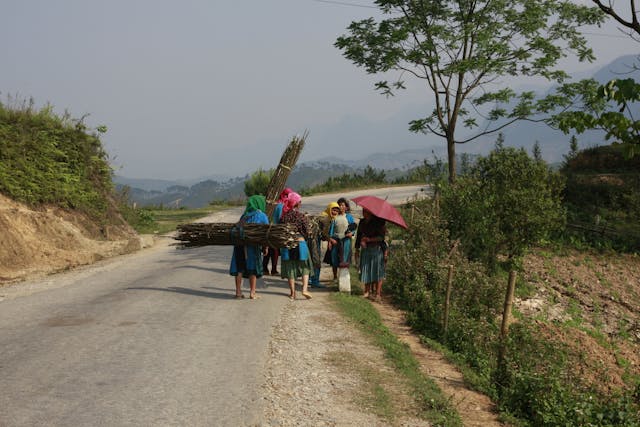
Bridging Dreams: 25 Years of PMGSY Transforming Rural India
Introduction: Roads as the Arteries of Rural Development
In the heart of rural India, roads are more than pathways—they are lifelines that connect dreams to reality. From enabling farmers to sell their crops at fair prices to giving children access to schools and hospitals, rural roads are engines of socio-economic transformation. The Pradhan Mantri Gram Sadak Yojana (PMGSY), launched on 25 December 2000, has been the cornerstone of this transformation. Over 25 years, it has redefined rural connectivity, bringing prosperity, mobility, and opportunity to millions.
Laying the Foundation: PMGSY Phase I
The first phase of PMGSY focused on all-weather connectivity, linking previously isolated villages to nearby towns, markets, schools, and hospitals. “Before the road, it would take me two hours to reach the nearest market,” recalls Sita Devi, a farmer from Bihar. “Now, in 30 minutes, I can sell my vegetables at a better price and bring my children to school on time.”
Phase I sanctioned connectivity for 1,63,339 rural habitations, marking the beginning of a nationwide revolution in rural infrastructure. Roads were no longer just paths—they became the veins through which economic and social life flowed.
Strengthening the Network: Phase II
Phase II, launched in 2013, shifted focus from connectivity to consolidation and economic integration. Priority was given to economically vital routes, connecting rural hubs to growth centers and service institutions.
In Madhya Pradesh, villagers like Ramesh Kumar noticed immediate benefits. “Before, our local hospital was a day’s journey away. Now, emergency services reach us quickly, and children can attend high school in town,” he says. The improved roads not only saved time but also reduced risks associated with remote travel.
Targeted Development in LWE Areas: RCPLWEA
The Road Connectivity Project for Left Wing Extremism Affected Areas (2016) illustrates the program’s dual mission of security and development. Covering 44 districts across nine states, it enabled better mobility for security forces while simultaneously fostering socio-economic growth. Villages that were once isolated now enjoy access to markets, schools, and healthcare, creating a foundation for stability and prosperity.
Phase III and IV: Expanding Horizons
Phase III (2019–2024) focused on major rural links, improving integration with agricultural markets, higher secondary schools, and healthcare centers. As of 2025, 1,01,623 km of roads have been constructed, generating employment, enhancing mobility, and strengthening rural economies.
Phase IV (2024–2029) aims to connect 25,000 habitations and build 62,500 km of roads. Special attention is being given to tribal, aspirational, desert, and hilly areas, ensuring equitable development across diverse geographies.
Technology-Driven Development
PMGSY has embraced digital monitoring, GPS tracking, and performance-linked maintenance to ensure quality and transparency.
-
OMMAS (Online Management, Monitoring, and Accounting System) enables real-time monitoring of road projects.
-
e-MARG links maintenance payments to performance, ensuring long-term durability.
-
GPS-enabled machinery tracks deployment and operational efficiency, improving accountability.
Additionally, eco-friendly materials like waste plastic, crumb rubber bitumen, fly ash, and bio-bitumen are now widely used, promoting sustainable and resilient infrastructure. Over 1.24 lakh km of rural roads have been constructed with these innovations.
Human Stories: Roads That Changed Lives
Education on the Move
In Uttarakhand, the village of Bhimtal once saw children walking hours along treacherous mountain paths to reach school. “Now, buses run on all-weather roads,” says teacher Anjali Mehra. “Attendance has improved, and children are pursuing higher education for the first time.”
Boosting Agricultural Prosperity
In Odisha, farmer Prakash Nayak recalls, “Earlier, my crops would spoil before reaching the market. Now, I can sell produce on time and earn double.” PMGSY roads have strengthened supply chains, increasing incomes and reducing post-harvest losses.
Healthcare Access
In remote Chhattisgarh, pregnant women and the elderly once struggled to reach medical centers. “The new road reduced our travel time drastically,” says Maya Devi, a local resident. Emergency cases can now reach hospitals quickly, saving lives.
Quality and Sustainability: Ensuring Longevity
Three-tier quality monitoring—national, state, and independent inspectors—ensures roads meet durability and safety standards. Advanced construction methods like Full Depth Reclamation and cold mix technology have been applied to strengthen roads while minimizing environmental impact. These initiatives make PMGSY roads climate-resilient and future-ready.
Socio-Economic Impact: More Than Just Roads
PMGSY has catalyzed broad socio-economic transformation:
-
Agricultural growth: Better access to markets and inputs.
-
Employment generation: Construction and maintenance of roads provide thousands of jobs.
-
Healthcare and education: Easier access to hospitals and schools improves quality of life.
-
Market integration: Villages are now linked to regional and national economies.
Conclusion: 25 Years of Transformation
As PMGSY celebrates its silver jubilee in 2025, it is evident that roads are more than infrastructure—they are instruments of hope, opportunity, and empowerment. By combining technology, sustainability, and social impact, PMGSY has not only connected villages to towns but also linked dreams to reality, transforming rural India one road at a time.
From the remote mountains of Uttarakhand to the fertile plains of Odisha, PMGSY is a living testament to the power of connectivity, proving that when roads reach every doorstep, prosperity follows.