

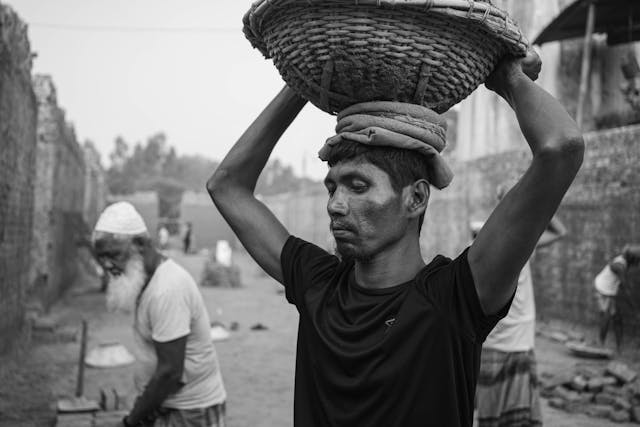
New Delhi: The Union government is preparing to introduce a new rural employment legislation titled “Viksit Bharat—Guarantee for Rozgar and Ajeevika Mission (Gramin)”, which is expected to replace the Mahatma Gandhi National Rural Employment Guarantee Act (MGNREGA), 2005. While the proposed Bill aims to expand guaranteed employment days from 100 to 125, it has already triggered debate over its structural changes and potential financial implications for states.
According to available details, the proposed mission seeks to align rural employment more closely with the government’s broader vision of Viksit Bharat, focusing on livelihood creation, skill-linked work, and asset-building in rural areas. By increasing the number of guaranteed workdays, the Centre projects the Bill as a step towards enhanced income security for rural households.
However, critics argue that the new framework significantly alters the core philosophy of MGNREGA. One of the most contentious aspects is the dilution of the demand-driven nature of the existing law. Under MGNREGA, rural households have a legal right to demand work, making it one of the world’s largest rights-based employment programmes. The proposed Bill, in contrast, is understood to move towards a more administratively driven allocation of work, raising concerns about reduced accountability and weaker legal safeguards for workers.
Another major point of concern is the increased financial burden on states. While the Centre has proposed an expansion in guaranteed workdays, states fear higher cost-sharing responsibilities without commensurate increases in central funding. Several state governments have already struggled with delayed fund releases and pending wage payments under the current system, and the new Bill may exacerbate fiscal pressures on state finances.
Labour economists and rural policy experts caution that dismantling the existing demand-driven structure could undermine the programme’s effectiveness during periods of distress, such as droughts or economic slowdowns, when rural employment demand typically rises sharply. They argue that MGNREGA’s strength lies in its flexibility and legal entitlement, features that must be preserved even as reforms are considered.
Supporters of the proposed legislation, however, maintain that the new mission will improve efficiency, reduce leakages, and integrate rural employment with long-term livelihood and infrastructure goals. They argue that the revised framework will better align public spending with productive outcomes while still providing income support to rural families.
As the Centre moves closer to tabling the Bill in Parliament, the proposed overhaul of India’s flagship rural employment programme is expected to spark intense debate. The discussion is likely to revolve around a critical question: how to balance expanded employment guarantees with fiscal sustainability, while preserving the rights-based foundation that has defined rural employment policy in India for nearly two decades.