

By Pratiksha Singh
Jaipur: It started with a small toothache—nothing that seemed urgent. Like many people, the patient, Sarika, ignored it, hoping the pain would fade on its own. Days turned into weeks, and fear of visiting a dentist kept the problem untreated. By the time medical help was finally sought, the pain had worsened and Sarika was filled with anxiety, unsure whether the tooth could even be saved.
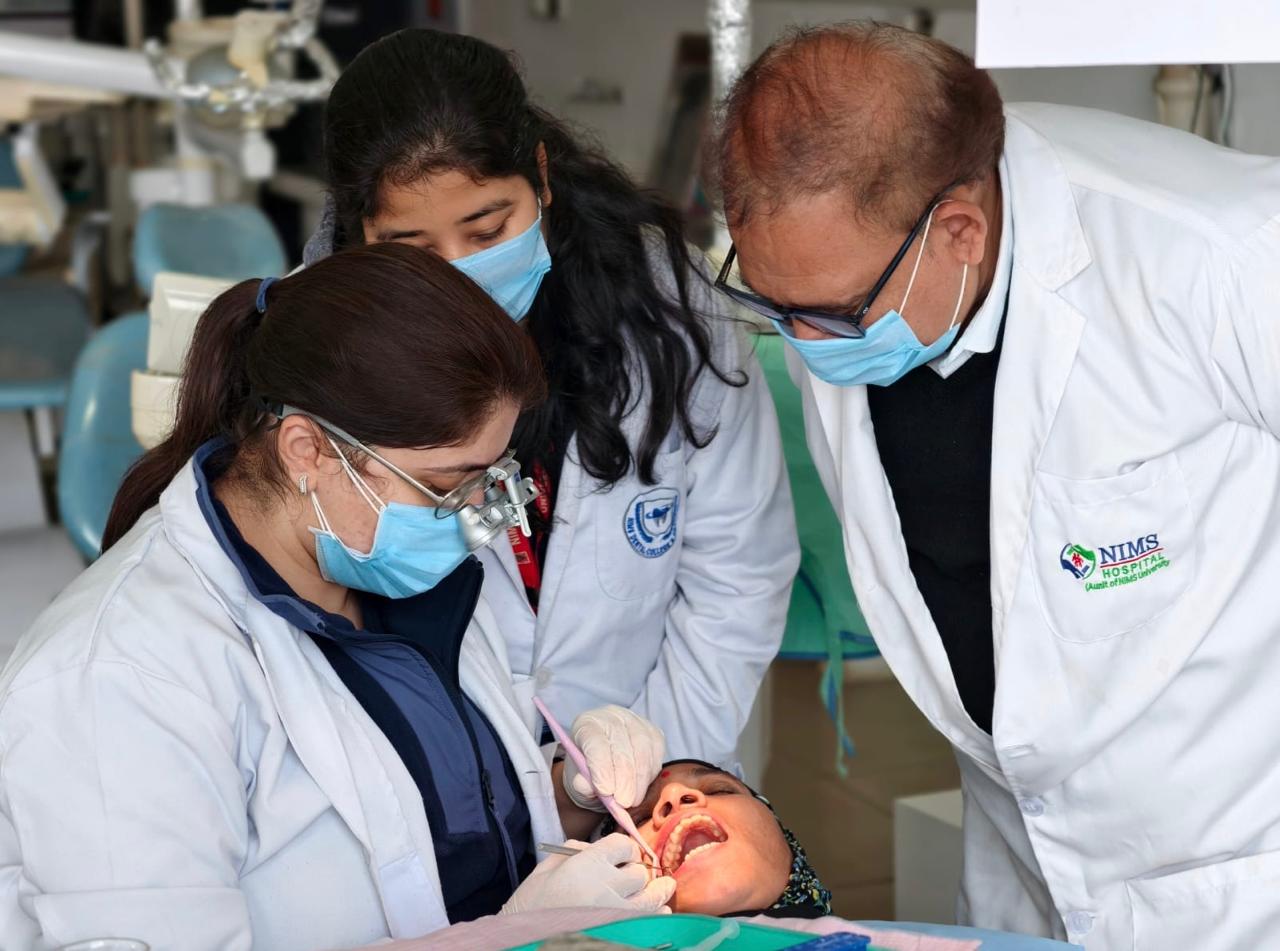
Sarika reached NIMS University Hospital, Jaipur, where the case was managed under the leadership of Prof. Dr. Sunil Sharma, Pro Vice Chancellor, Dean & Director, NIMS School of Dental Sciences, and was taken up by Dr. Deepak Sharma, Professor and Head of the Department of Conservative Dentistry and Endodontics, along with postgraduate student Dr. Babra. The treating team explained that many serious dental problems do not happen overnight but become complicated due to delay.
Medical examination showed that the patient was suffering from severe tooth infection, a condition that usually requires timely root canal treatment.
Doctors noted that postponing treatment often increases pain, infection, and emotional stress. During routine X-ray examination, doctors noticed something unusual—an extra root in the tooth, a rare condition known as radix entomolaris. They explained that this condition is seen in only 5–8 percent of people in India, making it difficult to detect and treat.
For Sarika, hearing that the case was rare increased fear and uncertainty. She was worried about losing the tooth and the complexity of the treatment.
The entire procedure was carried out at NIMS Dental College, using advanced diagnostic facilities available within the hospital. Doctors highlighted that modern imaging and careful planning play a crucial role in handling rare dental cases. To clearly identify the extra root, doctors took X-rays from different angles. They explained that a normal approach often misses such hidden problems. The access opening of the tooth was modified to reach the hidden canal safely.
According to PG student Dr. Babra, this step required patience and accuracy, as the extra root was narrow and sharply curved. She explained that such curved canals increase the risk of instrument breakage and treatment errors. She added that careful technique and guidance are essential to avoid complications.
Doctors used flexible modern instruments designed to work safely in curved canals. They stressed that proper cleaning and slow, controlled treatment help ensure success. Special care was taken while sealing the tooth, keeping its natural shape in mind. The team explained that rushing treatment in such cases can affect long-term results.
For Sarika, the completion of treatment brought relief—both physical and emotional. Months of pain and fear ended with reassurance and the knowledge that the tooth had been saved. Sharing her experience, she said that ignoring the pain was her biggest mistake and that timely treatment could have spared her months of discomfort and anxiety. She expressed gratitude to the doctors for patiently explaining the procedure and restoring her confidence in dental care.
The experience became a personal reminder of the importance of timely dental care. Doctors at NIMS observed that many people ignore dental pain, relying on home remedies or temporary relief. They warned that such habits often turn simple problems into serious medical conditions.
This rare case highlights an important message for the public: dental pain should never be ignored. Early consultation not only saves teeth but also reduces cost, complications, and emotional stress. Beyond medical success, the case reflects how experienced doctors, trained students, and modern facilities work together to deliver safe care.
The doctors concluded that awareness, timely action, and trust in proper medical care can change outcomes—even in rare and challenging cases.