

Raulane Festival of Himachal Pradesh: A Centuries-Old Himalayan Tradition Celebrating Faith, Nature and Community
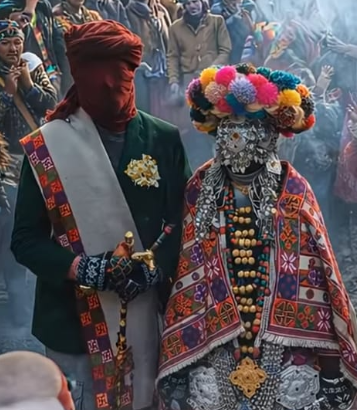
Bright and colourful images from Himachal Pradesh have recently gone viral on social media, drawing attention to the Raulane Festival, an ancient winter ritual celebrated in the Kinnaur district. The visuals—featuring masked performers, traditional costumes, and symbolic rituals—have sparked widespread curiosity about this unique cultural tradition rooted in Himalayan belief systems.
A Sacred Winter Festival of Kinnaur
The Raulane Festival is a deeply spiritual and culturally significant winter celebration observed in remote villages of Kinnaur. It is dedicated to “Saunis”, celestial fairies believed in local tradition to be gentle, radiant beings who protect villagers during harsh winters.
According to local belief, these divine beings provide warmth, guidance, and protection when life becomes difficult in the extreme Himalayan climate.
Symbolic Marriage Ritual: Raula and Raulane
One of the most fascinating aspects of the festival is its symbolic marriage ritual. During the celebration, two men are chosen to represent the divine couple:
- The Raula (groom)
- The Raulane (bride)
They are believed to act as spiritual vessels for the Saunis. This ritual is not a real marriage but a symbolic performance representing divine unity and protection.
The participants wear heavy traditional woollen clothing suited for the cold Himalayan weather. Their faces are fully covered with masks, and their hands are gloved, giving the ritual a mysterious and sacred appearance.
The Raulane, representing the bride figure, is dressed in elaborate attire with decorative ornaments, traditional jewellery, and detailed headgear, transforming the performer into a ritual identity rather than an individual.
Ritual Dance and Village Participation
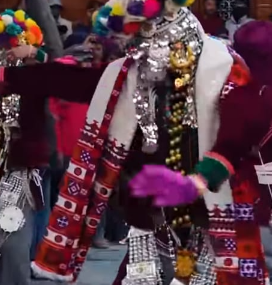
A key highlight of the festival is a slow, meditative ritual dance performed at the Nagin Narayan Temple, one of the important spiritual centres in the region. The movement is calm and symbolic, reflecting devotion and spiritual connection.
The entire village takes part in prayers, gatherings, and celebrations, making the festival a deeply communal event rather than an individual ritual.
Cultural and Spiritual Importance
The Raulane Festival is not just a celebration—it is a living expression of Himalayan heritage. It plays a vital role in:
- Preserving ancient oral traditions and folklore
- Strengthening community bonding in remote mountain villages
- Honouring nature-based spiritual beliefs
- Maintaining cultural identity in harsh geographical conditions
Local traditions suggest that the festival may be thousands of years old, with some accounts estimating its origins to be nearly 5,000 years old, though this remains part of oral belief rather than documented history.
Why the Festival Is Trending Now
The festival has recently gained global attention due to:
- Viral social media images and videos
- Unique masked performances and costumes
- Curiosity about Himalayan spiritual traditions
- Increased interest in cultural and heritage tourism
Travel enthusiasts and cultural observers are now highlighting Kinnaur as a destination rich in untouched traditions and deep-rooted beliefs.
Conclusion
The Raulane Festival stands as a powerful reminder of India’s diverse cultural heritage. In the remote mountains of Himachal Pradesh, traditions like these continue to thrive, blending faith, mythology, and community life.
Beyond its striking visuals, the festival reflects a deeper message—of harmony between humans, nature, and spirituality, preserved through generations in the heart of the Himalayas.
