

Why Education Must Move Beyond Marks and Degrees
For years, success in India has been measured by marks, ranks, and degrees. Students are pushed toward academic excellence, often without asking a simple question—what can they actually do with what they learn? The result is visible today. Degrees are increasing, but employability is not keeping pace.
India has a powerful demographic advantage, with over 65 percent of its population under the age of 35. But this advantage can easily turn into a burden if young people are not equipped with practical, usable skills. This is where trade training—often overlooked and undervalued—needs to take centre stage.
This is not about replacing education. It is about fixing what education is missing.
Why Skill Exposure Should Start Early
Waiting until college to introduce skills is a mistake. By then, most students have already been conditioned to believe that only academic paths matter.
The right time to introduce trade training is between 12 and 14 years of age. At this stage, students are curious, adaptable, and more open to exploring different kinds of work. Exposure at this age is not about forcing a career choice. It is about building awareness and confidence.
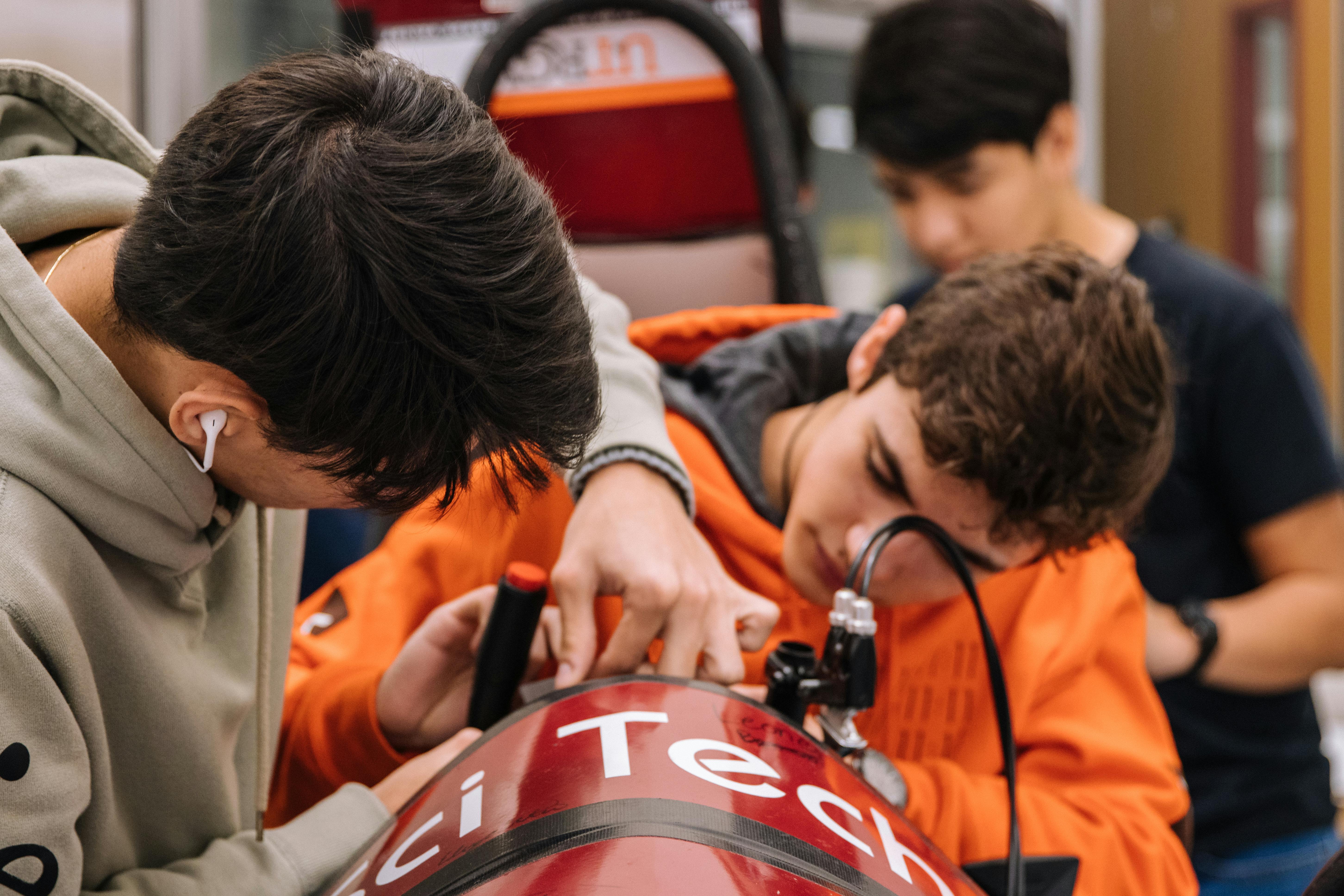
When students learn basic skills early, they start understanding how things work in the real world. They develop problem-solving ability, hand-eye coordination, and practical thinking—skills that textbooks alone cannot teach.
More importantly, they stop fearing “non-academic” careers.
Breaking the Bias Against Blue Collar Work
Let’s be blunt. In India, blue-collar jobs are still looked down upon. Parents want their children to become engineers, doctors, or corporate professionals, even when those paths do not suit the child.
But the economy does not run on degrees alone. It runs on people who build, repair, maintain, and create. Electricians, technicians, mechanics, and skilled workers are not “lesser” professionals. They are essential.
The problem is not the jobs. The problem is the perception.
When trade skills become part of school education, this bias starts to weaken. Students begin to see these professions as skilled, respectable, and even financially rewarding. That shift in mindset is critical if India wants to build a balanced workforce.
How Early Skill Training Strengthens the Economy
India is facing a clear contradiction. On one side, there are millions of graduates struggling to find jobs. On the other, industries are constantly searching for skilled workers.
Data suggests that only around 45 percent of graduates are employable in their fields. At the same time, sectors like construction, manufacturing, logistics, and services face ongoing skill shortages.
This gap exists because the education system produces degree holders, not job-ready individuals.
Introducing trade training early can directly address this issue. It creates a workforce that is prepared, adaptable, and productive from the start.
The economic impact is straightforward:
▫️More employable youth entering the workforce
▫️Reduced hiring and training costs for industries
▫️Higher productivity in labour-intensive sectors
▫️Increased opportunities for self-employment and small businesses
When people have skills, they do not just look for jobs. They create them.
What Needs to Change in the Education System
The current system treats vocational training as a backup option. That approach has to change.
Trade training should be introduced as a core part of the curriculum, not as an optional subject. Students should be exposed to multiple skills so they can discover what interests them.
Learning must also become more practical. Instead of focusing only on written exams, schools should include hands-on projects, real-world tasks, and skill-based assessments. If a student can build, repair, design, or solve a real problem, that ability should carry weight.
Industry involvement is equally important. Training must reflect real-world needs, not outdated syllabi. When education aligns with industry, students graduate with relevant skills, not just certificates.
The Role of Policy and Infrastructure
India has already taken steps through initiatives like Skill India Mission, but the impact remains limited because these efforts are not fully integrated into mainstream schooling.
Schools need proper infrastructure—workshops, tools, and trained instructors. Teachers must also be trained to guide students without bias toward only academic careers.
Skill development should not feel like a separate system. It should feel like a natural part of education.
A Necessary Shift for the Future
The world is changing faster than traditional education systems can keep up. Jobs are evolving, industries are transforming, and the definition of “success” is no longer limited to a degree.
India cannot afford to continue with an outdated model that produces graduates without practical ability. The focus must shift from “what you studied” to “what you can do.”
Trade training is not a backup plan. It is a foundation for a stronger, more balanced economy.
If India gets this right, it will not just create a skilled workforce. It will create confident individuals who can build, adapt, and contribute from an early stage.
And that is what real education should do.
