

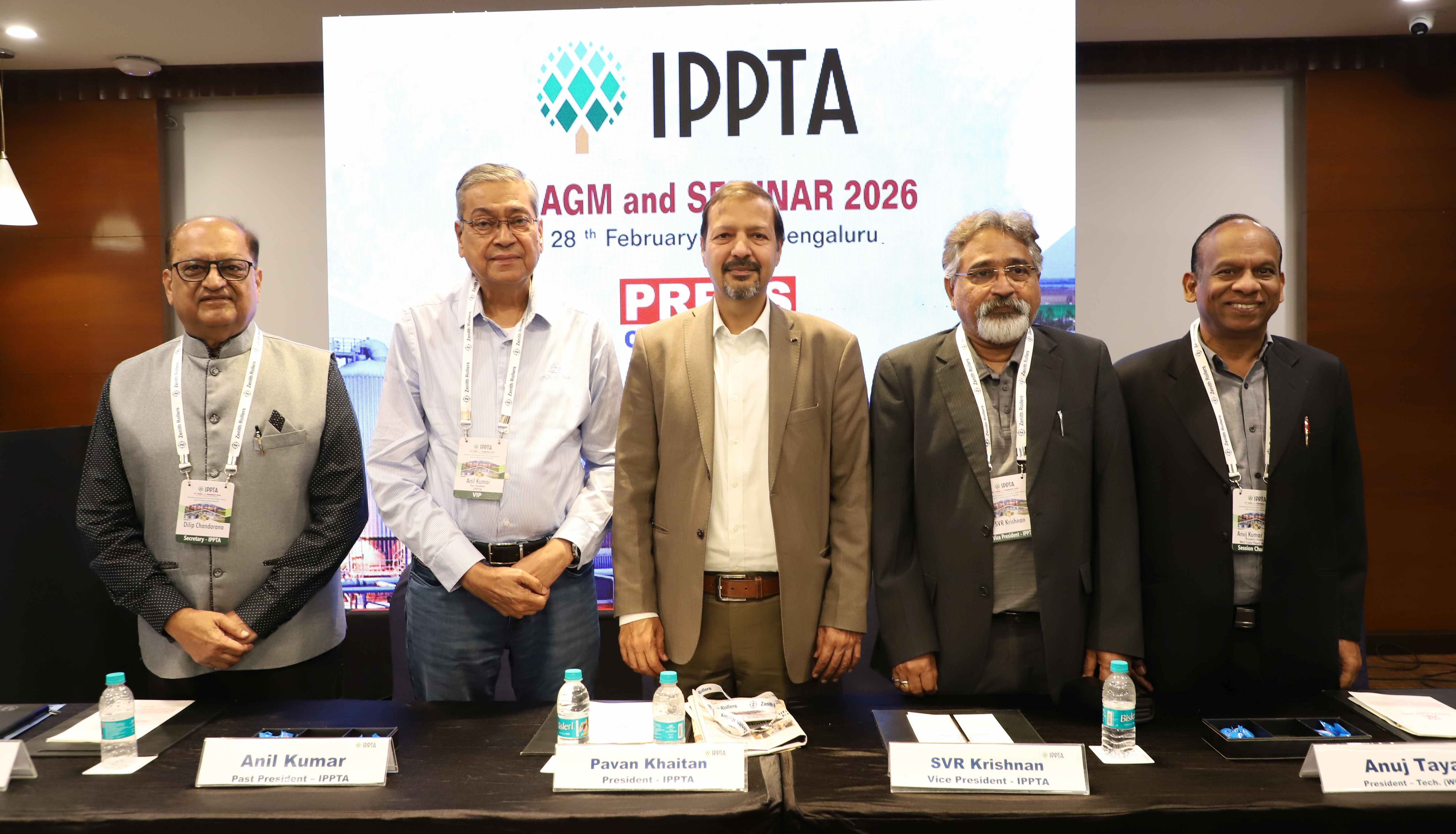
Bengaluru, Feb 26: The Indian paper sector is at a critical crossroads. While we are driving the nation’s transition to sustainable, plastic-free packaging, our domestic manufacturing base is under severe threat,” stated Pavan Khaitan, President of the Indian Pulp and Paper Technical Association (IPPTA).
He was Addressing the media following the inauguration of the IPPTA AGM & Seminar at the Royal Orchid Resort & Convention Centre today, the Indian paper industry issued a strong call for urgent policy intervention to protect its domestic manufacturing base from the dual threats of zero-duty imports and a severe domestic fibre shortage.
“The sharp rise in paper and paperboard imports from China and ASEAN countries at zero or low duty is placing immense financial pressure on domestic mills that are simultaneously investing heavily in green technologies. We urgently need a level playing field against these low-priced imports” Pavan Khaitan Stated.
Compounding this economic pressure is India’s structural fibre deficiency. Dilip Chandarana, Secretary of IPPTA, highlighted this operational hurdle “India is fundamentally a fibre-deficient country. Due to inefficient and fragmented waste-paper collection systems, we remain heavily dependent on imported waste paper, which exposes the industry to intense global price volatility”. He further noted that rising energy and raw material costs have significantly increased operational expenses, impacting profitability across the sector.
Despite these economic headwinds, the leaders emphasized that the sector stands as one of the most environmentally responsible manufacturing industries in the country. Dispelling outdated myths, IPPTA clarified that the Indian paper industry utilizes absolutely no forest wood.
Nearly 75% of the paper produced in India is based on recycled fibre, making it one of the highest recycling-oriented sectors globally. The remaining raw material is sourced entirely from farm forestry on non-forest land, making the industry “wood-positive” and a net contributor to expanding India’s green cover. Furthermore, by converting agricultural residues like bagasse and straw into valuable pulp, the industry provides a direct, commercial solution to reduce the national crisis of agricultural stubble burning.
As digitalization drastically reduces the demand for traditional newsprint, mills are rapidly pivoting to packaging and specialty papers to support India’s ban on single-use plastics. However, upgrading outdated technology to meet these new market demands requires immense capital.
“With the right policy support and improved waste-collection frameworks, we can strengthen our position as a globally competitive green industry,” Khaitan concluded. “Our message to policymakers is clear: Paper is not the problem — paper is part of the solution”.