

Chandigarh, Mar 21: Tata Steel has marked a significant milestone in its sustainability journey with the inauguration of India’s first scrap-based Electric Arc Furnace (EAF) plant at the Hi-Tech Valley in Ludhiana. Built with an investment of approximately ₹3,200 crore, the plant has an annual production capacity of 0.75 million tonnes.
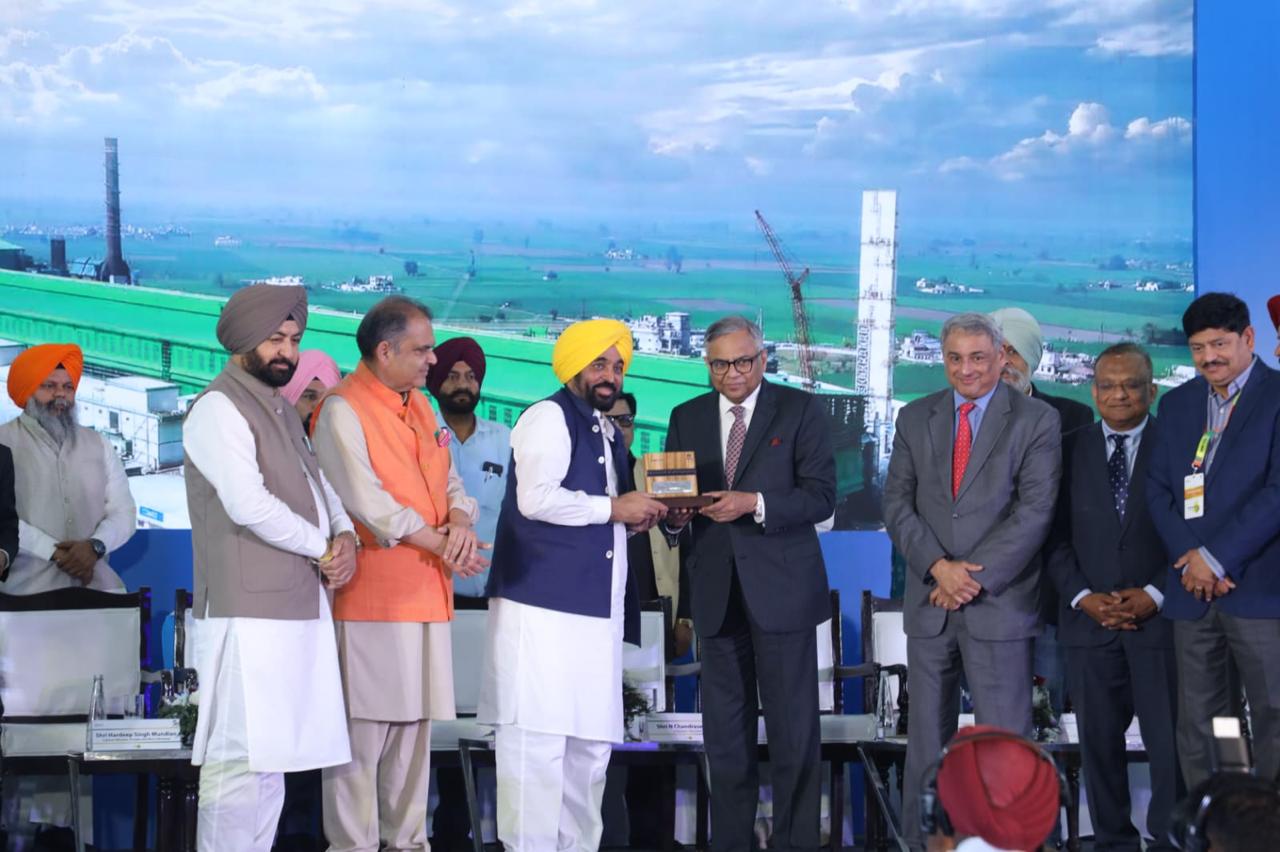
The state-of-the-art facility is designed to keep CO₂ emissions below 0.3 tonnes per tonne of steel produced, aligning with Tata Steel’s long-term commitment to achieve net-zero emissions by 2045.
The inauguration ceremony was graced by Bhagwant Mann, Chief Minister of Punjab, along with Natarajan Chandrasekaran, Chairman of Tata Steel, and T. V. Narendran, CEO & Managing Director, alongside senior government officials and company representatives.
Speaking on the occasion, N. Chandrasekaran said,
“As India moves toward a climate-conscious future, sustainability has become a national priority requiring collective action. Tata Steel’s Ludhiana EAF plant reflects the Tata Group’s long-term commitment to building a greener and more resilient industrial future.”
T. V. Narendran added,
“The Ludhiana EAF is a key milestone in our journey to achieve net zero by 2045. It highlights our approach to investing in circular economy-driven technologies that reduce resource consumption while maintaining global competitiveness. We are grateful for the continued support of the Punjab Government and look forward to creating long-term value for local communities.”
Designed to support low-carbon steel production, the plant will utilize around 50% renewable energy and rely entirely on 100% steel scrap as raw material. Approximately 40% of the scrap will be sourced from Tata Steel’s recycling facility in Rohtak, Haryana.
The facility will manufacture construction-grade steel rebars under the company’s flagship retail brand Tata Tiscon, further strengthening Tata Steel’s presence in the construction sector.
Over the past three years, Tata Steel, through the Tata Steel Foundation, has actively engaged with local communities around the Ludhiana plant. Initiatives have focused on healthcare, education, agriculture, and women’s empowerment. Key programs include skill development for ITI students, livelihood opportunities for women, installation of solar-powered street lights, promotion of climate-resilient farming practices, community-based waste management systems, enhancement of school infrastructure, and scholarships for meritorious students.
This milestone underscores Tata Steel’s commitment to sustainable industrial development while contributing to India’s transition toward a greener, low-carbon economy.
