

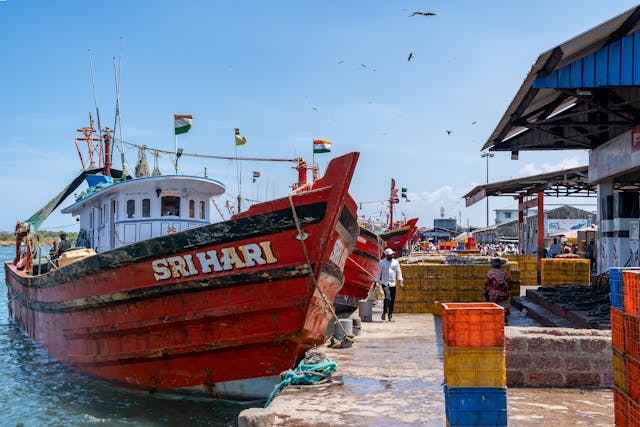
Across India’s vast coastline and busy shipping lanes lies one of the strongest pillars of the national economy. Nearly 95% of India’s trade by volume and about 70% by value moves through maritime routes, making ports, shipping, and inland waterways the invisible engines of growth. As India steps into a new economic phase, the maritime sector is no longer just about moving cargo—it is about competitiveness, sustainability, and global leadership.
With the Maritime India Vision 2030 and the long-term Maritime Amrit Kaal Vision 2047, India is reimagining its maritime ecosystem to be greener, safer, digitally enabled, and business-friendly—aligning trade expansion with environmental responsibility.
Maritime India Vision 2030: A Blueprint for Scale and Efficiency
Launched as a comprehensive roadmap, Maritime India Vision 2030 (MIV 2030) outlines over 150 strategic initiatives across ports, shipping, shipbuilding, coastal shipping, and inland waterways. With projected investments of ₹3–3.5 lakh crore, the vision focuses on modernising infrastructure, reducing logistics costs, strengthening value chains, and creating millions of jobs.
The impact is already visible. In FY 2024–25, India’s major ports handled around 855 million tonnes of cargo, reflecting rising trade volumes and improved port efficiency. Port capacity has nearly doubled over the last decade, while vessel turnaround time has been cut almost in half—directly enhancing India’s attractiveness as a global trading partner.
For businesses, faster cargo handling, predictable logistics, and reduced dwell times translate into lower costs, improved supply-chain reliability, and better integration with global markets.
Sagarmala: Linking Ports to Prosperity
At the heart of India’s maritime transformation lies the Sagarmala Programme, a flagship initiative designed to unlock the economic potential of ports and coastal regions. Sagarmala focuses on port-led development, multimodal connectivity, industrial clusters, and coastal community upliftment.
By 2035, 840 projects worth ₹5.8 lakh crore are planned under Sagarmala, with a significant number already completed or under implementation. These projects are helping decongest road and rail networks, promote coastal shipping, and bring industries closer to ports—reducing logistics costs that have long weighed on Indian manufacturing and exports.
For exporters and importers, this means greater competitiveness, especially in sectors such as energy, steel, textiles, automobiles, chemicals, and agri-products.
Odisha: Anchoring Growth in India’s Maritime Future
Odisha, with its strategic eastern coastline along the Bay of Bengal, is emerging as a critical hub in India’s maritime transformation. Under the Sagarmala Programme and Maritime India Vision 2030, Odisha is set to play a major role in port-led industrialisation, shipbuilding, and trade expansion.
Key Projects in Odisha:
-
Greenfield Port at Bahuda: This mega port, with a capacity of 150 million tonnes per annum (MTPA) and an investment of around ₹21,500 crore, will position Odisha as a key gateway for cargo movement in eastern India. It will facilitate bulk cargo, containers, and industrial shipments, creating thousands of direct and indirect jobs.
-
National Maritime Heritage and Shipbuilding Initiatives: Odisha is earmarked for strategic shipbuilding clusters under the Shipbuilding Development Scheme (SbDS), promoting greenfield shipyards and modern ship repair facilities. This strengthens the industrial base and generates skilled employment in engineering, logistics, and maritime services.
-
Tourism & Inland Waterways: Coastal Odisha will benefit from river cruises and Ro-Pax ferry services, integrating tourism with trade. These developments will enhance connectivity, boost local business, and attract tourism-led investments.
-
Green Shipping Corridors: Paradip Port is part of India’s Green Hydrogen and low-emission shipping corridors. Investments in renewable fuels and port electrification are making Paradip a model for sustainable maritime operations, reducing operational costs for traders while contributing to climate goals.
Impact on Odisha’s Economy:
These initiatives are expected to transform Odisha into a maritime and industrial hub, boosting trade, logistics, and employment. Local businesses will benefit from improved port connectivity and infrastructure, while industrial clusters linked to ports will stimulate manufacturing and export-oriented growth. By 2035, Odisha could see hundreds of thousands of new jobs in shipping, logistics, shipbuilding, and allied services.
Greener Seas, Safer Shipping
Sustainability has emerged as a defining theme of India’s maritime strategy. Through initiatives such as the Harit Sagar Green Port Guidelines, Green Tug Transition Programme, and National Green Hydrogen Mission, India is transitioning toward low-emission ports and cleaner shipping fuels.
Three major ports—Kandla, Paradip, and Tuticorin—are being developed as Green Hydrogen hubs, supporting alternative fuels like green hydrogen, methanol, LNG, and biofuels. These efforts aim to decarbonise port operations and reduce dependence on fossil fuels, aligning India’s maritime growth with global climate commitments.
Safer navigation systems, digital traffic management, and modern vessel standards are improving maritime safety—critical for protecting trade flows and reducing operational risks for shipping companies and insurers.
Financing the Maritime Future
The government has launched targeted financial mechanisms to support the maritime transformation:
-
₹25,000 crore Maritime Development Fund (MDF): Long-term financing for fleet expansion, green infrastructure, and shipbuilding.
-
₹69,725 crore Shipbuilding Package: Reduces domestic cost disadvantages, promotes local shipbuilding, and strengthens India’s maritime industrial base.
These measures will reduce reliance on foreign vessels, boost domestic manufacturing, and create high-skilled employment in shipbuilding, design, engineering, and logistics.
Inland Waterways: The Silent Growth Engine
India’s inland waterways are emerging as a cost-effective and eco-friendly alternative for cargo and passenger movement. Cargo traffic has surged dramatically over the last decade, while new terminals and multimodal hubs are strengthening regional trade, particularly in the Northeast.
Passenger ferries and Ro-Pax services are gaining popularity, improving connectivity and supporting tourism-led growth—adding another dimension to maritime-led economic development.
Business Impact: Trade, Jobs, and Global Positioning
For businesses, India’s maritime push offers multiple advantages:
-
Lower logistics costs improve export competitiveness
-
Green shipping corridors enhance access to sustainability-conscious global markets
-
Integrated port-led industrial clusters support faster manufacturing-to-market cycles
-
Improved safety and digitalisation reduce operational risks
The sector is also a major employment generator. India supplies over 12% of the global seafaring workforce, creating opportunities both domestically and internationally.
From Vision to Voyage
India’s maritime journey is entering a decisive phase. With modern ports, cleaner fuels, safer shipping, and strong policy support, the country is transforming its coastline into a gateway of opportunity. The Maritime Amrit Kaal Vision 2047, with investments nearing ₹80 lakh crore, sets an ambitious target—to make India one of the world’s leading maritime and shipbuilding nations by the centenary of independence.
As global trade seeks resilient, sustainable supply chains, India’s maritime sector is positioning itself not just as a conduit for commerce, but as a strategic driver of economic growth, environmental stewardship, and global leadership. In the decades ahead, the waves that carry India’s trade will also carry its aspirations—toward prosperity, sustainability, and a stronger global role.