

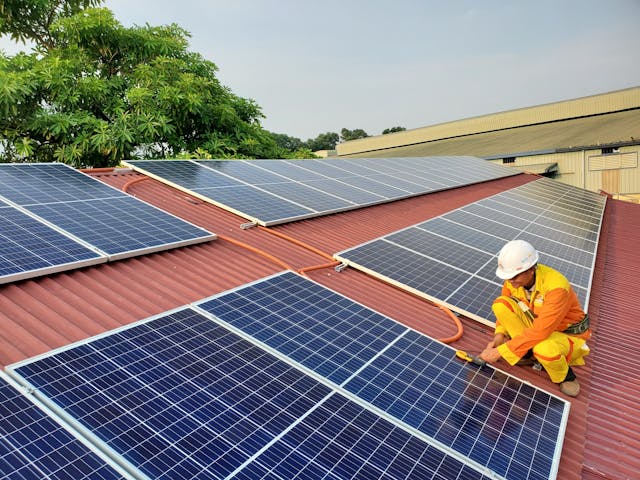
Once celebrated for its forts, vibrant culture, and expansive deserts, Rajasthan is rapidly redefining its identity—as a powerhouse of India’s clean energy revolution. With abundant sunlight, strategic governance, and progressive policy reforms, the desert state is emerging as a leading hub for solar energy, driving both sustainable growth and energy security for the nation.
The Rise of Large-Scale Solar Projects
At the forefront of this transformation is Pugal in Bikaner, where one of India’s largest solar parks is taking shape. With a planned capacity of 2,450 megawatts and 5,000 megawatt-hours of battery energy storage, the project marks a significant milestone in India’s renewable energy journey. Complementing it are multiple battery storage projects, collectively offering nearly 6,000 megawatt-hours of storage with an investment of approximately Rs 6,000 crore.
These storage facilities are critical to ensuring round-the-clock energy availability, reducing dependence on costly electricity purchases during peak demand, and reinforcing India’s path toward energy self-reliance. By integrating advanced energy storage with large-scale solar generation, Rajasthan is setting a benchmark for how states can harness solar power efficiently and reliably.
Additionally, the state has allocated land across key locations, including Bikaner, Chittorgarh, and Barmer, to further strengthen its renewable energy infrastructure. The development of a 765 KV substation will enhance transmission capabilities, ensuring that the growing solar output can be efficiently distributed to meet both local and national energy needs.
Rajasthan’s Solar Capacity: A National Leader
Rajasthan’s achievements in solar energy are remarkable. The state now boasts a total renewable energy capacity of 41,189 megawatts, with 35,337 megawatts generated from solar power alone. This positions the state as a dominant contributor, accounting for 27.2% of India’s total solar capacity and 16.4% of overall renewable energy.
The pace of this growth is unprecedented. In just the last two years, Rajasthan added 17,820 megawatts of renewable capacity, including 17,326 megawatts from solar energy, demonstrating the state’s rapid scaling capabilities. With projects totaling 45 gigawatts under development, Rajasthan is not just keeping pace with India’s energy goals—it is leading them.
Decentralized Solar: Empowering Communities
Rajasthan’s solar success is not limited to massive desert parks. The state is also a pioneer in decentralized solar energy, bringing clean power to villages, farms, and households. Through central schemes like PM-KUSUM and PM Suryaghar Yojana, Rajasthan has installed thousands of small grid-connected solar projects, totaling over 2,345 megawatts, making it a national leader in rural solar deployment.
Rooftop solar has also seen significant uptake. Under the Suryaghar initiative, over 1,09,000 rooftop systems with a combined capacity of 441 megawatts have been installed in just two years. These decentralized systems reduce electricity bills for households and farmers while contributing to environmental sustainability, making solar energy both an economic and ecological asset.
Strategic Implementation for Growth and Safety
Rajasthan’s approach to solar energy emphasizes strategic implementation, reliability, and safety. Key measures include:
-
Integrated Energy Storage: By pairing solar generation with large-scale battery systems, the state ensures consistent power supply even during non-sunlight hours.
-
Robust Transmission Infrastructure: Investment in high-voltage substations and grid upgrades guarantees efficient electricity delivery while minimizing transmission losses.
-
Policy-Driven Expansion: Land allocation and regulatory support accelerate project development, reduce bureaucratic hurdles, and attract private investment.
-
Decentralized Deployment: Community-level solar projects reduce grid dependency, increase energy access, and empower local economies.
-
Environmental Safeguards: Solar projects are designed with sustainability in mind, promoting clean energy while minimizing ecological impact.
By combining large-scale generation with localized solar adoption, Rajasthan is creating a resilient, scalable, and sustainable solar ecosystem. This dual strategy ensures energy security, reduces carbon emissions, and supports long-term economic growth.
Economic and Social Impact
The growth of solar energy in Rajasthan extends beyond energy production. It is creating employment opportunities, fostering technology-driven innovation, and supporting rural development. Farmers and households benefit from reduced electricity costs, while the industrial and commercial sectors gain access to reliable renewable energy.
As solar infrastructure expands, Rajasthan is also positioning itself as a knowledge hub for renewable energy technology, attracting investment and expertise. The development of storage solutions, grid management systems, and solar manufacturing units is likely to generate high-skilled employment, boosting the state’s economy.
The Future of Solar in Rajasthan
Looking ahead, Rajasthan’s solar journey is poised to accelerate. The combination of abundant sunlight, supportive policies, and strategic planning positions the state as a national and global leader in solar energy. By 2027, the completion of large solar parks, enhanced battery storage facilities, and robust transmission networks will solidify Rajasthan’s role as the backbone of India’s clean energy future.
The state’s approach serves as a model for other regions aiming to harness renewable energy sustainably and effectively. By balancing large-scale projects with decentralized initiatives, prioritizing safety and reliability, and encouraging private and public investment, Rajasthan is demonstrating how solar energy can drive economic growth, social welfare, and environmental stewardship.
Conclusion
From arid deserts to vibrant solar fields, Rajasthan is transforming its landscape and identity. Its journey illustrates that clean energy is not just a technological shift—it is a catalyst for economic development, community empowerment, and environmental sustainability.
Through innovative projects, strategic policy frameworks, and a focus on both large-scale and decentralized solutions, Rajasthan is proving that solar energy can be safe, scalable, and economically transformative. As the state continues to expand its solar capacity, it is not only illuminating homes and powering industries but also charting a roadmap for India’s clean energy future.
Rajasthan’s desert, once seen as a harsh and inhospitable terrain, is now the nation’s solar powerhouse, leading the way in renewable energy, economic growth, and sustainable development.