

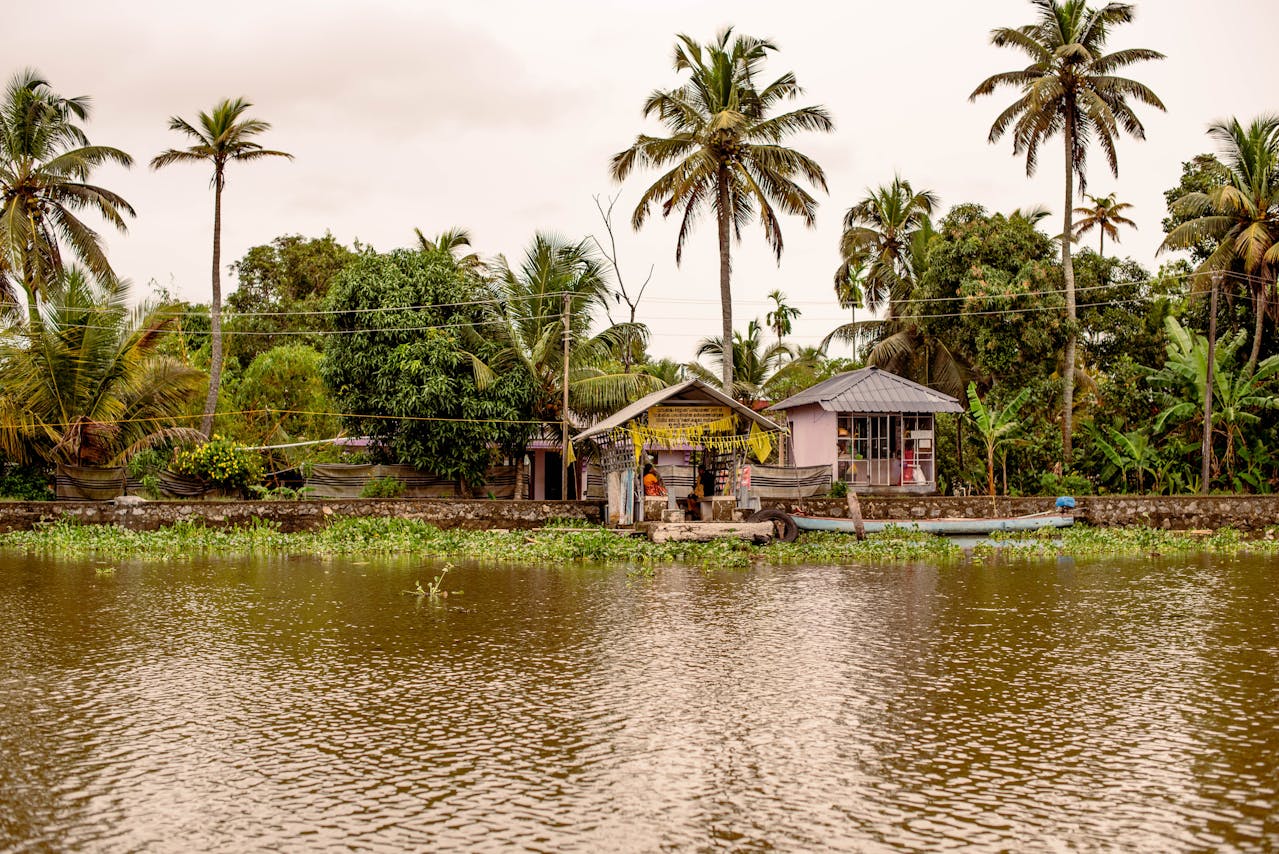
Government support for Kerala’s traditional fishing communities is expanding through welfare schemes, infrastructure investments and livelihood diversification programmes. But the latest figures shared in Parliament reveal a more complex policy landscape, where welfare, sustainability and energy transition are shaping the future of coastal livelihoods.
According to Fisheries Minister Rajiv Ranjan Singh, projects worth ₹1,418.51 crore have been approved for Kerala under the Pradhan Mantri Matsya Sampada Yojana over the past five years and the current financial year. The investments span infrastructure, alternative livelihoods, community support and coastal ecosystem management.
Expanding the fisheries development model
The scale of support highlights how the fisheries sector has become a key focus area in India’s rural livelihood strategy. Traditionally dependent on near-shore fishing and small boats, Kerala’s fisherfolk are increasingly being integrated into a broader fisheries economy that includes aquaculture, value-added processing and modern marketing channels.
Under the approved projects, support has been extended for deep-sea fishing vessels, replacement boats and nets, artificial reefs and aquaculture units. The programme also promotes alternative income sources such as bivalve cultivation, biofloc aquaculture and ornamental fish farming, indicating a shift away from dependence solely on marine capture fishing.
Such diversification is particularly important in Kerala, where coastal fish stocks have faced pressure due to overfishing, climate change and habitat degradation.
Artificial reefs, for instance, are intended to rejuvenate fish populations by creating new marine habitats. Similarly, aquaculture systems such as Re-Circulatory Aquaculture Systems (RAS) and biofloc units allow communities to produce fish in controlled environments, reducing pressure on marine ecosystems.
Building coastal infrastructure and market access
Another dimension of the programme focuses on strengthening the fisheries value chain. Projects approved for Kerala include transport vehicles, fish kiosks, live fish vending centres and value-added enterprise units.
These investments address a long-standing structural problem in India’s fisheries sector: poor post-harvest infrastructure. Without cold storage, transport and processing facilities, a significant portion of fish catch loses value before reaching markets.
By expanding retail outlets and value-added enterprises, policymakers hope to help fishermen and fisherwomen capture a larger share of the final consumer price.
The establishment of Integrated Modern Coastal Fishing Villages and Climate Resilient Coastal Villages also reflects a broader attempt to combine livelihood development with climate adaptation in vulnerable coastal regions.
Welfare and financial inclusion at the state level
Alongside central schemes, the Government of Kerala has continued its own welfare initiatives through institutions such as the Kerala Fishermen Welfare Fund Board and Matsyafed.
These programmes provide interest-free loans, microfinance support, education loans for fishermen’s children, and financial assistance to fisherwomen engaged in fish vending.
Such interventions aim to reduce dependence on informal credit networks that have historically trapped many fishing families in cycles of debt. Access to institutional finance also enables fishermen to upgrade boats, engines and fishing gear.
The kerosene transition dilemma
While fisheries welfare schemes are expanding, another policy shift is affecting the sector: the gradual reduction of kerosene subsidies.
The Ministry of Petroleum and Natural Gas has been reducing allocations of Public Distribution System (PDS) kerosene over the years because of environmental and health concerns. Kerosene is widely considered a polluting fuel and many states have already phased it out.
However, in coastal fishing communities, kerosene still plays a practical role, particularly for lighting and small-scale fishing operations.
Under the new PDS Kerosene Allocation Policy for 2025–26 to 2027–28, states have flexibility to allocate kerosene for specific needs, including fisheries. For Kerala, the allocation has increased sharply to 22,704 kilolitres for 2025–26, compared with 4,368 KL in 2024–25.
Yet utilisation data shows uneven uptake across quarters, suggesting that distribution mechanisms and changing energy patterns may be influencing consumption.
Balancing sustainability with livelihoods
Kerala’s fisheries sector illustrates the broader policy challenge facing India’s coastal economy. On one hand, governments are investing heavily in modernisation, aquaculture and infrastructure to increase incomes. On the other, environmental pressures and energy transitions are reshaping how traditional fishing communities operate.
The combination of livelihood diversification, welfare support and infrastructure investment suggests a long-term effort to reduce the vulnerability of small-scale fishers.
But the success of these initiatives will depend on how effectively traditional fishermen adapt to new production models, and whether policy frameworks can balance sustainability goals with the economic realities of coastal communities.