

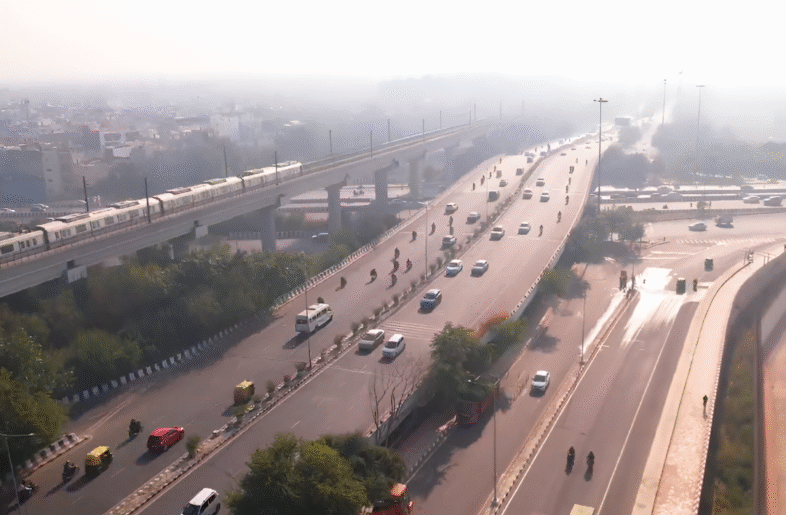
India’s infrastructure story is one of ambition, scale, and transformation. According to the Economic Survey 2025-26, India has emerged as a global leader in infrastructure investment, ranking among the top five countries worldwide for private investment in infrastructure among low- and middle-income economies, as per the World Bank.
This recognition underscores the central role infrastructure plays in India’s growth strategy, with public capital expenditure following a steady upward trajectory since FY15. From roads and railways to ports and renewable energy, India is building the backbone of its economic future.
Infrastructure: The Backbone of Economic Growth
India’s success in infrastructure development has been supported by multimodal planning initiatives such as PM GatiShakti, complemented by the National Logistics Policy and digital platforms that reduce transaction costs and execution risks.
The numbers speak for themselves:
-
Public capital expenditure has surged nearly 4.2 times, from ₹2.63 lakh crore in FY18 to ₹11.21 lakh crore in FY26 (BE). The effective capital expenditure for FY26 is projected at ₹15.48 lakh crore, highlighting infrastructure as a key economic driver.
-
NBFC credit to the commercial sector has grown at a CAGR of 43.3% during FY20–FY25, diversifying infrastructure financing beyond traditional bank credit.
Transforming India’s Transport Network
Roads and Highways
India’s National Highway network has expanded nearly 60%, from 91,287 km in FY14 to 1,46,572 km in FY26.
High-speed corridors have seen a tenfold increase, from 550 km in FY14 to 5,364 km in FY26, improving connectivity and reducing travel time for passengers and goods alike.
Railways
The railway network now spans 69,439 route km (as of March 2025), with 3,500 km targeted for addition in FY26. Electrification has reached 99.1% as of October 2025. Key initiatives include:
-
Economic Railway Corridors
-
Mumbai-Ahmedabad High-Speed Rail
-
Dedicated Freight Corridors
-
Station redevelopment and track upgradation
Aviation
The number of airports has more than doubled, from 74 in 2014 to 164 in 2025. Domestic airports handled 412 million passengers in FY25, projected to rise to 665 million by FY31. Air cargo volumes have also increased from 2.53 MMT in FY15 to 3.72 MMT in FY25.
Ports and Maritime Infrastructure
Initiatives like Maritime India Vision 2030 and Maritime Amrit Kaal Vision 2047 have modernized India’s ports, achieving near-global standards in container turnaround times. Seven Indian ports now feature among the top 100 in the World Bank’s Container Port Performance Index 2024.
Waterways
India now operates 32 National Waterways, spanning 5,155 km, supporting cargo, cruise, and passenger services. Investment in shipbuilding reached ₹69,725 crore in September 2025, revitalizing the maritime ecosystem.
Energy and Renewables
India’s power sector has witnessed sustained expansion, with installed capacity rising 11.6% YoY to 509.74 GW as of November 2025. Renewable energy now constitutes nearly 50% of total capacity, with India ranking:
-
Third globally in overall renewable energy and solar capacity
-
Fourth in installed wind capacity
This growth reflects India’s dual focus on economic development and sustainability, positioning it as a renewable energy powerhouse.
World Bank: A Global Development Partner
India’s recognition by the World Bank highlights the role of international institutions in assessing global economic trends.
The World Bank is an international financial institution established in 1944 to provide funding, technical assistance, and policy advice to developing countries. Its primary aim is reducing poverty and promoting sustainable development worldwide. The Bank provides loans, grants, and expertise for projects ranging from infrastructure to health and education.
-
Headquarters: Washington, D.C., United States
-
President: [Currently David Malpass as of 2025; please confirm the latest]
-
Membership: 189 countries
Through data collection, financing, and policy guidance, the World Bank plays a key role in ranking and advising nations on infrastructure development, private investment, and sustainable economic growth.
India’s Road Ahead
The Economic Survey emphasizes that infrastructure is a multiplier for economic growth, boosting productivity, creating jobs, and enhancing competitiveness. India’s strategic investment in roads, railways, airports, ports, waterways, and renewable energy demonstrates a comprehensive approach to growth, blending modern technology, policy reform, and large-scale investment.
With continued focus on innovation, multimodal planning, and private sector participation, India is poised to strengthen its position as a global leader in infrastructure development, contributing to a more inclusive and sustainable economy.