

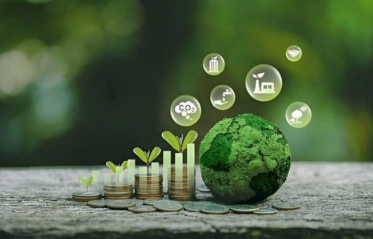
From sanitation to circular economy, India’s SDG journey reflects a shift toward balancing prosperity with environmental responsibility
India’s development story is entering a new phase—one that is not defined by economic growth alone, but by how sustainably that growth is achieved. Recent thematic reports released by the Ministry of Statistics and Programme Implementation offer a compelling glimpse into this transition, highlighting the country’s progress under the “Planet” and “Prosperity” pillars of the Sustainable Development Goals.
Together, these reports tell a larger story: India is attempting to weave environmental consciousness into the fabric of its economic ambitions. It is a delicate balance—one that requires not just policy shifts, but a reimagining of how development itself is defined.
India blends sustainability with growth in twin-track model: Mospihttps://t.co/AHfHCOa2CC
via NaMo App pic.twitter.com/YJ9YSHexlF
— PMO India (@PMOIndia) March 19, 2026
A Sanitation Transformation
Few initiatives illustrate this shift more clearly than the Swachh Bharat Mission. What began as a nationwide cleanliness drive has grown into a transformative public health movement. The achievement of Open Defecation Free (ODF) status across all districts by 2019–20 marked a turning point, not just in infrastructure, but in behavioural change.
Behind this milestone lies a deeper impact—improved dignity, especially for women, better health outcomes, and safer living conditions in both rural and urban India. It is a reminder that sustainability is as much about people as it is about the planet.
Inclusion at the Core
The reports also highlight progress in gender-sensitive sanitation, particularly in schools. Regions such as Chandigarh, Goa, Delhi, Dadra and Nagar Haveli, Andaman and Nicobar Islands, and Lakshadweep have achieved full compliance—ensuring that girls have access to safe and functional sanitation facilities.
This may seem like a small step in the larger development narrative, but its ripple effects are profound. Access to proper sanitation directly influences school attendance, confidence, and long-term opportunities for young girls. In this sense, infrastructure becomes a tool for social equity.
From Waste to Wealth
Perhaps the most forward-looking aspect of India’s sustainability journey is its growing focus on waste management and the circular economy. In just a few years, the number of waste recycling facilities has expanded dramatically—from fewer than a thousand to over 3,000.
This expansion has helped prevent millions of tonnes of plastic waste from ending up in landfills. But beyond environmental gains, it has unlocked new economic possibilities. Recycling is no longer seen merely as a necessity—it is emerging as a sector that generates jobs, supports innovation, and creates value from what was once discarded.
Redefining Development
What emerges from these findings is a broader shift in mindset. Development is no longer measured solely by output or industrial growth, but by its sustainability, inclusiveness, and long-term impact.
India’s approach reflects an understanding that economic progress cannot come at the cost of environmental degradation. Instead, the two must move together—guided by efficiency, responsibility, and a commitment to future generations.
The Road Ahead
Challenges remain. Rapid urbanisation, climate pressures, and resource constraints will continue to test the country’s ability to sustain this balance. Yet, the direction is clear.
By aligning policy with data, and growth with sustainability, India is laying the groundwork for a model of development that is both resilient and inclusive. The journey is ongoing, but the shift is unmistakable—a move toward growth that not only builds wealth, but also protects the world it depends on.