

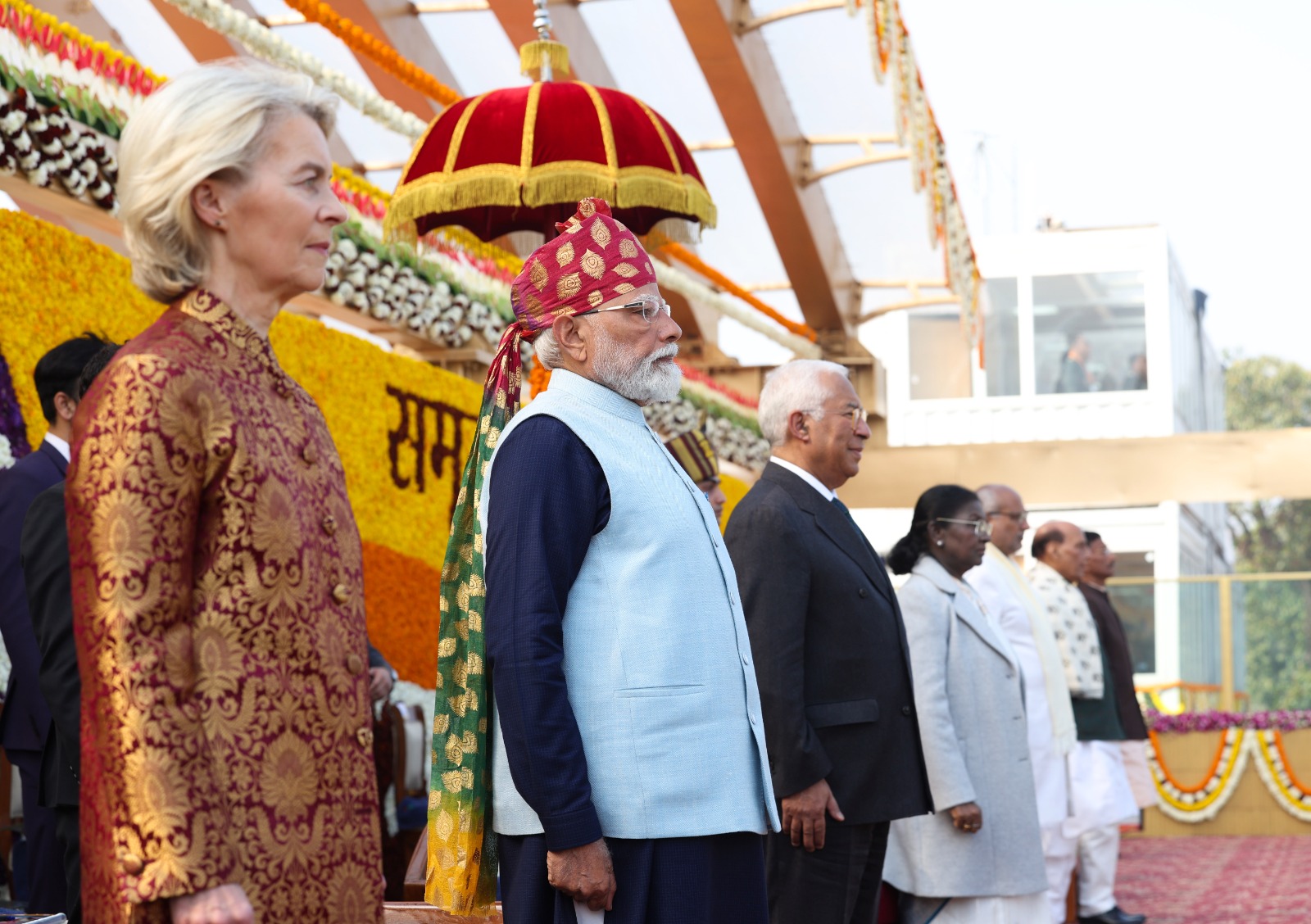
New Delhi / Brussels: After 18 years of negotiations, India and the European Union (EU) have finalized a historic Free Trade Agreement (FTA), a move that could reshape global trade patterns and boost economic growth for both partners. The announcement, made on January 27, 2026, signals a new era in bilateral relations, connecting 2 billion people, accounting for 25% of global GDP, and covering one-third of global trade.
The FTA is set to be signed later this year and may come into force from early 2027. By reducing or eliminating duties on over 90% of EU goods entering India and providing reciprocal market access for Indian exports, the agreement aims to create a more integrated and competitive trade framework.
Addressing the joint press meet with European Council President António Costa and European Commission President Ursula von der Leyen.@eucopresident @vonderleyen @EUCouncil @EU_Commission https://t.co/0hh4YX8DHe
— Narendra Modi (@narendramodi) January 27, 2026
Strategic Sectors and Key Discussions
The India-EU FTA was not just about lowering tariffs—it included focused negotiations across multiple high-impact sectors, reflecting the economic priorities of both parties.
1. Manufacturing and Industrial Goods
Industrial and manufacturing goods were a central part of the discussions. Europe sought easier access for automobiles, machinery, and engineering products, while India aimed to enhance exports of textiles, leather products, and pharmaceuticals. Reduced tariffs on industrial machinery and components are expected to make Indian manufacturing more competitive, stimulate domestic production, and encourage technology transfer from European companies.
2. Automobiles and Mobility
Automobile trade was another major focus. The FTA includes gradual tariff reductions for cars and commercial vehicles, which will help European automakers expand in India while supporting domestic suppliers. At the same time, Indian automotive companies, particularly in the electric vehicle (EV) and two-wheeler segments, may gain improved access to European markets.
3. Pharmaceuticals and Healthcare
Healthcare and pharmaceutical exports were a priority for India. The agreement will facilitate market entry for Indian generic drugs and medical devices while ensuring adherence to EU regulatory standards. This sector is poised to benefit from a streamlined approval process, encouraging further research, development, and investment in biotechnology and life sciences.
4. Information Technology and Services
Services trade, particularly in IT, consulting, and professional services, formed a core part of the FTA discussion. India’s IT and business process outsourcing (BPO) industries are expected to benefit from mutual recognition agreements, easier visa norms, and digital trade facilitation, allowing smoother service delivery to EU clients. European companies will also gain access to India’s burgeoning services sector, including financial, legal, and engineering services.
5. Agriculture and Food Products
Agriculture and food products were another critical area. The FTA focuses on reducing tariffs and non-tariff barriers for processed foods, specialty grains, and dairy products. This will encourage Indian farmers to scale up production for export markets while giving European agricultural exporters better access to India’s vast consumer base.
6. Sustainable and Green Industries
Sustainability was a defining theme of the negotiations. Both parties discussed clean energy technologies, green infrastructure, and environmental standards, signaling a push toward sustainable development. The FTA encourages collaboration in renewable energy projects, EV manufacturing, and eco-friendly industrial processes.
Economic Implications
The FTA is expected to transform bilateral trade, boost investment confidence, and create employment opportunities across multiple sectors:
-
Boost to Manufacturing: Lower tariffs on machinery and components will reduce production costs, enhancing competitiveness for Indian industries.
-
Services Expansion: IT, professional services, and fintech are expected to see greater access to European markets, encouraging innovation and digital transformation.
-
Investment Confidence: European firms may increase investment in India due to more predictable trade rules and easier market access.
-
Agricultural Growth: Reduced barriers will enable Indian agricultural exporters to expand into European markets, benefiting rural economies.
-
Green Economy Opportunities: Collaboration in renewable energy, EVs, and sustainable practices may accelerate India’s transition toward a greener economy.
Long-Term Strategic Impact
Beyond trade, the India-EU FTA strengthens political and economic ties and demonstrates the benefits of rules-based international trade amid global uncertainties. It sets a benchmark for future bilateral agreements and positions India as a key player in global supply chains, while giving the EU access to one of the fastest-growing consumer markets in the world.
By fostering a rules-based, transparent trade framework, the agreement also encourages innovation, investment, and entrepreneurship. Both sides are expected to benefit from a more predictable trade environment, with reduced barriers and clearer regulations, paving the way for sustainable economic growth.
A Historic Milestone
The FTA’s conclusion is a reminder of the value of strategic patience and long-term negotiation. Over the past 18 years, discussions have navigated complex issues such as tariffs, intellectual property rights, regulatory alignment, and market access. With this agreement, India and the EU have set a new global benchmark for comprehensive, mutually beneficial trade partnerships.
This landmark deal promises to open doors for industries, strengthen investment ties, and create new economic opportunities, demonstrating that collaboration and vision can redefine international trade.