


Aug 24: A holiday is supposed to be a break from everyday life. Yet for many travellers, the smartphone now travels everywhere with them. From checking emails and social media to photographing meals, navigating unfamiliar streets and responding to work messages, staying connected has become almost automatic.
That is creating a new opportunity for the hospitality industry: digital detox experiences.
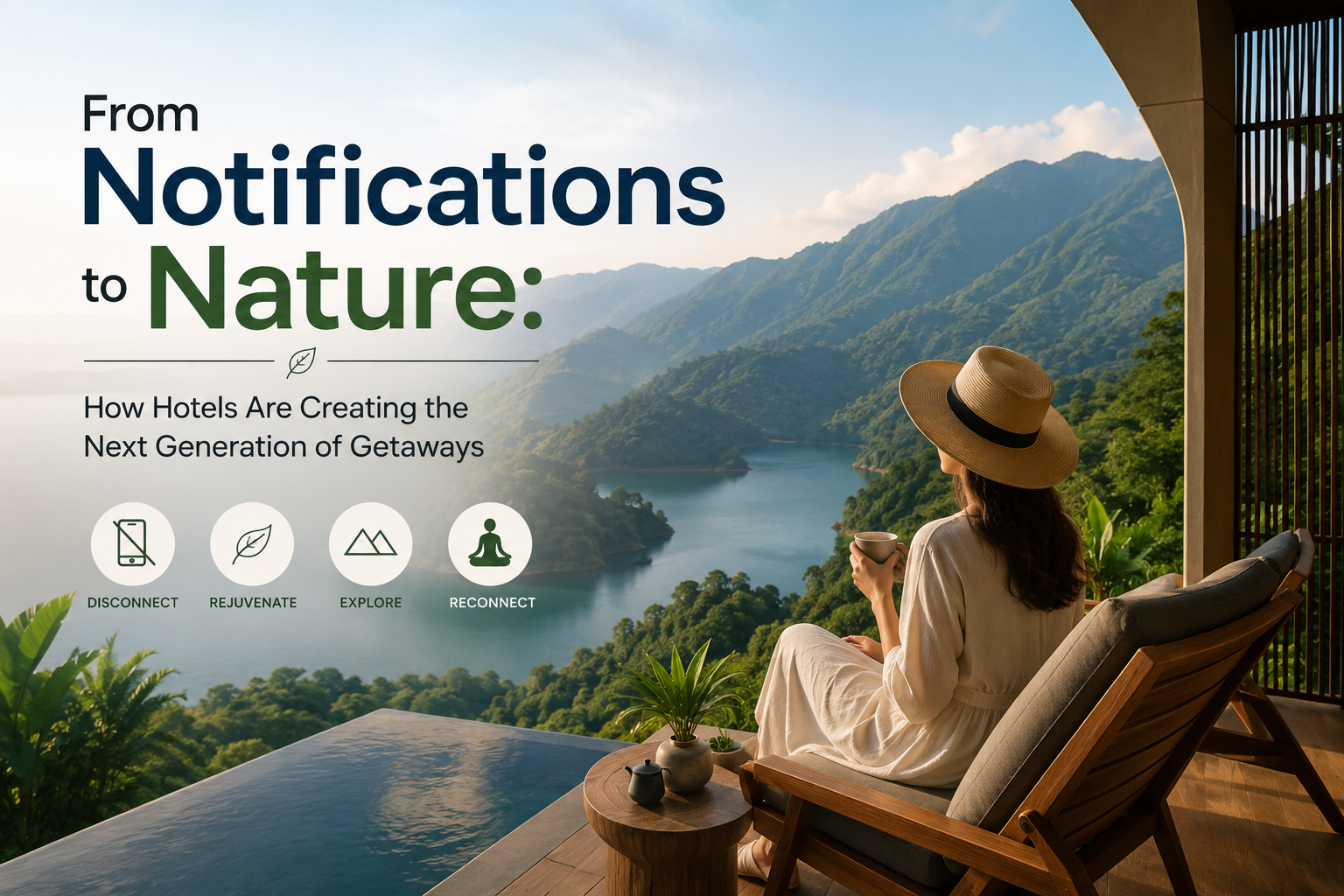
Hotels and resorts are exploring ways to encourage guests to put their devices aside and focus on sleep, nature, wellness, food and human connection. This is giving rise to a new type of hospitality experience built around screen-free holidays, mindful travel and digital disconnection.
The trend is also closely linked to the growth of wellness tourism. The Global Wellness Institute estimates that global wellness tourism reached $893.9 billion in 2024 and is projected to reach approximately $1.38 trillion by 2029.
For hotels, this creates an opportunity to turn “switching off” into a genuine guest experience.
Why Hotels Are Embracing Digital Detox Travel
Smartphones have changed the way people experience holidays.
Guests may check notifications over breakfast, photograph every meal, scroll through social media beside a pool or respond to work messages from their hotel room. Even when travelling, it can be difficult to completely escape digital routines.
Hotels are responding by creating spaces and experiences that encourage guests to disconnect.
The objective is not necessarily to ban smartphones. Instead, hotels can encourage more intentional technology use while providing compelling alternatives.
A digital detox programme might combine accommodation with nature walks, meditation, spa treatments, reading, local cuisine and device-free activities.
Research Supports the Digital-Free Hospitality Concept
The idea is gaining support from emerging hospitality research.
A 2026 study published in the International Journal of Tourism Research found that memorable digital-free hospitality experiences were associated with higher subjective wellbeing, psychological resilience and intention to revisit. The research also identified novelty, guest participation and a feeling of refreshment as important elements in creating memorable digital-free experiences.
The researchers observed:
“People today are feeling exhausted by the continual distraction of mobile devices.”
This finding is significant for hotels. A successful digital detox experience is not simply about taking a phone away from a guest. It is about replacing digital distraction with experiences that feel refreshing, engaging and memorable.
What Is a Digital Detox Hotel Experience?
A digital detox hotel experience is designed to help guests reduce their dependence on connected devices during their stay.
Some hotels may create dedicated phone-free packages, while others can introduce specific areas and activities where guests are encouraged to disconnect.
These experiences can include:
- Smartphone-free dining
- Device-free wellness sessions
- Phone storage boxes
- Screen-free rooms or zones
- Guided nature walks
- Meditation and yoga
- Reading corners
- Board games
- Journaling
- Outdoor activities
- Local cultural experiences
The idea is simple: give guests something meaningful to experience instead of automatically reaching for a screen.
Digital Detox Is Becoming Part of Wellness Travel
The rise of screen-free hospitality is closely connected with wellness tourism.
The Global Wellness Institute estimates that the global wellness economy reached $6.8 trillion in 2024, demonstrating the scale of consumer spending around health and wellbeing.
Hotels have already responded with spa treatments, yoga programmes, fitness facilities, healthy dining and meditation retreats.
Digital detox adds another dimension to these offerings.
Instead of focusing only on physical wellbeing, hotels can create experiences that encourage guests to slow down, pay attention to their surroundings and establish temporary boundaries around technology.
Nature Is a Natural Digital Detox
Hotels located near forests, mountains, beaches, plantations and other natural environments have an advantage when creating digital detox experiences.
Nature gives guests something else to focus on.
Instead of spending an afternoon scrolling through a phone, guests can hike, swim, cycle, birdwatch or simply sit outdoors.
A resort could, for example, organise a morning nature walk where guests are encouraged to leave their phones behind, followed by a locally sourced breakfast.
The experience becomes less about removing technology and more about replacing screen time with something memorable.
Hotels Are Reimagining the Guest Room
Digital detox can also influence the design of hotel rooms.
A conventional room may be built around television, charging points and constant connectivity. A digital detox room could take a different approach.
It might include:
- Books and magazines
- Writing journals
- Board games
- Art materials
- Meditation cushions
- Tea-making facilities
- Comfortable reading spaces
- Natural lighting
- Outdoor seating
The goal is not to make the room less comfortable. Instead, it is to create more opportunities for offline relaxation.
Phone-Free Dining Can Create Better Experiences
Hotels and restaurants can also introduce device-free dining.
Guests can be encouraged to keep smartphones away from the table and focus on their food and conversations.
This can become part of a larger culinary experience, such as a chef-led dinner, local-food storytelling or a traditional cooking demonstration.
The experience becomes about being present rather than documenting every course.
For couples, families and groups, such experiences can also encourage greater interaction during the holiday.
Screen-Free Activities Can Replace Digital Entertainment
A successful digital detox experience needs attractive alternatives.
Hotels can offer:
- Guided walks
- Stargazing
- Local craft workshops
- Cooking classes
- Gardening
- Cycling
- Yoga
- Meditation
- Art sessions
- Storytelling
- Live acoustic performances
These activities can also introduce guests to local culture.
A digital detox holiday does not have to mean sitting quietly in a room. It can be active, social and experiential.
Digital Detox Does Not Mean No Wi-Fi
Completely removing connectivity may not be practical for every traveller.
Guests may need smartphones for emergencies, digital payments, transportation or communication with family.
Hotels can therefore focus on intentional disconnection rather than complete technological isolation.
A property could offer a digital detox hour each evening, encourage phones to be stored during meals or provide device-free activities during selected parts of the day.
This flexible approach makes the concept more appealing to mainstream travellers.
India Could Become an Important Market
India has considerable potential for digital detox hospitality because of its wellness traditions, diverse landscapes and growing interest in experience-led travel.
Destinations such as Kerala, Uttarakhand, Himachal Pradesh, Karnataka and parts of Northeast India offer natural settings for screen-free experiences.
Kerala, for example, can combine Ayurveda, backwater experiences, yoga, local cuisine and nature.
A Himalayan retreat could combine hiking, meditation, stargazing and local cultural experiences.
A plantation retreat in Karnataka could combine nature walks, coffee experiences, reading and wellness activities.
The opportunity lies in combining India’s established wellness heritage with modern digital-detox concepts.
Digital Detox Can Help Hotels Differentiate Their Brands
The hospitality industry is highly competitive.
Hotels traditionally compete on location, room quality, facilities, pricing and service. Digital detox offers another potential point of differentiation.
Instead of simply selling a room, a hotel can sell a specific state of mind.
A three-night digital detox package could include accommodation, wellness sessions, nature activities, device-free meals and a personalised itinerary.
This gives the property a distinctive proposition beyond a conventional weekend package.
The Experience Matters More Than the Phone Ban
One of the biggest mistakes a hotel could make is treating digital detox simply as a restriction.
Telling guests to surrender their phones without providing meaningful alternatives could create frustration rather than relaxation.
Research into digital-free hospitality highlights the importance of memorable experiences, refreshment and guest participation.
Hotels therefore need to focus on what guests gain.
An evening without social media could be replaced with a sunset walk, local dinner, live music and stargazing.
The message becomes:
You are not giving up your phone; you are gaining more time for yourself.
Marketing Digital Detox Experiences
Hotels also need to communicate the concept carefully.
Marketing should not suggest that smartphones or technology are inherently negative. Instead, campaigns can focus on creating temporary boundaries.
Potential messaging could include:
“Three days. No notifications. More time for yourself.”
Or:
“Leave your phone. Take home the experience.”
Visual storytelling can be particularly effective. Hotels can showcase guests reading beside a window, walking through a forest, enjoying a meal, practising yoga or watching a sunset.
The product being marketed is ultimately time, attention and connection.
The Commercial Opportunity for Hospitality
Digital detox experiences can create new revenue opportunities for hotels.
They can be packaged alongside:
- Spa treatments
- Wellness retreats
- Premium dining
- Nature excursions
- Longer stays
- Couples’ packages
- Family holidays
- Corporate retreats
- Weekend getaways
Hotels may not need major infrastructure investments to create these experiences. Existing gardens, restaurants, walking trails, libraries and wellness spaces can often be brought together under a well-designed digital detox package.
What Could the Future Look Like?
Digital detox could gradually become part of mainstream hospitality rather than remaining a niche wellness concept.
Hotels could offer different levels of digital disconnection:
Light detox: No phones during meals.
Half-day detox: Devices stored during selected activities.
Weekend detox: Limited connectivity throughout the stay.
Full retreat: A structured screen-free experience combining wellness, nature and offline activities.
This flexible model allows guests to choose the level of disconnection that suits them.
Conclusion
The rise of screen-free holidays is creating a new opportunity for hotels and resorts.
As smartphones become increasingly embedded in everyday life, travellers may value experiences that help them temporarily step away from notifications and digital demands.
The growth of wellness tourism provides a strong commercial backdrop, with global wellness tourism reaching $893.9 billion in 2024 and projected to reach approximately $1.38 trillion by 2029.
Emerging hospitality research also suggests that memorable digital-free experiences can be associated with greater wellbeing, psychological resilience and intention to revisit.
For hotels, the opportunity is therefore not simply to take technology away from guests. It is to give them something better to focus on.
The next generation of wellness hospitality could be about creating spaces where guests can put down their phones, slow down, reconnect with others and genuinely experience the destination.
In a world that is always connected, the ability to switch off could become one of hospitality’s most valuable experiences.