

Seeds are the foundation of agriculture—and the starting point of food security.
Yet across Africa and India, millions of farmers continue to plant crop varieties developed decades ago, many of which are poorly suited to today’s changing climate and evolving nutritional needs.
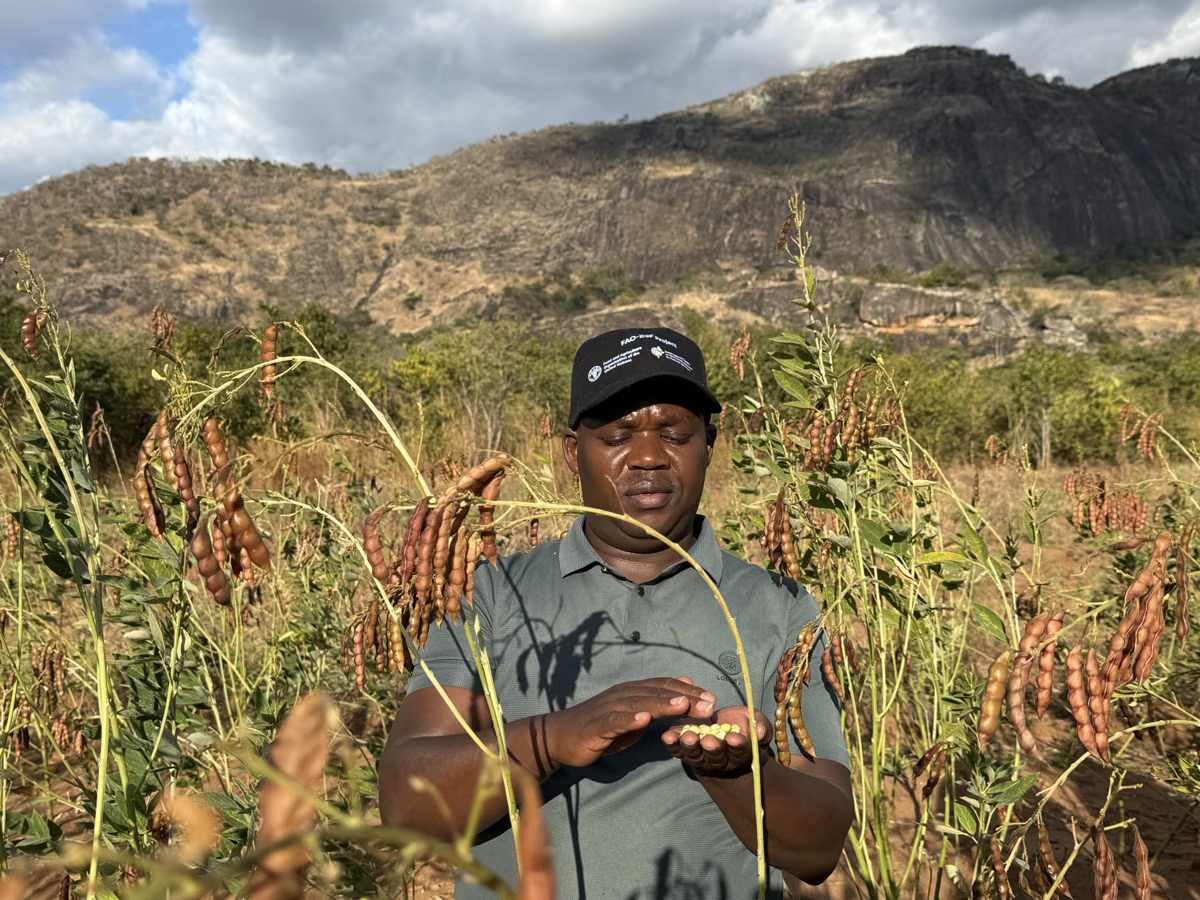
This challenge is largely driven by low seed replacement rates and slow varietal turnover. As a result, farmers often recycle seeds from previous harvests, gradually reducing yield potential and resilience. Over time, these seeds lose vigor and purity, leaving farmers dependent on outdated genetics that struggle against emerging pests, diseases, and climate stresses.
The consequences are subtle but serious: productivity declines steadily, and vulnerability deepens.
At the same time, agricultural science has advanced significantly. Today’s improved seeds reflect decades of progress in genomics, crop breeding, and climate adaptation.
In India’s drylands, new-generation pearl millet hybrids developed through partnerships with ICRISAT are delivering yield gains of up to 28% under drought conditions, while also enhancing disease resistance and fodder value.
Across Africa, biofortified pearl millet varieties released in countries such as Ethiopia—alongside hybrid innovations in Nigeria—are improving both productivity and nutrition by increasing iron and zinc content in staple crops.
The issue is not the absence of better seeds. It is that these innovations are not reaching farmers quickly enough. Closing this gap requires robust, science-driven seed systems capable of delivering improved varieties at scale.
This is where the work of ICRISAT stands out. Its strength lies not only in developing improved crop varieties, but also in ensuring their effective delivery through integrated, evidence-based approaches.
This systems-focused approach is reflected in the broader efforts of researchers across the CGIAR network, whose collaborations across Africa and Asia are helping bridge the gap between innovation and adoption.
Contributions from scientists such as Dr. Manzoor Dar have enabled millions of farmers to access stress-tolerant crops. Such efforts have received global recognition, including the 2025 Top Agri-Food Pioneer award from the World Food Prize Foundation.
This collective, systems-driven model is already delivering tangible results.
A compelling example comes from Malawi, where farmers have partnered with ICRISAT for over four decades to transform food systems and livelihoods.
Under the leadership of scientists such as Dr. Sam Njoroge and Dr. James Mwololo, this transformation has been driven by the Seed Revolving Fund—a model designed to ensure that improved seeds circulate continuously within farming systems, rather than being distributed just once.
