

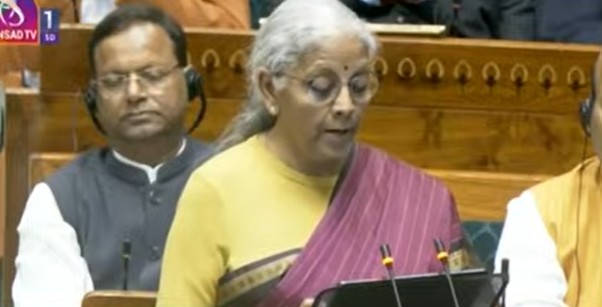
Feb 1: India’s Union Budget 2026 marks a strategic shift in economic policymaking, as Finance Minister Nirmala Sitharaman unveiled a Three ‘Kartavya’ Framework aimed at accelerating growth while ensuring inclusivity, responsibility, and long-term stability. Moving beyond short-term fiscal measures, the framework outlines a shared vision for government, industry, and citizens to collectively shape India’s economic future.
The Three Kartavyas reflect a mission-led approach to governance, focusing on policy continuity, structural reforms, and sustainable development as India progresses toward its long-term national goals.
Understanding the Three ‘Kartavya’ Framework
The Three Kartavya Framework defines distinct responsibilities that together form the foundation of India’s growth strategy under Budget 2026. Each Kartavya plays a critical role in ensuring that economic expansion is balanced, resilient, and inclusive.
Kartavya 1: Government’s Role – Stability, Infrastructure, and Policy Continuity
The first Kartavya emphasises the government’s responsibility to create a stable and enabling environment for growth. This includes sustained investment in infrastructure, regulatory simplification, and fiscal discipline. By maintaining policy consistency, the government aims to boost investor confidence and support long-term capital formation.
Investments in transport, digital infrastructure, education, healthcare, and urban development under this Kartavya are intended to strengthen productivity and ensure balanced regional growth.
Kartavya 2: Industry’s Role – Innovation, Manufacturing, and Job Creation
The second Kartavya places responsibility on industry to act as a key driver of economic expansion. Businesses are encouraged to invest in advanced technologies, expand manufacturing capabilities, and integrate with global value chains. Innovation, efficiency, and ethical business practices form the core of this responsibility.
Through increased private investment and job creation, industry participation is expected to enhance India’s competitiveness and economic resilience in a rapidly changing global landscape.
Kartavya 3: Citizens’ Role – Skills, Participation, and Sustainability
The third Kartavya highlights the importance of citizen participation in nation-building. It focuses on skill development, entrepreneurship, digital adoption, and responsible consumption. By equipping individuals with future-ready skills and encouraging active participation in the formal economy, this Kartavya aims to ensure that growth benefits a wider section of society.
Citizen engagement also plays a vital role in promoting sustainability and social accountability across economic activities.
Driving Inclusive and Responsible Growth
Together, the Three Kartavyas create a collaborative framework where growth is driven by shared responsibility. This approach ensures that economic benefits reach both urban and rural areas, reduce inequality, and generate long-term employment opportunities.
The framework also integrates environmental sustainability, aligning development priorities with climate goals and efficient resource use.
Strengthening India’s Long-Term Economic Vision
A key strength of the Three Kartavya Framework is its focus on long-term policy clarity. Predictable and stable policies reduce uncertainty, support strategic planning, and attract domestic and global investment. This clarity is essential for sectors such as infrastructure, manufacturing, clean energy, and technology, where long-term commitments are critical.
A Roadmap for India’s Future
With the introduction of the Three Kartavya Framework in Budget 2026, Finance Minister Nirmala Sitharaman has outlined a clear roadmap for India’s economic transformation. By balancing growth with responsibility and participation, the framework supports India’s ambition of becoming a resilient, inclusive, and globally competitive economy.
As India moves forward, the Three Kartavyas will serve as guiding principles—ensuring that development is not only faster, but also fairer and more sustainable.