


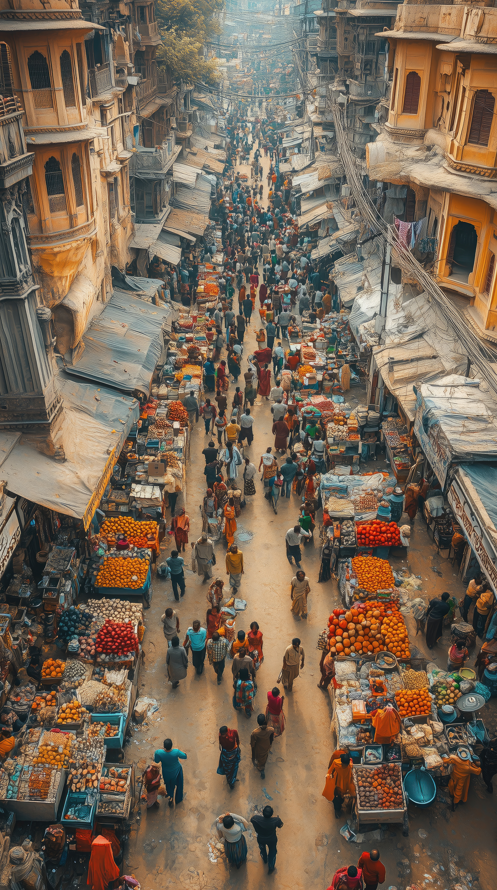
Heritage is no longer a side narrative in India’s tourism economy. It is the main driver.
Valued at approximately USD 32.7 billion in 2024, India’s heritage tourism market is projected to reach nearly USD 57 billion by 2033. Within that, cultural heritage accounts for over 56% of total revenue, making it the single largest contributor to the country’s heritage travel economy.
That dominance is not accidental. It reflects a structural shift in how, why and where people are traveling.
Experience Over Escape
Cultural heritage tourism — spanning historic cities, monuments, pilgrimage circuits, craft traditions and festivals — sits at the intersection of emotion and economics. It delivers what modern travelers increasingly seek: immersion.
Post-pandemic travel has moved beyond leisure escapes to meaning-driven journeys. Travelers want context, storytelling and authenticity. India, with its layered civilisations and living traditions, is uniquely positioned to meet that demand.
The fact that cultural heritage commands more than half of the sector’s revenue signals not just popularity, but purchasing power. These are travelers willing to spend on guided tours, curated experiences and longer itineraries.
The Sector-Wide Ripple Effect
A 56% revenue share reshapes the broader tourism value chain.
Cultural visitors tend to stay in a mix of mid-range and boutique hotels, often choosing properties that reflect local architecture or heritage character. They spend on guided walking tours, culinary trails, craft workshops and spiritual experiences. They shop for handicrafts and dine at regional restaurants. The economic multiplier effect benefits:
- Small and heritage hotels
- Regional airlines and secondary airports
- Experience-led tour operators
- Local guides and artisans
- Homegrown F&B brands
For hotel companies and investors, the data is instructive. If cultural heritage accounts for over half of heritage tourism revenue, product development should follow the demand. That means adaptive reuse of heritage properties, experiential F&B concepts, destination-led storytelling and curated guest itineraries.
“Travelers coming for cultural experiences are seeking depth, not just accommodation,” says Ambika Saxena, CEO, TWH Hospitality. “We are seeing stronger performance in destinations where the stay itself reflects the local narrative. Guests want architecture, cuisine and programming that connect them to the place.”
In other words, heritage is no longer a location. It is a product strategy.
Trade Platforms and The Commercial Pipeline
The growth of cultural tourism is also being shaped behind the scenes — on trade floors and B2B platforms.
Trade marketplaces play a critical role in connecting state tourism boards, inbound operators, hoteliers and international buyers. They convert storytelling into structured business conversations.
Mr Yogesh Mudras, Managing Director, Informa Markets in India, says, “At a time when cultural heritage accounts for 56% of the USD 32 billion India heritage tourism market the industry is moving from conversation to structured opportunity. We have clearly gone beyond the stage of showcasing destinations and monuments to an integrated ecosystem where states, private operators and global buyers are aligning on how India’s 43 UNESCO World Heritage Sites and thousands of living heritage experiences can be packaged, positioned and scaled responsibly.
“SATTE plays a critical role in that alignment. It is a platform where government stakeholders, industry leaders and international partners engage in outcome-driven dialogue. The business on the showfloor is important, but equally vital are the leadership conversations that shape policy thinking, market maturity and long-term growth. By bringing 2,000+ exhibitors from 60+ countries, SATTE brings together with purpose the conversations that shape how India travels and how the world discovers India.” he added.
In a market projected to approach USD 57 billion within the decade, these trade connectors become growth accelerators.
Infrastructure, Policy and the Road Ahead
Improved regional connectivity, digital discovery platforms and domestic tourism campaigns are amplifying the upward curve. Tier-2 and tier-3 cultural hubs are becoming more accessible, allowing weekend and short-haul travel to supplement traditional pilgrimage and long-haul circuits.
Yet growth must be managed carefully. Over-tourism, conservation pressures and infrastructure strain could challenge long-term sustainability if not balanced with preservation.
The Business of Identity
Globally, heritage tourism is worth hundreds of billions annually. India’s trajectory — with cultural heritage commanding over 56% of its USD 32.7 billion market — suggests the country is leaning into its most durable competitive advantage.
In an era where destinations compete through scale and spectacle, India’s edge lies in authenticity.
And as projections point toward USD 57 billion by 2033, the data makes one thing clear: in India, history is not just preserved — it is monetised, curated and increasingly central to the future of travel.