


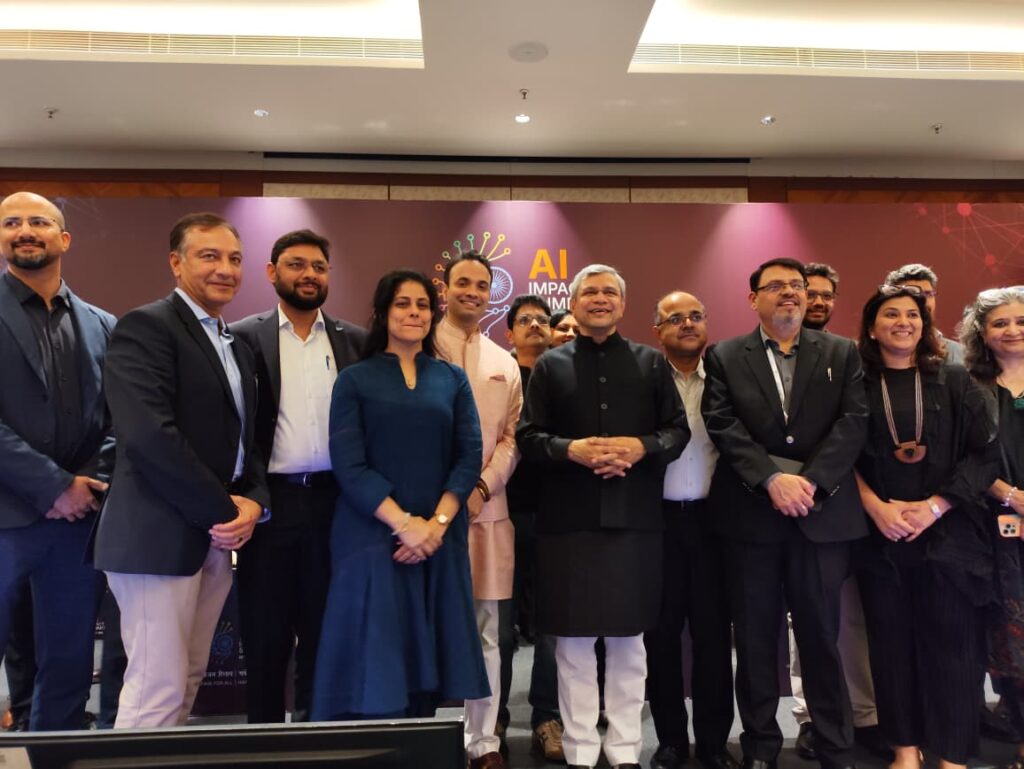
India has set its sights on becoming a global powerhouse in artificial intelligence (AI) and data infrastructure, with projected investments exceeding $200 billion over the next two years. The ambitious outlook was highlighted by Union Minister for Electronics and Information Technology, Ashwini Vaishnaw, during the India AI Impact Summit in the national capital.
The summit, attended by policymakers, global technology leaders, startup founders, investors, and researchers, marked a defining moment in India’s digital growth story. It underscored the country’s readiness to scale AI capabilities across industries while positioning itself as a trusted and inclusive technology partner on the global stage.
A Strong Investment Pipeline
India’s AI investment momentum is already underway. Substantial financial commitments have been secured, with additional large-scale announcements in data centers, cloud services, semiconductor ecosystems, and AI platforms. Policy measures—including tax incentives for companies establishing digital infrastructure—have created a favorable environment for long-term capital inflow.
The government’s strategic push focuses not only on attracting funds but also on building a comprehensive AI stack. This includes:
-
Advanced hardware and semiconductor capabilities
-
Expanding data center capacity
-
High-performance computing and cloud platforms
-
AI-driven software solutions and real-world applications
By strengthening each layer of the AI ecosystem, India aims to ensure both technological independence and global competitiveness.
Core Objectives of the Summit
The India AI Impact Summit served as more than a platform for announcements. It outlined a long-term roadmap for responsible, inclusive, and innovation-driven AI development. Key objectives include:
1. Building Robust Digital Infrastructure
Expanding data centers, cloud networks, and AI compute facilities to meet growing domestic and global demand.
2. Democratizing AI Access
Promoting affordable and open AI solutions, particularly for developing nations, through collaborative frameworks and shared innovation models.
3. Strengthening Research and Innovation
Encouraging startups, academic institutions, and private enterprises to accelerate AI research and product development.
4. Developing Skilled Talent
Integrating AI-focused curricula in universities and launching reskilling initiatives to prepare India’s workforce for the evolving digital economy.
Transformational Impact Across Key Sectors
The scale of projected investment is expected to influence nearly every sector of the economy.
Healthcare Revolution
AI technologies are enhancing early disease detection, medical imaging analysis, drug discovery, and predictive healthcare systems. Telemedicine platforms powered by AI can bridge the rural-urban healthcare divide, ensuring faster and more accurate diagnosis.
Business and Industry Modernization
AI-driven automation and predictive analytics are helping industries optimize supply chains, improve manufacturing efficiency, and reduce operational costs. Startups are leveraging AI for fintech, e-commerce, logistics, and customer service innovation, strengthening India’s entrepreneurial ecosystem.
Infrastructure and Smart Cities
AI will play a central role in urban planning, traffic management, energy optimization, and digital public services. Smart infrastructure systems can reduce waste, improve efficiency, and enhance citizens’ quality of life.
Agriculture and Rural Development
From crop forecasting to soil analysis and climate risk prediction, AI tools can empower farmers with real-time insights. This improves productivity, reduces losses, and supports sustainable farming practices.
Education and Skill Development
AI-enabled personalized learning platforms are transforming classrooms. Adaptive learning tools help students progress at their own pace, while digital certification programs equip young professionals with industry-relevant skills.
India’s Global Positioning
India’s expanding AI capabilities are strengthening its image as a dependable global technology partner. By combining affordability, innovation, and large-scale talent availability, the country is offering scalable AI solutions to both developed and developing markets.
The summit also emphasized the importance of ethical AI governance—ensuring transparency, accountability, and responsible data use. As nations worldwide debate AI regulation and safety, India is advocating balanced policies that encourage innovation while safeguarding public interest.
The Road Ahead
The next two years are expected to be transformative for India’s digital economy. With sustained policy support, private-sector collaboration, and global partnerships, AI is poised to become a central pillar of national growth.
The India AI Impact Summit has signaled a clear message: India is not merely adopting artificial intelligence—it is shaping its future. Through large-scale investment, infrastructure expansion, and inclusive innovation, the country aims to lead in the AI era while ensuring that technological progress benefits every sector of society.