


At DMA House in Daryaganj, the Delhi Medical Association (DMA) and Alcoholics Anonymous (AA) Delhi Region brought doctors and individuals in recovery onto the same platform for a public information meet on alcoholism. The focus was direct: addiction as a medical condition, its impact on families, and the path to sustained recovery.
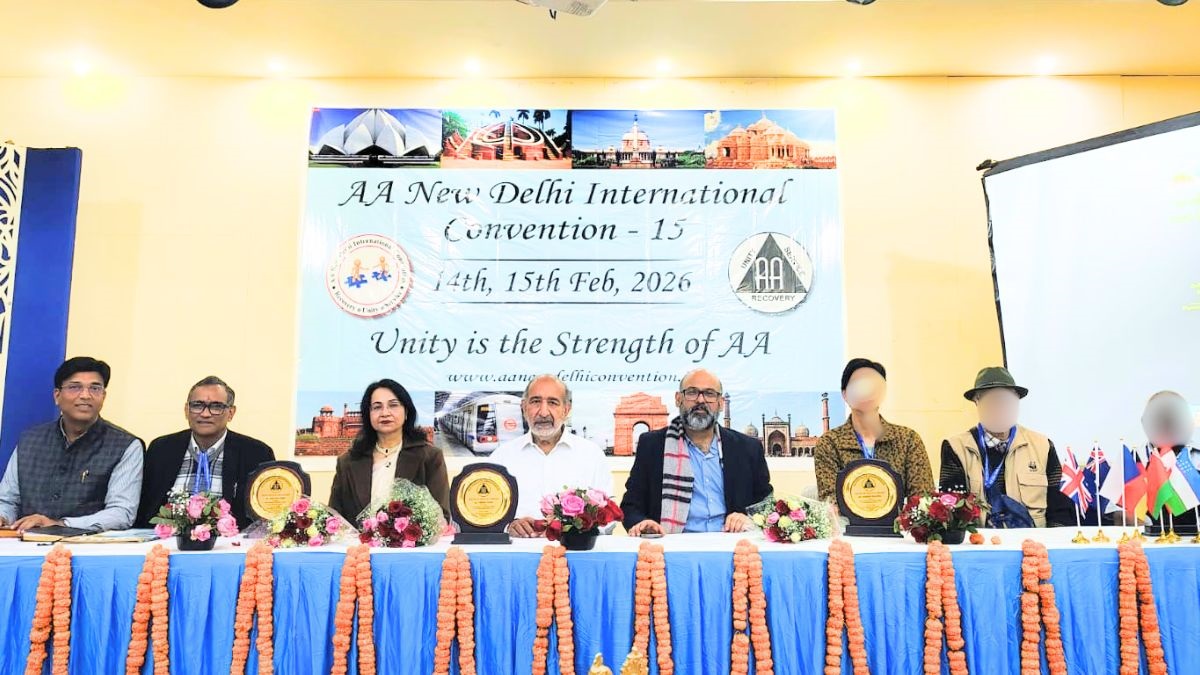
Doctors confront the reality in their clinics
Dr. Girish Tyagi, President of DMA, spoke from clinical experience. He said patients usually approach doctors after months or years of damage.
“When a person drinks compulsively, the suffering does not remain confined to him,” he said. “The wife suffers. The children suffer. The parents suffer.”
He explained that many individuals conceal their drinking from family members. However, once they sit across from a doctor, they often speak honestly. “People hide things at home. In a doctor’s chamber, they open up.”
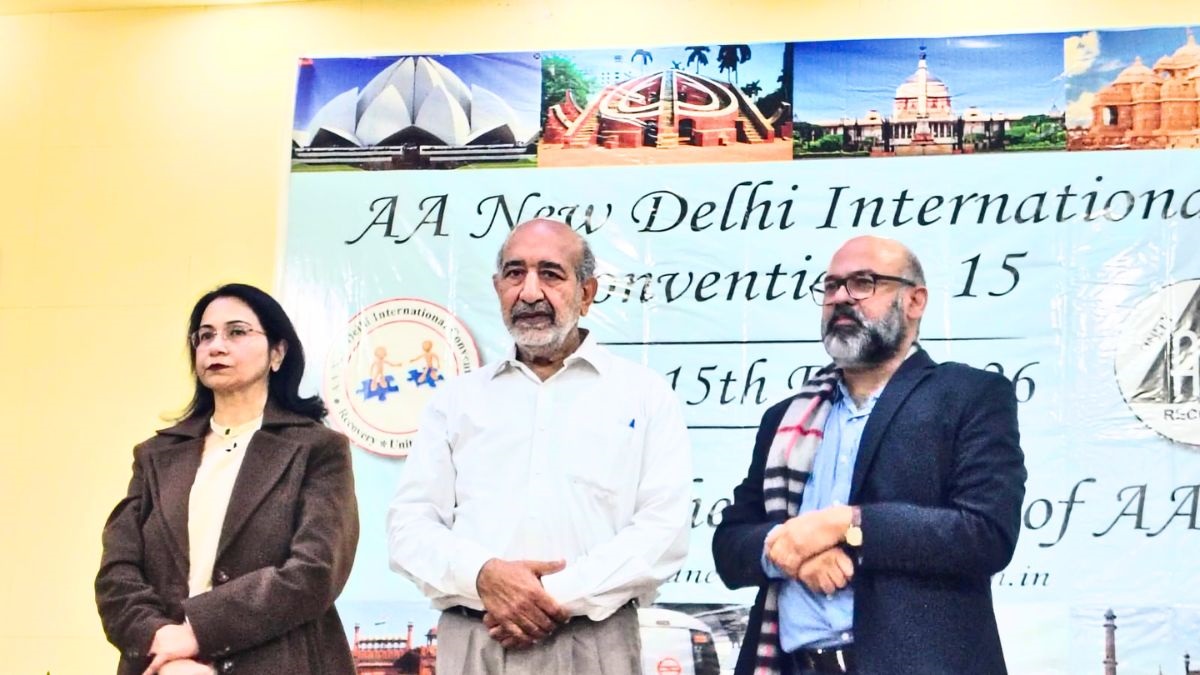
Dr. Tyagi shared that addiction has affected his own extended family. Even during hospital admission, he said, the compulsion to drink did not stop. The individual tried to negotiate, conceal, and continue. “Addiction overrides logic,” he said, underscoring that alcoholism is not a simple matter of willpower.
DMA represents nearly 18,000 doctors across Delhi. Dr. Tyagi announced that the association will activate its 13 branches to support awareness efforts. DMA will sensitise doctors, appoint nodal officers, and place informational posters or material in clinic waiting rooms so families can quietly seek guidance.
“This initiative is not about benefit to the association or any individual,” he said. “If even one family finds relief, that is enough.”
Speaking on the occasion, Dr. Neelam Lekhi, President-Elect, Delhi Medical Association (DMA), said, “Alcoholism must be treated with the same seriousness as any other chronic medical condition. It is not a moral weakness but a disease that affects the brain, behaviour, and family structure. As doctors, we must create safe spaces where patients and families can seek help without fear or stigma.”
“I Lived in the Dungeons of Alcoholism”
An individual in recovery, now 58, described the depth of his addiction without dramatics.
When he first came to AA, he weighed around 40 kilograms. He had visited doctors, consulted religious figures, and tried to control his drinking. Nothing sustained sobriety.
“I did not know what day it was. I lived in isolation,” he said. “Those days were painful.”
He described alcoholism as a physical compulsion combined with mental obsession. After the first drink, he could not stop. Even when physically ill, he continued.
“The solution for me was a change of heart — a spiritual awakening and emotional rearrangement,” he said. “Money, power, or status did not solve my problem.”
Through AA, he adopted a structured recovery process that included sponsorship and the 12 Steps of recovery based on the Big Book of Alcoholics Anonymous. The book was originally published in 1939 and has since been translated into numerous languages. He stressed that recovery requires connection. “You cannot do this alone. You need a sponsor. You need guidance.”
Today, he is employed, supports his family, and faces life’s uncertainties without alcohol. “Earlier, small events would destabilise me completely. Today, I remain steady from within,” he said.
The cooperation between DMA and AA attempts to combine medical intervention with peer-led recovery. Doctors can manage withdrawal, treat organ damage, and address psychiatric symptoms. AA provides long-term community support built on shared experience.
AA representatives reiterated that the fellowship does not align with any religion, political ideology, or institution. Membership requires only a desire to stop drinking. The programme does not charge fees and sustains itself through voluntary contributions.
A clear message
The meet delivered a straightforward message: addiction does not remain confined to one person; it disrupts the entire family. It cuts across education levels and social status, affecting people from all backgrounds. In most cases, lasting recovery requires structured medical care and community support, not isolation or willpower alone.
Sharing his perspective as a senior journalist observing social issues, Sr. Journalist Manoj Sharma said, “Alcoholism is not just a private struggle; it is a public health concern that silently damages families and communities. Media must play a responsible role in spreading awareness and reducing stigma so that people are encouraged to seek help rather than hide their suffering.”
For families struggling silently, doctors urged early consultation. For individuals caught in cycles of denial and relapse, those in recovery offered evidence that change is possible.
The event closed without slogans or exaggeration — only with a commitment to expand awareness and protect the dignity of those who seek recovery.