


Business Travel in the Era of Economic Transformation
In 2026, business travel is no longer defined by routine meetings and annual conferences. It has evolved into a strategic instrument for market expansion, cross-border investment, and long-term capital deployment. Across the Middle East, one destination is rapidly redefining corporate mobility and investor interest—Riyadh.
Driven by ambitious economic reforms under Vision 2030, Riyadh has emerged as one of the most dynamic cities for executives, private equity leaders, sovereign wealth representatives, and multinational corporations seeking new growth corridors.
For readers of Business News For Profit, Riyadh represents more than a travel destination—it represents opportunity.
The Strategic Rise of Riyadh
Saudi Arabia’s transformation over the past decade has shifted global investor perception. Once viewed primarily as an oil-dependent economy, the Kingdom is now positioning itself as a diversified investment powerhouse spanning technology, tourism, logistics, renewable energy, entertainment, and infrastructure.
Riyadh sits at the heart of this transformation.
Massive infrastructure investments, regulatory reforms, and foreign ownership incentives have accelerated inbound corporate travel. Global CEOs are flying into Riyadh not only to attend conferences but to establish regional headquarters, explore joint ventures, and secure government-backed contracts.
Vision 2030: The Catalyst Behind Corporate Travel Growth
Launched by Crown Prince Mohammed bin Salman, Vision 2030 aims to reduce Saudi Arabia’s dependence on oil while developing public service sectors such as health, education, infrastructure, recreation, and tourism.
For international investors and business leaders, Vision 2030 signals:
Long-term economic commitment
Regulatory modernization
Public-private partnership expansion
Increased foreign direct investment (FDI) openness
Executives visiting Riyadh in 2026 often find themselves exploring billion-dollar infrastructure projects and smart-city developments aligned with national priorities.
Mega Projects Driving Executive Mobility
One of the strongest drivers of business travel to Riyadh is access to transformational giga-projects. Among the most talked-about initiatives is NEOM, a futuristic urban development redefining sustainability, AI integration, and next-generation infrastructure.
Though located outside Riyadh, strategic planning and investment discussions around NEOM frequently occur within the capital’s financial and governmental corridors.
Other large-scale initiatives, including entertainment districts, logistics hubs, and tourism developments, have created unprecedented demand for executive site visits and stakeholder negotiations.
A Growing Financial Power Center
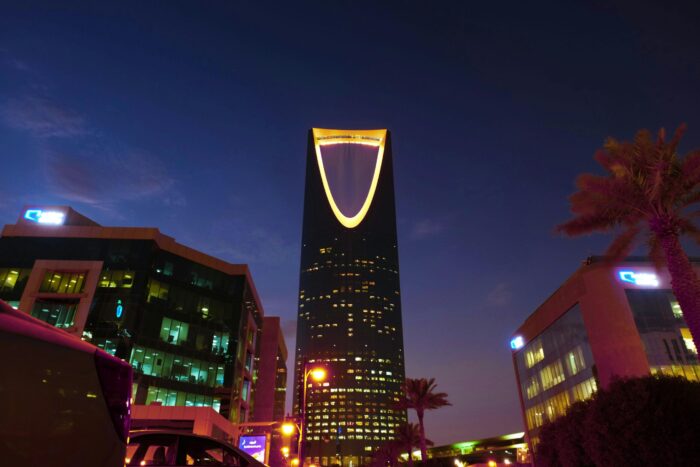
Riyadh’s financial ecosystem has matured significantly. The development of King Abdullah Financial District (KAFD) has positioned the city as a rising regional financial nucleus.
KAFD now hosts:
International banks
Investment firms
Asset management companies
Legal advisory networks
Fintech startups
This concentration of financial institutions has made Riyadh an essential stop for global capital allocators evaluating Middle East exposure.
Why Multinationals Are Relocating Regional HQs
In 2026, Saudi Arabia’s policy encouraging multinational corporations to establish regional headquarters within the Kingdom has significantly increased executive traffic to Riyadh.
Corporate leaders visiting Riyadh are exploring:
Tax incentives
Regulatory support
Strategic geographic positioning
Access to government contracts
The city’s location provides connectivity across the GCC, Africa, and Asia, strengthening its appeal as a strategic operations base.
Business Hospitality Meets Cultural Transformation
Riyadh’s hospitality sector has undergone rapid modernization. Five-star international hotels, premium serviced residences, and business-ready conference venues now cater specifically to high-level executives.
Beyond boardrooms, visitors experience a city undergoing cultural transformation—expanding entertainment zones, culinary diversity, and global sporting events are reshaping its global image.
Business travelers increasingly view Riyadh not just as a place for negotiations, but as a city investing in quality of life and long-term international engagement.
Sector-Specific Opportunities Attracting Investors
Several high-growth sectors are driving consistent executive travel to Riyadh:
1. Technology and AI
Saudi Arabia is investing heavily in artificial intelligence, digital infrastructure, and smart-city frameworks.
2. Renewable Energy
Large-scale solar and green hydrogen initiatives are positioning the Kingdom as a future energy transition leader.
3. Tourism and Entertainment
Luxury tourism projects and international events are diversifying revenue streams.
4. Real Estate and Infrastructure
Urban expansion and commercial development offer large-scale investment opportunities.
For global investors, site visits and in-person negotiations remain essential for securing partnerships in these rapidly evolving sectors.
Geopolitical Stability and Regional Influence
Amid global economic volatility, Saudi Arabia’s strategic diplomatic positioning and economic resilience have increased investor confidence.
Riyadh’s role in regional policymaking and international economic discussions continues to strengthen its global profile. As geopolitical dynamics shift, investors are increasingly looking to the Middle East for diversification—and Riyadh stands at the center of that recalibration.
Business Travel as an Investment Strategy
For today’s global executive, travel decisions are increasingly strategic. A visit to Riyadh may include:
High-level meetings with sovereign wealth representatives
Site tours of giga-project developments
Exploration of regulatory frameworks
Strategic networking within financial districts
In many cases, short visits convert into long-term partnerships or permanent regional expansion.
Business travel in 2026 is not about presence—it is about positioning.
Conclusion: Riyadh’s Defining Moment
As global capital searches for new frontiers, Riyadh is emerging as one of the most compelling destinations for business travel and investment alignment. Its transformation under Vision 2030, combined with large-scale infrastructure development and regulatory reform, has redefined the city’s global standing.
For readers of Business News For Profit, Riyadh is more than a headline—it is a strategic inflection point in the future of global commerce.
In 2026, the world is not just watching Riyadh. It is flying there.