


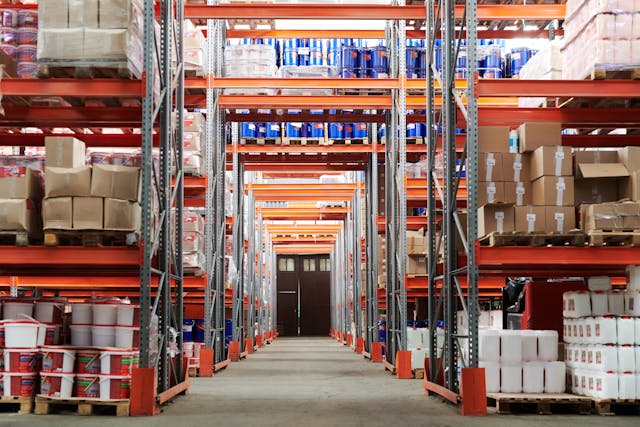
For decades, high logistics costs weakened India’s export competitiveness. Fragmented transport systems, limited coordination, and overdependence on roads created inefficiencies.
The integration of the National Logistics Policy with PM Gati Shakti has begun to address these structural gaps.
At the operational level, the Unified Logistics Interface Platform connects multiple ministries and stakeholders through a shared digital ecosystem. What previously required months of approvals and data exchange can now be executed in a fraction of the time.
Lower logistics costs are not merely a technical improvement — they enhance export competitiveness, reduce inflationary pressures, and increase business predictability.
Transport Rebalancing: Rail, Road, and Water
India’s freight movement remains heavily skewed toward road transport, which is costlier and more carbon-intensive than rail or waterways.
The National Highways Authority of India is now developing access-controlled expressways designed to function as economic corridors rather than simple highways. These projects aim to reduce travel time and improve supply chain reliability.
Simultaneously, dedicated freight corridors and high-speed rail proposals seek to improve rail efficiency and separate passenger and cargo traffic. Inland waterways and coastal shipping initiatives are being revived to diversify transport modes and lower environmental impact.
The long-term objective is clear: create a balanced, multimodal logistics network that reduces vulnerability and increases efficiency.
Green Infrastructure: Growth with Responsibility
India’s infrastructure expansion is increasingly aligned with climate commitments.
The PM Surya Ghar Yojana promotes decentralized renewable energy adoption at the household level, strengthening energy security while reducing carbon intensity.
Large-scale battery storage projects and renewable energy targets aim to stabilize the grid as India transitions toward cleaner energy sources. The emphasis is shifting from simply generating power to ensuring reliable, sustainable supply.
Green infrastructure is no longer a parallel agenda — it is central to industrial competitiveness in a world where environmental standards influence trade and investment decisions.
Advanced Manufacturing and Semiconductor Strategy
India’s ambitions now extend beyond traditional manufacturing.
The expansion of the India Semiconductor Mission reflects an effort to enter high-value technology supply chains. Semiconductor fabrication requires precise logistics, uninterrupted power, advanced water systems, and skilled labor.
This is a structural upgrade — moving from volume-based growth to value-driven industrial capacity.
The Human Side of Infrastructure
Behind every policy document are millions of lived experiences.
-
A small manufacturer gains faster access to markets.
-
A truck driver spends fewer hours in traffic.
-
A commuter saves time through improved metro connectivity.
-
A rural household generates solar power for its own consumption.
Infrastructure is not only about physical assets; it shapes opportunity, productivity, and quality of life.
Yet challenges remain. Land acquisition delays slow execution. Warehousing standards require modernization. Rail freight must diversify beyond bulk commodities. Private investment confidence must deepen.
These gaps are reminders that transformation is a process, not an event.
The Road Ahead: Execution Over Announcement
India’s next phase of growth will depend on institutional capacity — coordination across ministries, timely project completion, regulatory clarity, and private sector participation.
The shift from boosting demand to building systems is ambitious. It requires discipline, transparency, and continuous reform.
If executed effectively, this pivot could redefine India’s economic trajectory for the next decade.
Conclusion: Growth with Foundations
India’s story in 2026 is not simply about maintaining high GDP numbers. It is about ensuring that growth rests on durable foundations.
By investing in logistics reform, green energy, multimodal transport, and advanced manufacturing, India is attempting to future-proof its development model.
The transition from stimulus-led expansion to infrastructure-led resilience marks a decisive moment in the country’s economic journey.
The real test now lies not in vision, but in delivery — turning blueprints into functioning systems that serve businesses, communities, and generations to come.