


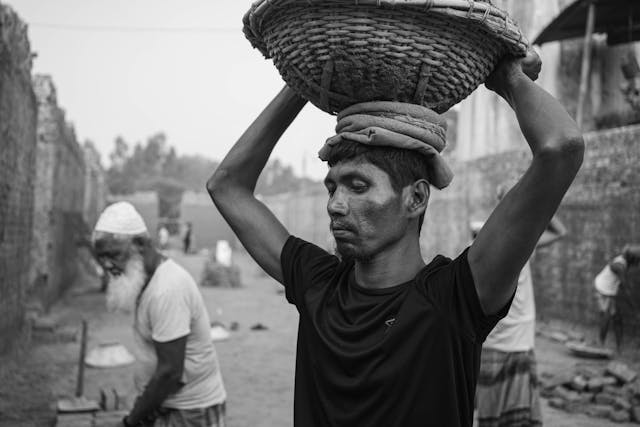
On the afternoon of 21 November 2025, India crossed one of the most significant milestones in its labour history. After decades of debates, delays, and demands from workers, employers and policymakers, the Government of India officially implemented the Four Labour Codes—replacing 29 fragmented laws, some dating back more than 80 years.
In a country where more than 500 million workers shape the nation’s economic heartbeat—from gig riders in bustling cities to beedi workers in rural lanes—this is not merely a reform.
It is a redefinition of work itself.
These Codes:
• The Code on Wages (2019)
• The Industrial Relations Code (2020)
• The Code on Social Security (2020)
• The Occupational Safety, Health & Working Conditions (OSHWC) Code (2020)
—represent a collective promise:
India’s growth story must uplift the worker, not leave them behind.
Why India Needed This Reform: A Long-Brewing Transformation
For decades, India’s labour laws were a patchwork: overlapping, confusing and sometimes contradictory. Many were written in the pre-independence era, when digital platforms didn’t exist, gig workers were unimaginable, and women were largely excluded from industrial work.
This outdated framework made compliance painfully complex for industries, especially MSMEs, and left millions of workers unprotected and unseen.
The Four Labour Codes fix this at the root.
They offer:
-
Clarity for employers
-
Security for workers
-
Flexibility for industries
-
Equity and dignity for the labour force
For the first time in independent India’s history, the focus is not only on productivity and investment—but also on the human lives behind the economy.
How the Labour Landscape Has Changed: A Before & After Reality
The transformation brought by the Codes is nothing short of a cultural shift.
1. Appointment Letters for All Workers
Earlier, many workers—especially casual, informal or contractual—worked without written proof of employment.
Now, employers must issue mandatory appointment letters.
This single step gives workers:
-
Employment identity
-
Proof for loans or rentals
-
Job security
-
Access to social security
-
Protection against exploitation
A piece of paper becomes a shield for millions.
2. Universal Minimum Wages and Timely Payments
Earlier:
Minimum wage laws applied only to scheduled industries, excluding large chunks of the workforce.
Now:
Every worker, regardless of industry, job type, or place, must be paid minimum wages.
And wages must be paid on time—ending decades of uncertainty and financial stress for low-income families.
This will directly uplift millions of households that survive on daily or weekly wages.
3. A Giant Leap for Social Security—Including Gig and Platform Workers
This is one of the most historic changes.
For the first time, India recognises the digital-age worker:
-
Delivery partners
-
App-based drivers
-
Freelancers
-
Platform-based service providers
-
Online creators
Gig workers now gain:
-
Insurance
-
PF-like benefits
-
ESIC coverage
-
A national, portable Universal Account Number
Aggregators must contribute 1–2% of annual turnover, ensuring funds for worker welfare.
This reform finally acknowledges the workforce shaping India’s modern urban economy.
4. Women at the Centre of the Workforce Revolution
The Codes dramatically strengthen women’s participation:
-
Women can now work night shifts across sectors—with consent and safety measures.
-
They can work in mines, heavy machinery, and previously restricted jobs.
-
Gender discrimination is explicitly prohibited.
-
Equal pay becomes a legal guarantee.
-
Women must be included in grievance committees.
-
Parents-in-law can be included in dependent lists.
This opens the door for women to access higher-paying opportunities, not just traditional roles.
5. Safety, Health and Dignity as Legal Rights
For the first time, preventive healthcare is a legal requirement.
-
Free annual health check-ups for workers above 40
-
National safety standards across sectors
-
Mandatory safety committees in large establishments
-
Strict rules for chemical handling, mining, hazardous processes
-
Better sanitation, drinking water, canteens, rest areas
-
Standard working hours: 8–12 hours per day, 48 hours per week
India is signalling that a productive workforce must also be a protected workforce.
Sector-by-Sector Impact: Transforming Lives Across India
Fixed-Term Employees
-
Gratuity after one year
-
Equal benefits as permanent workers
-
Reduced contractual exploitation
MSME Workers
-
Access to welfare facilities
-
Double overtime wages
-
Timely salaries
-
Clear working hours and leave rights
Roadmap for Gig & Platform Workers
-
Welfare fund contributions from aggregators
-
Fully portable benefits
-
Legal recognition of their employment type
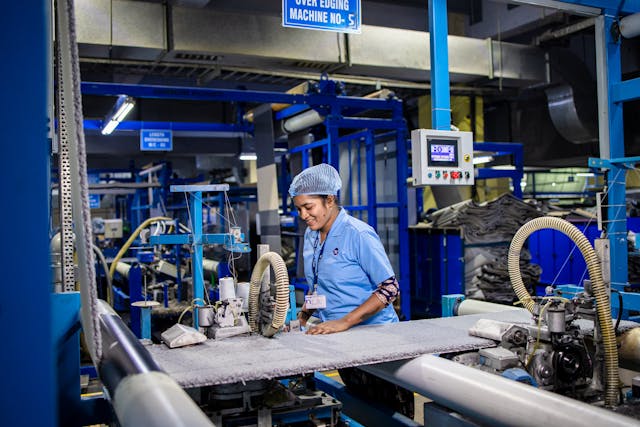
Textile & Export Industry Workers
-
Equal wages for migrant workers
-
Portability of PDS
-
Double wages for overtime
-
Social security access
Plantation Workers
-
ESI for families
-
Safety training
-
Educational facilities for children
Audio-Visual & Digital Media
-
Appointment letters
-
Protection against delayed payments
-
Overtime rules
Beedi & Cigar Workers
-
Minimum wages
-
Limited working hours
-
Bonus eligibility
Dock & Port Workers
-
Medical facilities
-
Safety norms
-
Insurance benefits
These sectoral reforms ensure that no worker is invisible anymore.
How This Shapes India’s Long-Term Economic Vision
The labour ecosystem is essential to India’s goal of becoming a developed nation by 2047.
The Four Codes strengthen the foundation of:
-
Formal employment
-
Ease of doing business
-
Productive industries
-
Women-led development
-
Youth skills and opportunities
-
A modern social-security system
They align India with global labour standards—ensuring fairness without impeding growth.
The Human Soul of the Reforms: Stories Waiting to Be Heard
Behind every clause, every definition, every provision—there are real people:
- A young migrant worker who can now carry social-security benefits across states.
- A mother working in a textile unit who receives equal pay and medical security.
- A gig worker getting insurance for the first time in his life.
- A woman entering a night shift role she was previously barred from.
- A dock worker receiving an appointment letter after years of anonymity.
These stories may never reach headlines, but they represent a quiet revolution—
one that touches the most vulnerable hands that build the nation.
The Road Ahead
Transition will take time. Industries will adapt gradually. Workers will need awareness. Rules and schemes will evolve through public engagement.
But the direction is clear and irreversible: India is building a labour ecosystem that prioritises dignity, justice, protection and growth—equally.
This is more than a policy reform.
It is a generational shift, ensuring that India’s rise on the global stage is matched by a rise in the quality of life for those who power its progress.
And perhaps, years from now, when the history of modern India is written, 21 November 2025 will be remembered as the day the nation placed its workers at the centre of its destiny.