


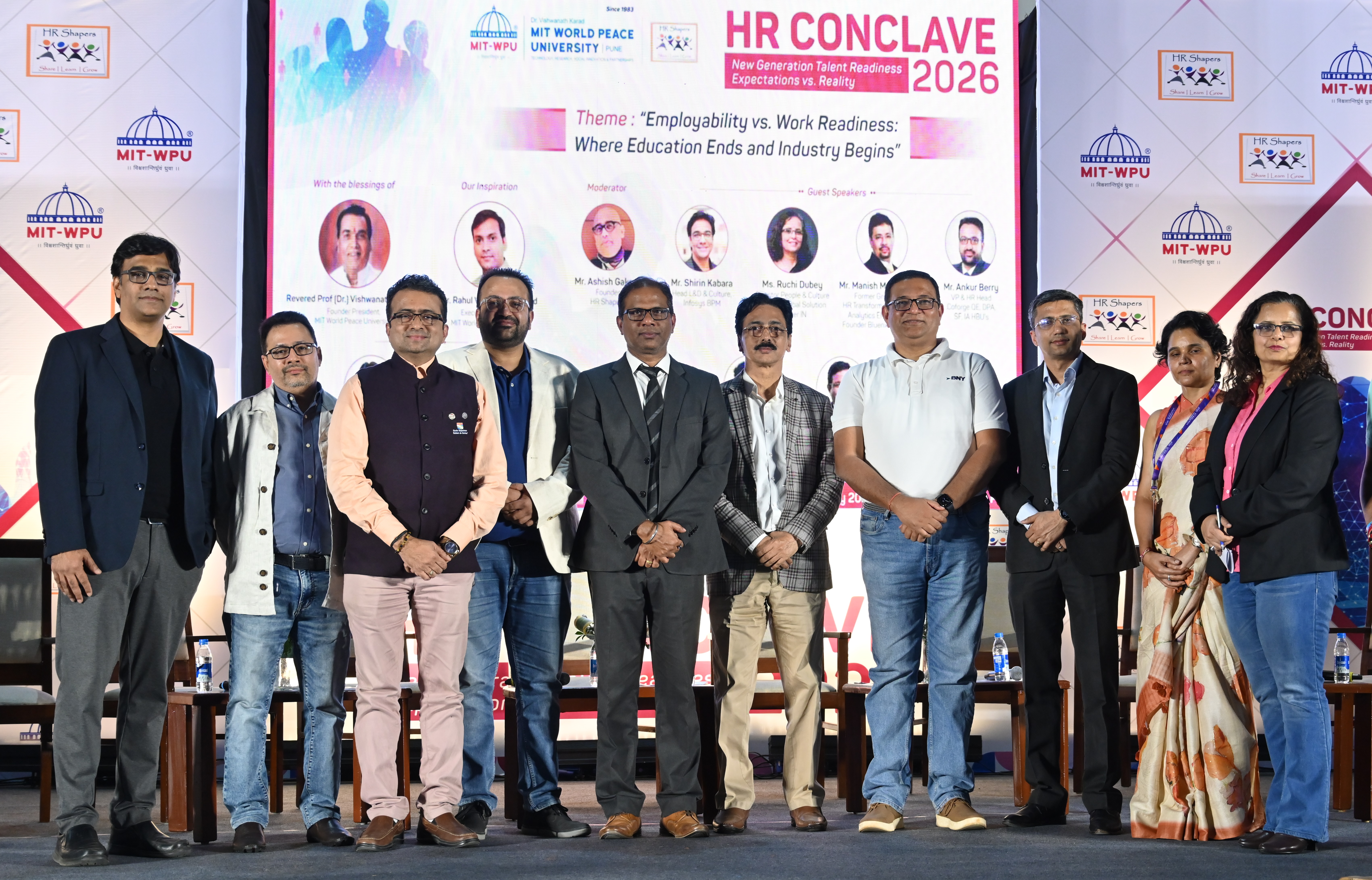
Pune, Feb 11: MIT World Peace University (MIT-WPU), Pune, successfully hosted HR Conclave 2026, a national-level industry–academia dialogue focused on preparing students for the changing expectations of the modern workplace. The conclave revolved around the overarching theme New Generation Talent Readiness: Expectations vs. Reality.
The event brought together senior HR leaders, industry practitioners, and academic experts to deliberate on the widening gap between graduate employability and workplace readiness. The discussions were centred around two key sub-themes: Plug-and-Play or Train-and-Transform? HR Perspectives on New-Generation Talent and “Employability vs. Work Readiness: Where Education Ends and Industry Begins.
The panel discussions featured HR leaders from prominent national and global organisations, including Infosys BPM, Novartis, Kalyani Group, SKF India, United Airlines, Wipro Engineering, METRO Global Solutions, BNY Mellon, SEARCE, PwC and Innomatics Research Labs.
Dr. R. M. Chitnis, Vice Chancellor, MIT World Peace University, said: “HR professionals support employees’ growth and emotional well-being, but it is equally important to care for oneself. Development must be holistic — physical health, mental balance, relationships and financial security together define success. When individuals remain balanced and fulfilled, organisations naturally become stronger, more productive and humane.”
Mr. Vikram Kulkarni, AD HR, Novartis, said: “Our mantra is simple — slow down to go fast. Teams should feel busy but not overwhelmed. Conversations on well-being and psychological safety must begin at the leadership level, as culture flows from the top. HR plays a crucial role in building awareness, enabling supportive leadership and setting realistic expectations. Sustainable performance comes from balanced workplaces where employees feel heard, supported and motivated.”
Mr. Jacob Varghese, Vice President-HR, SKF India Ltd. said: “Mental well-being is now central to organisational sustainability. Companies are building ecosystems through policies, counselling, training and employee assistance programmes because mentally healthy employees perform consistently over the long term. However, well-being is also an individual responsibility — people must learn to set boundaries, say no and avoid unhealthy comparisons or financial stress. In India, we are finally speaking openly about mental health after COVID, which is encouraging. A balanced approach, combining organisational support and personal awareness, is essential for healthier workplaces.”
Mr. Nikhil Bhojwani, L&D Head, Mumbai Metro One Pvt. Ltd. (Reliance Group), said: “Parental well-being has become a critical focus for organisations. Many employees, especially working parents, struggle to balance professional and personal responsibilities, which can lead to burnout and attrition. When organisations support families, offer counselling and create an inclusive environment, employees feel valued. Such practices significantly strengthen engagement, loyalty and long-term commitment.”
The sessions also explored evolving hiring trends, AI-enabled workplaces and changing campus recruitment expectations. Experts emphasised the need for internships, live projects, apprenticeships and mentorship-driven learning as essential bridges between academia and industry.
The conclave concluded with a shared commitment between industry and academia to co-create talent development frameworks that ensure graduates are not just qualified but truly work-ready.