


Gujarat’s Innovative Push for Water Conservation and Wildlife Protection
In the sweeping salt plains of the Little Rann of Kutch — a landscape defined by extremes — Gujarat has embarked on a forward-looking environmental initiative aimed at restoring ecological balance in one of India’s most unique arid ecosystems.
The state government, under the leadership of Chief Minister Bhupendra Patel, has launched a comprehensive conservation project through the Forest Department. The initiative focuses on three critical priorities: water conservation, soil preservation, and habitat enhancement for wildlife and migratory birds.
Understanding the Ecological Significance
The Little Rann of Kutch is not merely a dry, saline expanse. It is a fragile yet vital ecosystem that supports diverse flora and fauna, including:
-
The endangered Indian wild ass
-
Numerous migratory bird species
-
Desert-adapted mammals and reptiles
-
Seasonal wetland biodiversity
Despite its ecological importance, the region faces persistent challenges such as erratic rainfall, water scarcity, increasing salinity, and soil erosion. These factors threaten both biodiversity and the long-term sustainability of the landscape.
Water Conservation: Strengthening the Lifeline
At the heart of the initiative lies a strong focus on water management. In an area where rainfall is limited and unpredictable, conserving every drop becomes essential.
The project aims to:
-
Improve rainwater harvesting during monsoon months
-
Enhance groundwater recharge
-
Increase surface water retention
-
Support seasonal wetlands critical for wildlife
Improved water availability will help sustain native grasslands and plant species, which form the foundation of the region’s ecological food chain.
Combating Soil Erosion and Land Degradation
The Little Rann’s loose, saline soil is highly vulnerable to wind erosion and degradation. To counter this, the initiative includes:
-
Soil stabilization measures
-
Plantation of drought-resistant native species
-
Controlled ecological restoration practices
By strengthening vegetation cover and anchoring soil naturally, the project seeks to gradually restore productivity and prevent further desertification.
Enhancing Wildlife and Bird Habitats
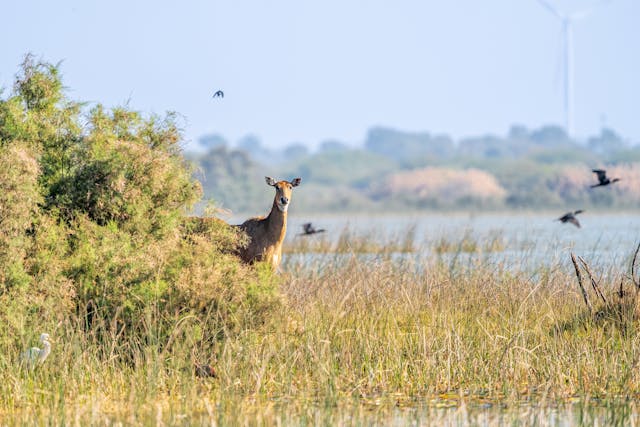
The Little Rann is internationally recognized for its biodiversity value. Seasonal wetlands attract flamingos, cranes, pelicans, and other migratory birds that travel vast distances each year.
With improved water retention and vegetation growth, the project aims to:
-
Expand feeding and breeding grounds
-
Create safer habitats for wildlife
-
Strengthen ecosystem resilience
The Indian wild ass, an iconic species of the region, stands to benefit significantly from improved grazing conditions and stable water sources.
Toward a Self-Sustaining Ecosystem
Beyond immediate conservation efforts, the broader objective is to establish a self-sustaining ecological system. By restoring natural cycles of water and vegetation, the initiative seeks to reduce long-term dependency on artificial interventions.
Environmental planners emphasize that such region-specific strategies are crucial in addressing climate change, desertification, and biodiversity loss — particularly in arid and semi-arid zones.
A Model for Arid Region Restoration
As climate variability continues to challenge fragile ecosystems across India, Gujarat’s initiative in the Little Rann of Kutch represents a proactive approach to environmental governance.
If successfully implemented, the project could serve as a replicable model for other dryland regions seeking to balance conservation with long-term sustainability.
In the vast silence of the Rann, where survival has always depended on resilience, this initiative marks a decisive step toward ecological renewal — proving that even the harshest landscapes can be restored with thoughtful planning and sustained commitment.