


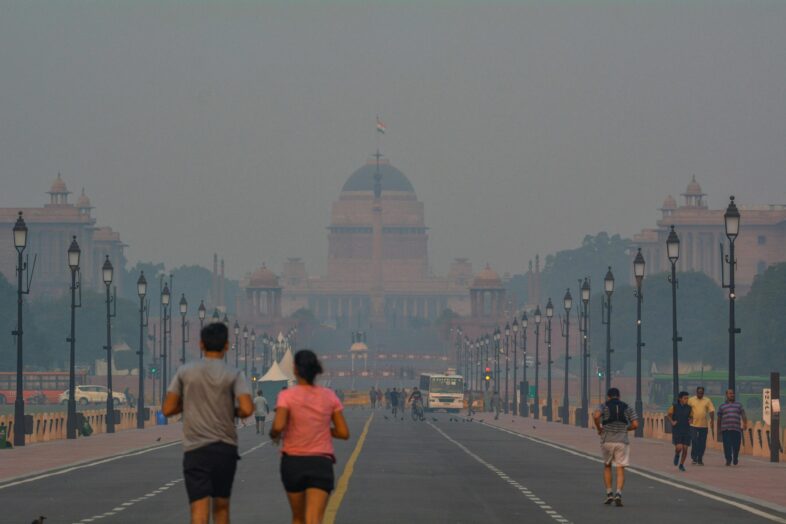
New Delhi is stepping up its year-round battle against air pollution. Chief Minister Rekha Gupta on Monday inaugurated six new Continuous Ambient Air Quality Monitoring Systems (CAAQMS) and flagged off the ‘Vayu Rakshak’ mobile monitoring fleet, marking a significant push toward data-driven pollution control in the capital.
The newly installed monitoring stations are located at key institutional and public sites across the city, including Jawaharlal Nehru University (JNU), Indira Gandhi National Open University (IGNOU), Netaji Subhas University of Technology (NSUT) West Campus, CWG Akshardham, Sarvodaya Bal Vidyalaya in Delhi Cantonment, and SPM Talkatora Garden. Together, these stations will expand Delhi’s real-time air quality surveillance network, enabling authorities to track pollution levels more accurately across diverse zones.
Focus on Year-Round Pollution Control
Emphasising that pollution control cannot be limited to the winter months, Chief Minister Gupta said the government is committed to sustained action throughout the year.
“Accurate monitoring is the foundation of effective action,” she said, noting that the new systems will help authorities respond quickly and scientifically to changes in air quality. The data generated by the stations will support targeted interventions, enforcement measures and policy decisions.
‘Vayu Rakshak’ Fleet to Take Monitoring to the Streets
Complementing the fixed monitoring stations, the ‘Vayu Rakshak’ fleet will operate as a mobile air-quality enforcement unit. These vehicles will travel across neighbourhoods to assess pollution levels on the ground, identify local sources of emissions and assist in immediate mitigation efforts.
Officials said the fleet will strengthen on-site inspections and help bridge gaps between monitoring and enforcement, particularly in pollution-prone areas.
Cabinet Minister Manjinder Singh Sirsa and other senior officials were present at the launch event.
Clean Mobility Push Gains Momentum
The air-quality initiative follows closely on the heels of another major environmental step taken by the Delhi government. Just a day earlier, 500 electric buses were inducted into the Delhi Transport Corporation (DTC) fleet, reinforcing the city’s push toward cleaner public transport.
Speaking at the bus induction event at Ramlila Maidan, Chief Minister Gupta said Delhi now has the largest electric bus fleet among Indian states. She also flagged off an inter-state electric bus service between Delhi and Panipat, aimed at offering commuters a safer, cleaner and more sustainable travel option.
Ambitious Targets Ahead
The government has set ambitious goals for electric mobility. Plans are underway to expand the DTC’s electric bus fleet to 7,500 buses by the end of 2026, with a long-term target of 14,000 electric buses by 2028. Officials believe this transition will play a critical role in reducing vehicular emissions, one of the biggest contributors to Delhi’s air pollution.
A Broader Environmental Strategy
The launch of new monitoring systems and clean transport initiatives coincides with the first anniversary of the Bharatiya Janata Party government’s return to power in Delhi. The measures reflect a broader strategy that combines technology, clean energy and enforcement to address one of the city’s most persistent challenges.
By expanding air-quality monitoring and accelerating the shift to electric mobility, the Delhi government aims to move from reactive responses to proactive, evidence-based environmental governance—offering hope for cleaner air and healthier living conditions in the years ahead.