


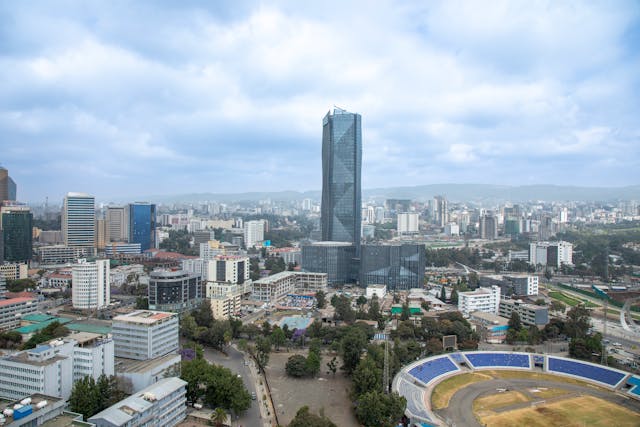
Addis Ababa, Ethiopia — Long known as the political heart of Africa, Addis Ababa is now rapidly earning a new reputation: one of the continent’s most dynamic and compelling travel destinations. Recent tourism figures reveal a city in ascent, drawing hundreds of thousands of international visitors and millions of domestic travelers, driven by cultural depth, expanding infrastructure, and a renewed focus on global engagement.
During the first six months of Ethiopia’s current fiscal year, which began on July 8, 2025, nearly 700,000 foreign tourists visited Addis Ababa. According to city authorities, 699,761 international arrivals were recorded—marking a 15 percent increase compared to the same period last year. The announcement was made by Adanech Abiebie, Mayor of Addis Ababa, during the city’s half-year performance report on the tourism sector.
The surge has translated into significant economic gains. Tourism activities generated 155 billion birr (approximately 1 billion U.S. dollars) in revenue for the city, underscoring the sector’s growing role in Addis Ababa’s urban economy. At the same time, 4.9 million domestic tourists visited the capital during the same period, exceeding the city’s original target and highlighting Addis Ababa’s appeal not only to foreign travelers but also to Ethiopians exploring their own cultural capital.
A City Reinventing Itself for Global Travelers
City officials attribute the strong performance to new and upgraded tourism destinations, large-scale urban renewal projects, and Addis Ababa’s expanding role as a conference and events hub. Over the past six months alone, the city hosted nearly 150 international and continental events, a remarkable 50 percent increase year on year.
As home to the African Union and numerous international organizations, Addis Ababa has long attracted diplomats and business travelers. Today, that legacy is being leveraged into a broader tourism strategy—one that combines meetings and conferences with cultural discovery, leisure travel, and wellness experiences.
Mayor Abiebie has emphasized that public, religious, and cultural festivals—many of which draw visitors from across Africa and the global diaspora—are central to the city’s growing appeal. Alongside these, the expansion of sports tourism and health tourism is helping diversify the visitor experience and extend average stays.
The Cultural Capital of Ethiopia
Few African capitals offer the cultural density of Addis Ababa. Founded in the late 19th century, the city is a living archive of Ethiopian history, religion, and creativity. Its museums house some of the most important archaeological and cultural collections on the continent, while its neighborhoods reflect a mosaic of languages, traditions, and artistic expressions.
Religious landmarks remain among the city’s most visited attractions. Historic Orthodox Christian churches, grand mosques, and spiritual centers coexist peacefully, reflecting Ethiopia’s long tradition of religious tolerance. Festivals tied to the Ethiopian calendar—many of which are centuries old—bring color, music, and ritual to the streets throughout the year.
Food is another gateway into the city’s soul. Addis Ababa is widely regarded as the best place in the world to experience authentic Ethiopian cuisine, from injera-based communal meals to richly spiced stews and ceremonial coffee rituals. Traditional music and dance are not reserved for special occasions; they are part of daily life, performed in cultural restaurants and neighborhood venues across the city.
Nature at the City’s Edge
Addis Ababa’s geographical setting is as striking as its cultural heritage. Located in the Ethiopian highlands near the Great Rift Valley, the city sits at a high altitude, giving it a mild climate year-round. Just beyond the urban sprawl rise the Entoto Mountains, offering hiking trails, panoramic views, historic monasteries, and forested landscapes that feel far removed from city life.
This proximity to nature is becoming an increasingly important draw for visitors seeking balance between urban exploration and outdoor experiences. Tour operators are now pairing city stays with eco-tourism excursions, wellness retreats, and short adventures that highlight Ethiopia’s dramatic landscapes.
Infrastructure, Investment, and the Future of Tourism
The city’s tourism growth is also closely linked to ongoing infrastructure development and flagship mega-projects. Improvements in transportation, public spaces, hospitality facilities, and urban design are reshaping how visitors experience Addis Ababa.
New hotels, conference centers, cultural venues, and revitalized public areas are supporting the city’s ambition to attract high-level international summits, exhibitions, and cultural events. For travelers, this translates into better services, greater accessibility, and an increasingly cosmopolitan atmosphere.
Crucially, officials see tourism not just as a revenue generator, but as a tool for job creation, cultural exchange, and global image-building. By investing in heritage preservation alongside modernization, Addis Ababa aims to grow without losing its identity.
Why Addis Ababa Matters on the Global Travel Map
The recent tourism figures are more than just statistics—they signal a shift in how Addis Ababa is perceived internationally. Once viewed primarily as a diplomatic city or a transit point, the capital is now positioning itself as a standalone destination, capable of competing with established African urban centers.
For travelers, Addis Ababa offers something increasingly rare: a capital city where ancient traditions, modern African identity, and future ambition coexist in visible, vibrant ways. For the tourism industry, its growth reflects a broader trend toward diverse, culturally rich, and experience-driven travel across Africa.
As development continues and international interest grows, Addis Ababa appears poised to deepen its role as both Africa’s meeting place and one of its most rewarding travel experiences.